

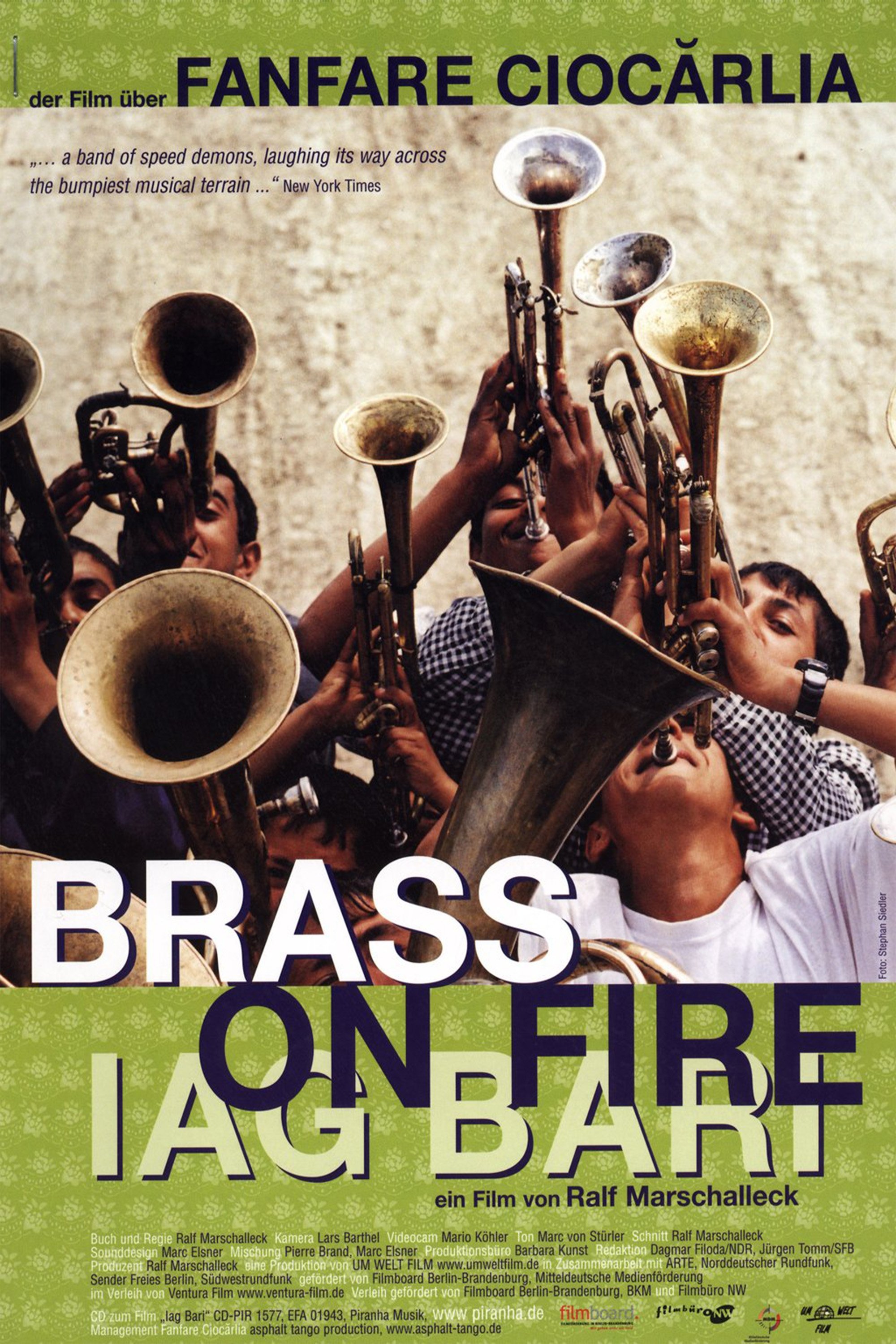
Brass on Fire - Iag Bari
Documentary
Overview
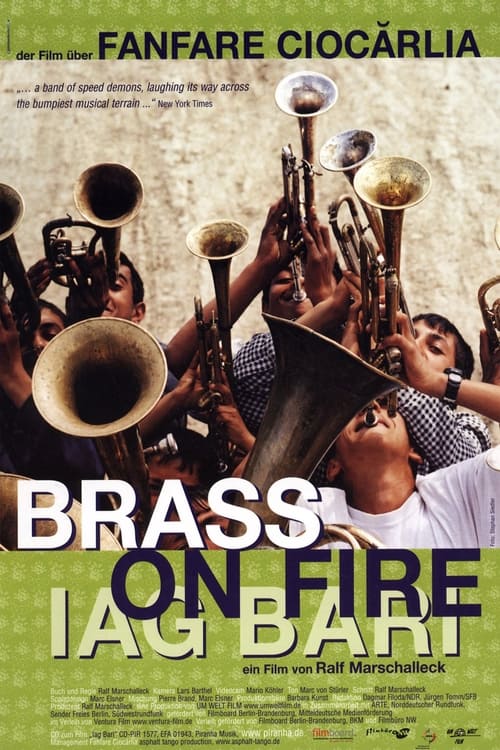
When Henry Ernst toured Romania in 1996, he came across a wedding band who called themselves Fanfare Ciocarlia. This is the story of that meeting, and how Ernst introduced the band to the world.
Top Cast




Constantin Calin
Constantin Calin
self
Constantin Calin
self
Constantin Cantea
Constantin Cantea
self
Constantin Cantea
self
Nicusor Cantea
Nicusor Cantea
self
Nicusor Cantea
self
Nicolae Ionita
Nicolae Ionita
self
Nicolae Ionita
self
Daniel Ivancea
Daniel Ivancea
self
Daniel Ivancea
self
Ioan Ivancea
Ioan Ivancea
self
Ioan Ivancea
self
Laurentiu Mihai Ivancea
Laurentiu Mihai Ivancea
self
Laurentiu Mihai Ivancea
self
Oprica Ivancea
Oprica Ivancea
self
Oprica Ivancea
self
Similar Movies
A Roma beggar on his knees raises many extreme emotions: guilt, rage, sympathy and frustration. Most people just walk on by, but there is always someone willing to help. In this film, the director follows the confrontations between the Roma beggars from Romania and Finnish people, and is forced to question, over and over again, her own ideas about helping.
Procreation is the social duty of all fertile women, was the political thinking during the 1960s and 1970s in Romania. In 1966, Ceaucescu issued Decree 770, in which he forbade abortion for all women unless they were over forty or were already taking care of four children. All forms of contraception were totally banned. The New Romanian Man was born. By 1969, the country had a million babies more than the previous average. Romanian society was rapidly changing. By using very interesting archival footage and excerpts from old fiction films and by interviewing famous personalities from that time – gynecologists or mothers who were part of the new society - the director revives this period of tremendous oppression of personal freedom. Many deaths were caused by the mere fact that women, including wives of secret Romanian agents, famous TV presenters, and actresses, had to undergo illegal abortions. Many women were jailed for having them.
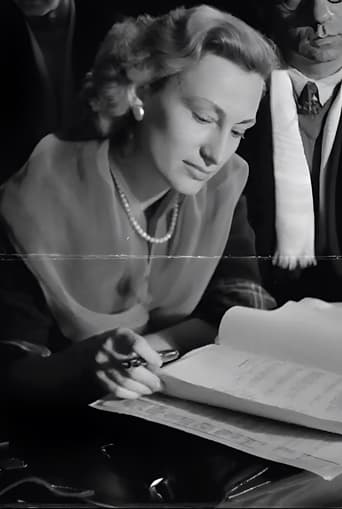
Made on the occasion of March 8, it presents a series of brief portraits of women, from various professional fields, of different ages and even of different ethnicities, pointing out the benefits that the communist organization had brought to their daily lives. A special emphasis is placed on their status as mothers and on the role of nurseries and socialist kindergartens not only in making their lives easier, but also in giving them the time they need to build a career. Another concern of the filmmaker, starting from the concrete case of one of the protagonists, is to highlight the differences between the happy present and the not-too-distant past in which someone with her social status should have dedicated herself exclusively to raising children, in hygienic and extremely difficult lives.
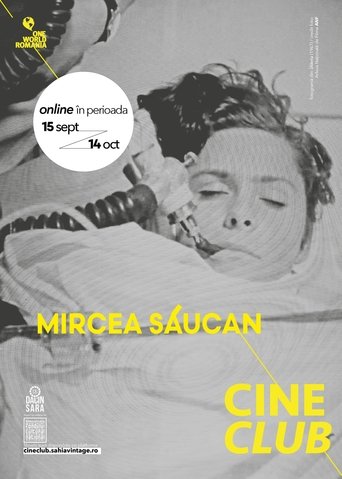
A more experimental aproach to labor protection films. In the line of Săucan's style, the soundtrack is as important as the image, the threatening music, full of shrillness, composed by Ion Dumitrescu potentiating the visual construction that mixes - in a montage reminiscent of the Soviet avant-garde school of the 1920s - all kinds of shooting techniques and frame combinations.
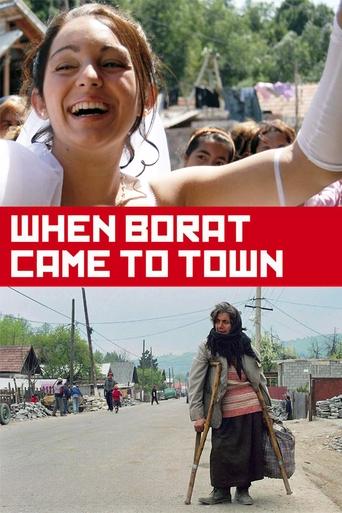
A look at what happened after Borat: Cultural Learnings of America for Make Benefit Glorious Nation of Kazakhstan was filmed in the Romanian village of Glod. It follows the life of one girl who longs to escape the poverty as foreign lawyers arrive with the promise of suing 20th Century Fox for millions of dollars.
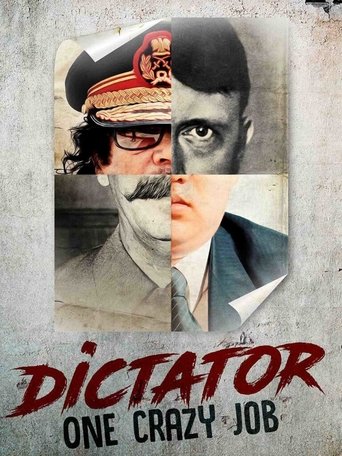
They’ve become the human face of inhuman barbarity. Leaders like Hitler, Idi Amin Dada, Stalin, Kim Jong Il, Saddam Hussein, Nicolae Ceausescu, Bokassa, Muammar Kadhafi, Khomeini, Mussolini and Franco governed their countries completely cut off from reality. These paranoid leaders were driven to abuse their power by the pathology of power itself. Dictators are driven by a relentless, thought-out determination to impose themselves as infallible, all-knowing and all-powerful beings. But they are also men ruled by their caprices, uncontrollable impulses, and reckless fits of frenzy, which paradoxically render them as human as anyone else. The abuses they committed were clearly atrocious, yet some of them were as outlandish as the characters portrayed in the film The Dictator. They sunk to depths worthy of Kafka: so incredibly absurd, they are outrageously funny.