

Architecture And Power
Documentary
Overview
A history of Bucharest, as seen in the light of the totalitarian architecture, having as leading idea the reality that the Power always exposes its purposes through architecture. After five decades of communism, the reality on thee Dark Ages is still waiting to be revealed, and architecture is one of the most obvious embodiments of the ideology to whom it was builtÉ It is not a movie about faults or about guilty peoples, but about official edifices of thee communist Romania and their story.



No cast information.
Similar Movies
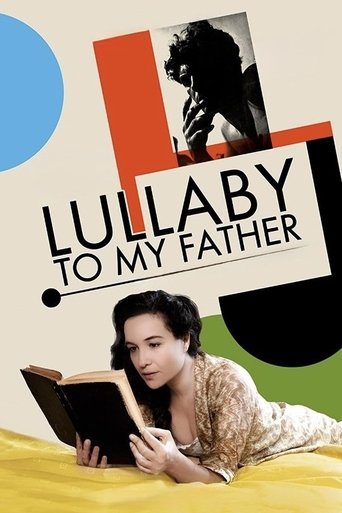
The film intertwines historical events and intimate memories. I observe how architecture represents the transformations of society and those who give form to this architecture. We follow the journey of Munio, my father, born in 1909 in Silesia, Poland, the son of a tenant farmer of a Prussian junker. At the age of 18, Munio goes to Berlin and Dessau to meet Walter Gropius, Kandinsky and Paul Klee at the Bauhaus. In 1933, the Bauhaus was closed by the Nazis, who accused Munio of treason against the German people. Munio was imprisoned, then deported to Basel. He left for Palestine. Upon his arrival in Haifa, he began a career as an architect and adapted European modernist principles to the Middle East.
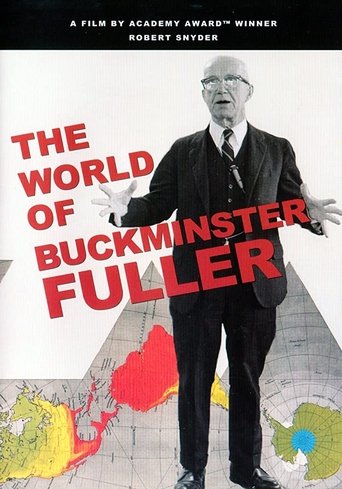
Architect, engineer, geometrician, cartographer, philosopher, futurist, inventor of the famous geodesic dome and one of the most brilliant thinkers of his time. Fuller was renowned for his comprehensive perspective on the world's problems. For more than five decades he developed pioneering solutions reflecting his commitment to the potential of innovative design to create technology that does "more with less" and thereby improve human lives. He spent much of his life traveling the world lecturing and discussing his ideas with thousands of audiences. Now more relevant than ever, this film captures Fuller's ideas and thinking told in his own words.
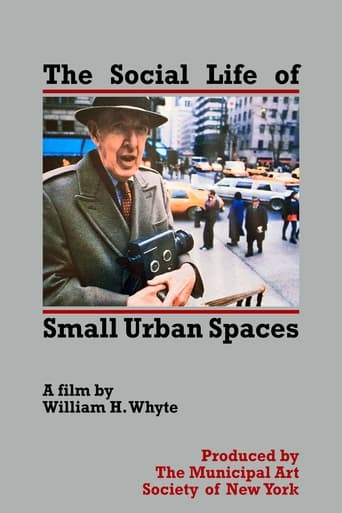
This witty and original film is about the open spaces of cities and why some of them work for people while others don't. Beginning at New York's Seagram Plaza, one of the most used open areas in the city, the film proceeds to analyze why this space is so popular and how other urban oases, both in New York and elsewhere, measure up. Based on direct observation of what people actually do, the film presents a remarkably engaging and informative tour of the urban landscape and looks at how it can be made more hospitable to those who live in it.
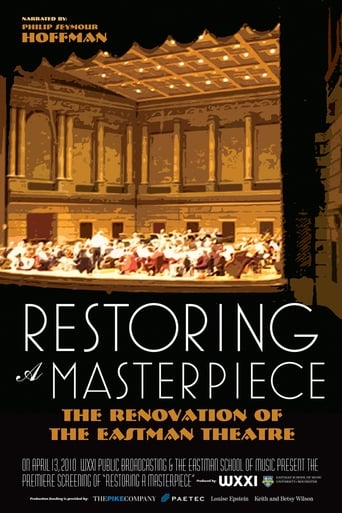
Take a look behind the curtain to see the vast history and recent renovation of one of Rochester, New York's most famous landmarks. Architects, theater personnel, historians, community leaders, and citizens provide in depth insight from start to finish in one of the most extensive renovations the city has ever seen.
50 % of the world’s population lives in urban areas. By 2050 this will increase to 80%. Life in a mega city is both enchanting and problematic. Today we face peak oil, climate change, loneliness and severe health issues due to our way of life. But why? The Danish architect and professor Jan Gehl has studied human behavior in cities through 40 years. He has documented how modern cities repel human interaction, and argues that we can build cities in a way, which takes human needs for inclusion and intimacy into account.
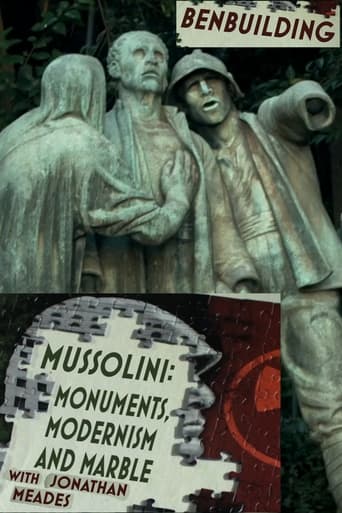
Having previously investigated the architecture of Hitler and Stalin's regimes, Jonathan Meades turns his attention to another notorious 20th-century European dictator, Mussolini. His travels take him to Rome, Milan, Genoa, the new town of Sabaudia and the vast military memorials of Redipuglia and Monte Grappa. When it comes to the buildings of the fascist era, Meades discovers a dictator who couldn't dictate, with Mussolini caught between the contending forces of modernism and a revivalism that harked back to ancient Rome. The result was a variety of styles that still influence architecture today. Along the way, Meades ponders on the nature of fascism, the influence of the Futurists, and Mussolini's love of a fancy uniform.
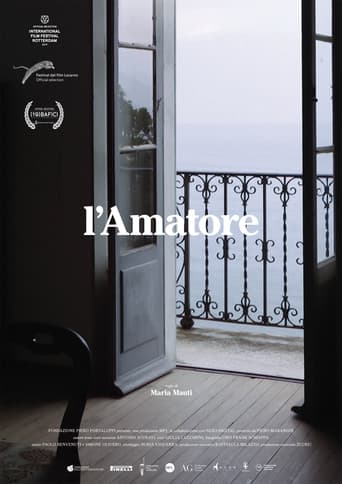
The memory of Piero Portaluppi, a Milanese architect who reached the peak of his fame during the 20 years of the Fascist regime, comes back to life, both through the rediscovery of his work today and in a previously unpublished film diary in 16 mm, shot and edited throughout his lifetime. A man of great charm and power, Portaluppi lived through a grandiose but tragic era with ironic detachment, as if dancing across things as he created beauty. History marches on implacably, radically transforming the arena in which the eclectic artist and his large family lived and worked.
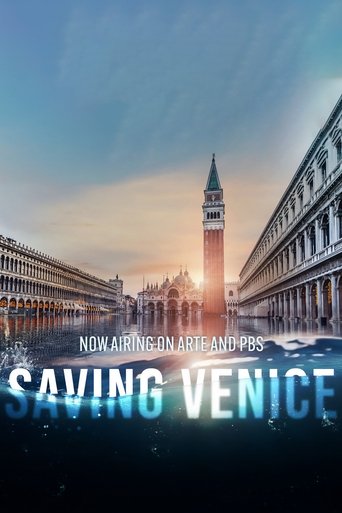
Rising sea levels and sinking land threaten to destroy Venice. Leading scientists and engineers battling the forces of nature to try to save this historic city for future generations. Discover the innovative projects and feats of engineering currently underway, including a hi-tech flood barrier, eco-projects to conserve the lagoon, and new efforts to investigate erosion beneath the city.
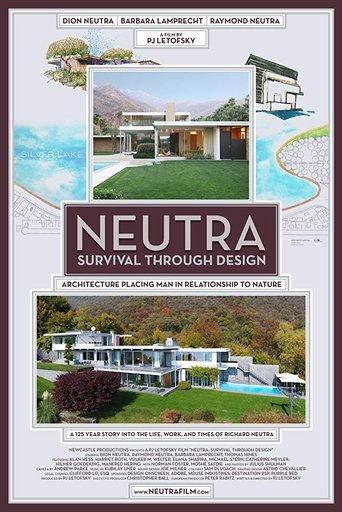
This insightful documentary feature from PJ Letofsky serves as a profile of iconic Austrian-American Architect Richard Neutra, whose work and legacy have helped shape the modern understanding of design, architecture and the interconnected fabric of nature. Today, Richard's legacy lives on through his son, Dion, who has taken up his father's mantle after nearly three-decades under his mentorship.