

Photooxidation
Documentary
Overview
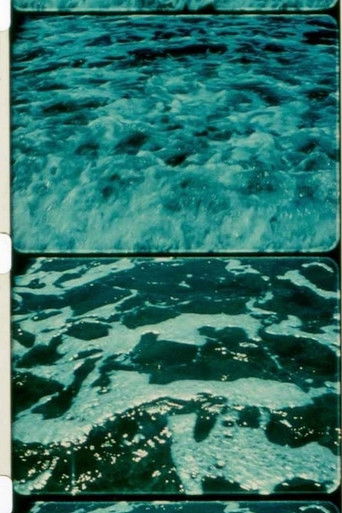
De-electronation of a molecular entity as a result of photoexcitation. Light increases its oxidation state, at the same time it releases free radical electrons. Light goes through human work as a natural photodegradation. It mutates within its own limits, from a solar irradiation to its impossible perception in an absent retina.


No cast information.
Similar Movies
Black Hole Radio is an installation that consists of taped confessions of callers of the New York City Phone Confession Line and video images. The Phone Confession Line is based on anonymous callers ringing to confess on things they had done or thought like adultery, theft, murder or regrets. Thereafter anybody could call and listen to the confessions. Although making a confession was free, listening to a confession costs money. After Cohen got his hands on the confessions, he used them as an audio heartbeat to accompany video-images of every day life in New York City he had taken over the years. This installation is a portrait of the city with its dark secrets, hushed voices and nocturnal images. In this way Cohen tries to bring across an experience to the viewer that relies on absence, waiting and the effort to hear something in the dark.
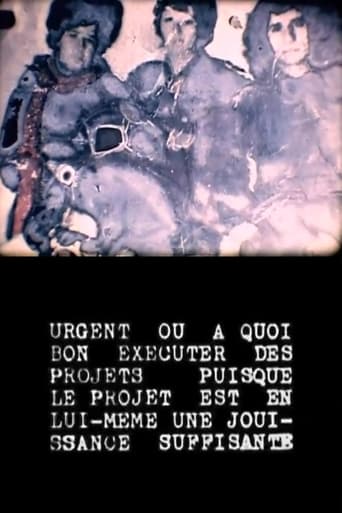
Gérard Courant applies the Lettrist editing techniques of Isidore Isou to footage of late 70's pop culture. Courant posits that his cinema offers an aggressive détournement to the French mainstream, reifying a Duchampian view of film: "I believe in impossible movies and works without meaning... I believe in the anti-movie. I believe in the non-movie. I believe in Urgent... My first full length movie that is so anti-everything that I sometimes wonder if it really does exist!"
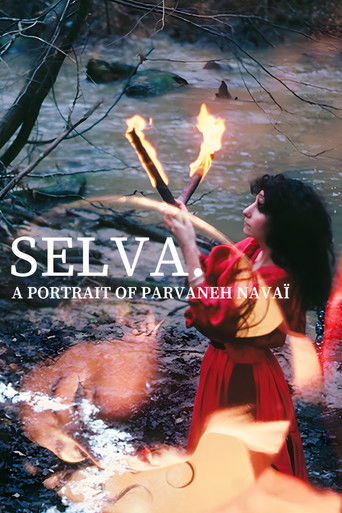
Trance dances and out of body projection. In front of the camera, Parvaneh Navaï becomes a mediator who enters in contact with and immerses into the energies of Nature, while her own energy radiates and echos in the forest ("selva"). The camera amplifies and expands her presence, transforming the forest into an imaginary space. The camera becomes a painter's brush.
Sylvia Kristel – Paris is a portrait of Sylvia Kristel , best known for her role in the 1970’s erotic cult classic Emmanuelle, as well as a film about the impossibility of memory in relation to biography. Between November 2000 and June 2002 Manon de Boer recorded the stories and memories of Kristel. At each recording session she asked her to speak about a city where Kristel has lived: Paris, Los Angeles, Brussels or Amsterdam; over the two years she spoke on several occasions about the same city. At first glance the collection of stories appears to make up a sort of biography, but over time it shows the impossibility of biography: the impossibility of ‘plotting’ somebody’s life as a coherent narrative.
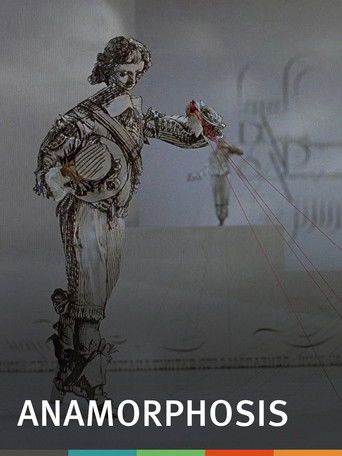
The Quays' interest in esoteric illusions finds its perfect realization in this fascinating animated lecture on the art of anamorphosis. This artistic technique, often used in the 16th- and 17th centuries, utilizes a method of visual distortion with which paintings, when viewed from different angles, mischievously revealed hidden symbols.
From Dr Who to The Dark Side of the Moon to modern day dance music, the pioneering members of the Electronic Music Studios radically changed the sound-scape of the 20th Century. What the Future Sounded Like tells this fascinating story of British electronic music. What The Future Sounded Like mixes experimental visual and sonic techniques with animation and never-seen-since archival footage. A sonic and visual collage, this documentary colors in a lost chapter in music history, uncovering a group of composers and music engineers who harnessed technology and new ideas to re-imagine the boundaries of music and sound.
"In his description for A CHILD'S GARDEN, Brakhage quotes from poets Ronald Johnson and Charles Olson (and cites Johnson's poem "Beam 29" as inspiration). But the film also vaguely calls to mind William Blake—more perhaps for his art than his poetry: there is both a sense of darkness and of mystical transport in Brakhage's images. The first film in the loose "Vancouver Island" quartet, Brakhage films locations around the British Columbia locale where his second wife, Marilyn, grew up. He films land, sea, and sky and intercuts frequently between them. Shots are often out-of-focus, to accentuate color and light; they are hand-held, upside down, and fleeting. All of this is no surprise for those who know Brakhage's work: anything and everything is valid, as long as it works." - Cine-File.info