

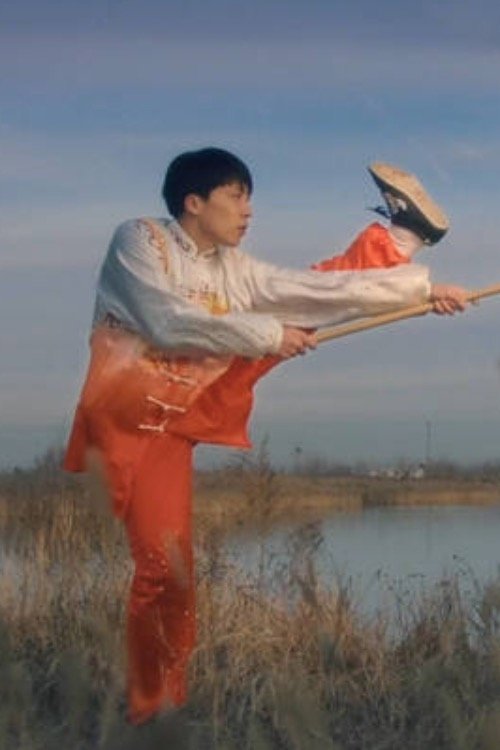
Young Masters: Bajiquan
Documentary
Overview
Young Masters is an original series commissioned by NOWNESS China focusing on traditional Chinese cultures, and how they continue to be defined by a new generation of the country's youth. Its first episode, Young Masters: Bajiquan, spotlights Wu Hao (吴昊), a young man in his twenties from Hebei province who is a stalwart practitioner of Bajiquan—a traditional Chinese fighting style known for its graceful stillness and sudden moments of targeted and ferocious violence. Director Haonan Shen traveled to the Mengcun Bajiquan International Training Center to profile Wu Hao whose paternal ancestor Wu Zhong (1712–1802) was the first recorded Bajiquan teacher. In this evocative portrait of a young man’s passion for sharing his family’s rich heritage, we get up close and personal with the violent elbow strikes, staff jabs, fierce rising and firm falling stances that characterize the martial art.
Top Cast





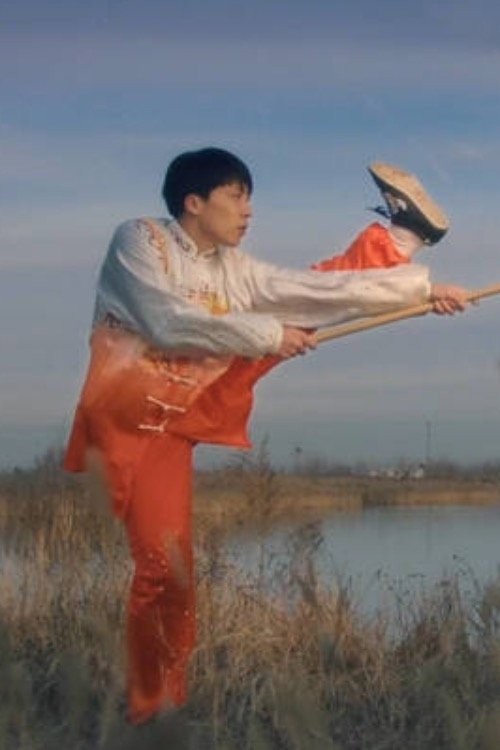
Wu Hao
Wu Hao
Wu Hao
Wu Lianzhi
Wu Lianzhi
Wu Lianzhi
Mi Ankang
Mi Ankang
Mi Ankang
Sun Junjie
Sun Junjie
Sun Junjie
Wu Shixue
Wu Shixue
Wu Shixue
Li Hao
Li Hao
Li Hao
Shuai Dejin
Shuai Dejin
Shuai Dejin
Liu Hao
Liu Hao
Liu Hao
Liu Zhicheng
Liu Zhicheng
Liu Zhicheng
Chu Mengde
Chu Mengde
Chu Mengde
Similar Movies
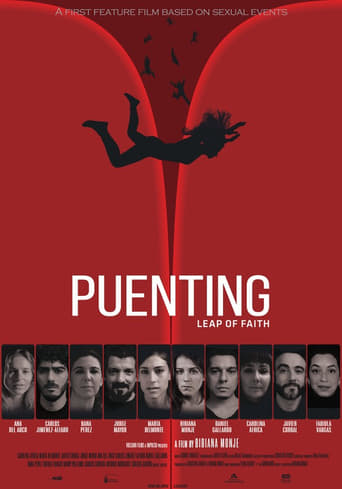
A first feature based on sexual events. An actress undertakes her desire of directing her first movie, without a budget or any production company funding her project. She gathers a group of professional actors and actresses, and proposes a project based on a very particular experience: stepping on their fears through a metaphorical 'leap of faith'. As the project advances, individual conflicts will arise affecting the shoot, making the movie crew wonder whether or not they should go on. Will they take the leap of faith with all its consequences?
The horses in Denys Colomb Daunant’s dream poem are the white beasts of the marshlands of the Camargue in South West France. Daunant was haunted by these creatures. His obsession was first visualized when he wrote the autobiographical script for Albert Lamorisse’s award-winning 1953 film White Mane. In this short the beauty of the horses is captured with a variety of film techniques and by Jacques Lasry’s beautiful electronic score.
NVIDIA (NVDA) GPUs have become so in-demand for so-called "AI" workloads that a black market has emerged around them. Where there's prohibition, there's smuggling, and there's money to be made for everyone in the chain. We found smugglers, users, fences, middlemen, and institutions in China, Taiwan, and the US involved in this pipeline flowing export controlled GPUs to China. This is in violation of US Government law, which now includes imposed numerous restrictions on semiconductor processing capabilities, making legitimate export of high-end GPUs to Chinese companies or governments impossible without rarely-granted licenses. But while this is going on, the US Government, NVIDIA, and AMD have been negotiating a cut of sales of two specific models of GPU in order to unblock over $6 billion in combined lost revenue between the companies. This is our first full-length, highly produced movie we've ever created. This was made possible thanks to our viewers supporting our ambitions.
Swimming, Dancing examines audiovisual representations of the Yangtze (1934–present), from silent film to video art to the contemporary vlog. Inspired by the city symphonies of the 1920s, Swimming, Dancing pieces together a “river symphony”, evoking the images, sounds and contradictions that make up the river’s turbulent history.
In their infinite quest for virgin big walls, adventurers Sean Villanueva O’Driscoll, Nicolas Favresse, Stephane Hanssens and Evrard Wendenbaum, head in September 2013 to a remote valley in the westernmost region of China. There, they found a fantastic 1200m vertical pillar, culminating at 5842m. They spent 14 days on the wall facing snow storms and harsh conditions to finally achieve this amazing ascent with some frost bites but never forgetting to have a lot of fun and to play unreal musical sessions.
An Okinawan photographer, Mao Ishikawa spent her early 20s working as a barmaid in establishments catered specifically to African American GIs stationed in Okinawa. “There was love,” as the tagline reads, her photography book, 『Red Flower – The Women of Okinawa』 captured the diaristic intimacy of friendships, love affairs, and wild nights shared amongst her social circle of that time.
Filmed inside Pharmacy No. 3 in Shanghai, Joris Ivens and Marceline Loridan-Ivens document the daily work of a state pharmacy that functions as both a dispensary and a neighborhood medical center. The film focuses on routine interactions between staff and patients, revealing an integrated model of urban healthcare in 1970s China.