

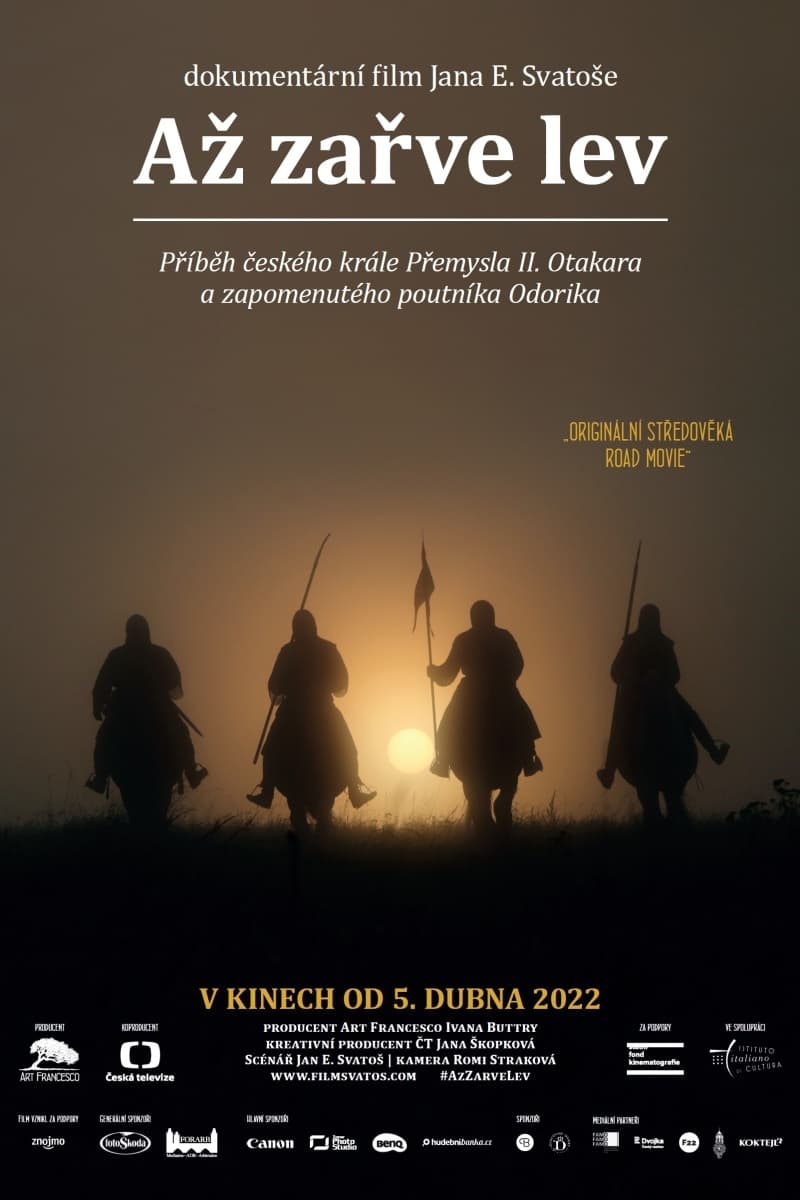
When the Lion Roars
Documentary
Overview
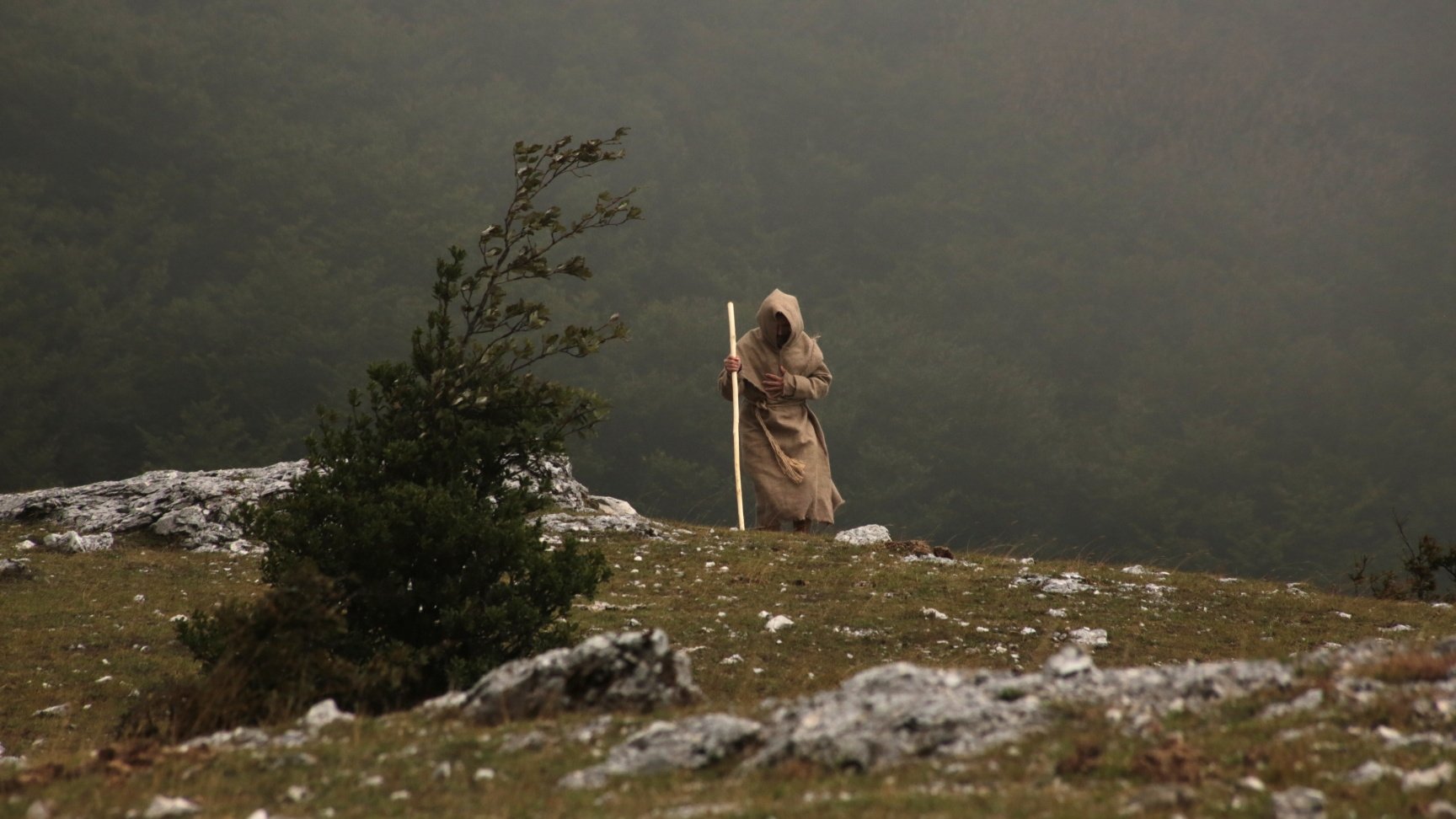
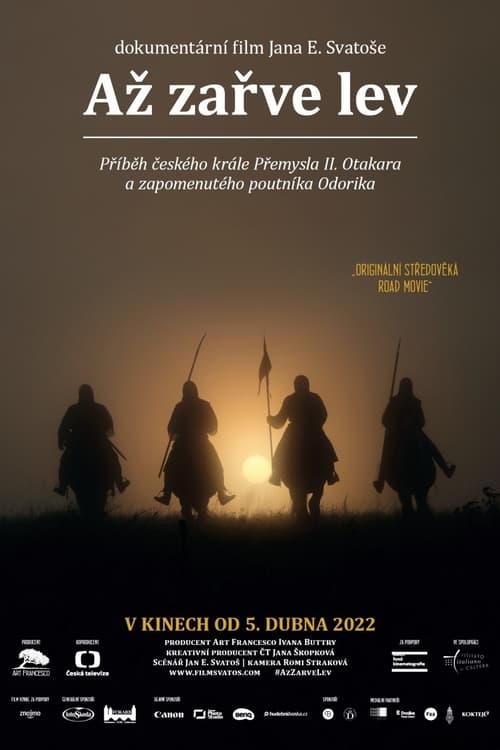
This is the story of the Bohemian King, Přemysl Otakar II, and the forgotten pilgrim, Odorik, who was the first-ever European to set eyes on Tibet. This medieval road movie brings an unconventional view to these two great figures of Czech medieval history. While the character of Odorik, regarded as the “Bohemian Marco Polo,” is practically unknown to us, the Bohemian King Přemysl Otakar II is either demonized or dismissed by the traditional clichés of the “Iron and Golden King.” In a private conversational format, the film’s author gives us a glimpse of this medieval world, set nearly 700 years apart from our modern context. But nothing has been lost in terms of this world’s impact or relevance, for both Odorik and Přemysl have outlived their time. Their lives are surprisingly endearing and touch on many of our current feelings.


František Němec
František Němec
Narrator (voice)
František Němec
Narrator (voice)
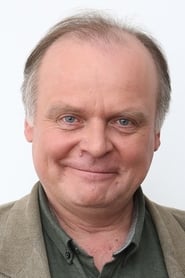
Igor Bareš
Igor Bareš
Narrator (voice)
Igor Bareš
Narrator (voice)
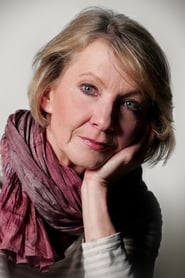
Daniela Kolářová
Daniela Kolářová
Narrator (voice)
Daniela Kolářová
Narrator (voice)
Similar Movies
On October 11, 1424, Hussite commander Jan Žižka breathed his last breath near the castle in Přibyslav. With a little exaggeration, it can be said that he never actually died, as he immediately entered national mythology as the prototype of a brilliant military leader and a true Czech. The revolutionary events then took a slightly different course than he would have liked, but his legacy remained ever-present among the Hussites. To this day, Žižka lives on in our society, with books written and films made about him. But even after 600 years of uninterrupted interest, a significant question mark remains over the Trocnov warrior: What was he really like? A deeply religious warrior of God, or just an ordinary medieval cutthroat? Leading Czech historians, headed by Professor Petr Čornej, are attempting to answer this question.
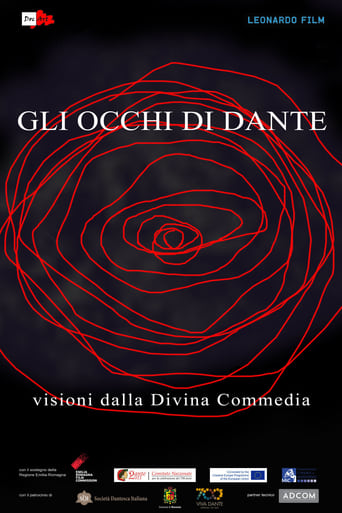
He is considered the greatest European poet of the Middle Ages and his work unfolds the whole panopticon of occidental education – theology, philosophy, sciences, politics and literature. But who has really read it, the “Divine Comedy”? Who knows more of its creator Dante Alighieri than that he had an eagle-like profile and was in love with a woman named Beatrice? 700 years after Dante’s death, the filmmaker Adolfo Conti travels through Italy with Dante’s words in mind and eyes to see the world as Dante did. As the film encounters the beauty of arts and the Tuscan landscape, the forces of nature, a dramatic life story is unfolded.
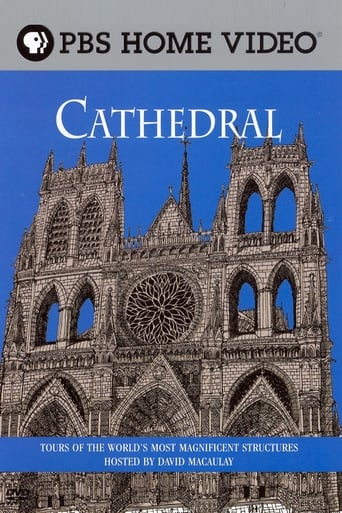
Author David Macaulay hosts CATHEDRAL, based on his award-winning book. Using a combination of spectacular location sequences and cinema-quality animation, the program surveys France's most famous churches. Travel back to 1214 to explore the design of Notre Dame de Beaulieu, a representative Gothic cathedral. The program tells period tales revealing fascinating stories of life and death, faith and despair, prosperity, and intrigue.
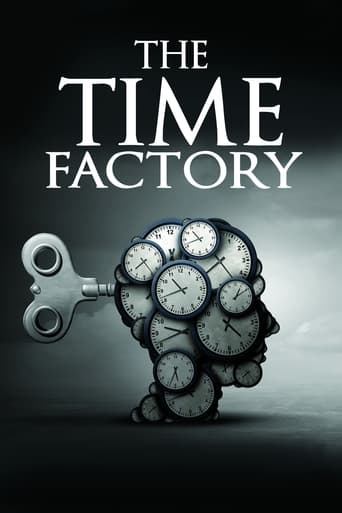
Who invented time, who invented the clock? Why 1 hour, why 60 minutes, why 60 seconds? Since prehistoric times, man has sought to measure time, to organize social and religious life, to plan food supply... Today we can surf the Internet, geolocate, pay by credit card… All our daily lives depend on time and the synchronization of clocks. The history of the invention of time and of the ways and instruments to measure it is a long story…
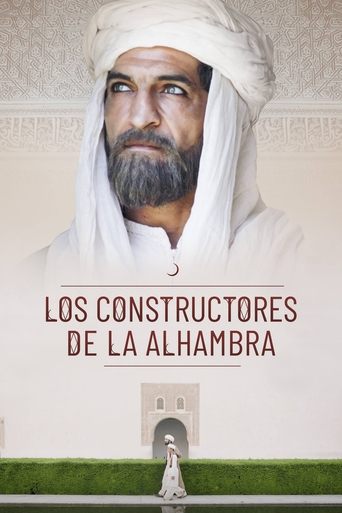
Kingdom of Granada, al-Andalus, 14th century. After recognizing that his land, always under siege, is hopelessly doomed to be conquered, Sultan Yusuf I undertakes the construction of a magnificent fortress with the purpose of turning it into the landmark of his civilization and his history, a glorious monument that will survive the oblivion of the coming centuries: the Alhambra.
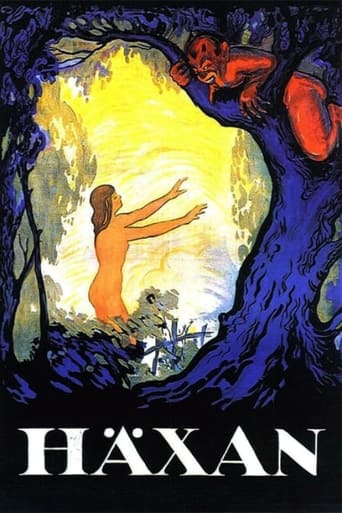
Grave robbing, torture, possessed nuns, and a satanic Sabbath: Benjamin Christensen's legendary film uses a series of dramatic vignettes to explore the scientific hypothesis that the witches of the Middle Ages suffered the same hysteria as turn-of-the-century psychiatric patients. But the film itself is far from serious-- instead it's a witches' brew of the scary, gross, and darkly humorous.
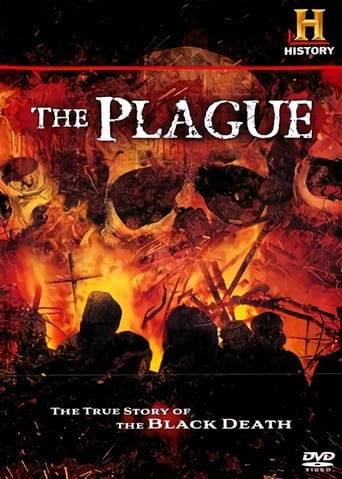
It began much like the common cold. Yet within a day fever took over black swellings the size of baseballs appeared on the neck and finally a highly contagious bloody cough quickly sealed the victim's fate. During the worst biological disaster in the history of mankind the so-called black death released an indiscriminate fury which shook the very foundations of human order. Religious hysteria began to break out and in desperation frenzied masses scrambled to find a scapegoat. When all was said and done nearly one-third of Europe's population had been completely wiped out and devastated survivors were left to contend with a world forever changed both socially and economically. In this feature-length special THE HISTORY CHANNEL-® investigates the origins of this devastating moment in human history and explores the many questions surrounding the terrifying possibility of a modern-day biological threat.
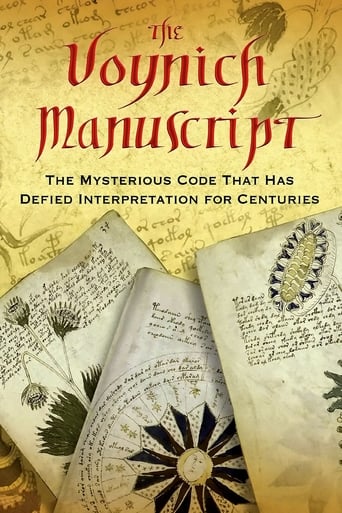
It is the world’s most mysterious manuscript. A book, written by an unknown author, illustrated with pictures that are as bizarre as they are puzzling — and written in a language that even the best cryptographers have been unable to decode. No wonder that this script even has a part in Dan Brown’s latest bestseller “The Lost Symbol”.