

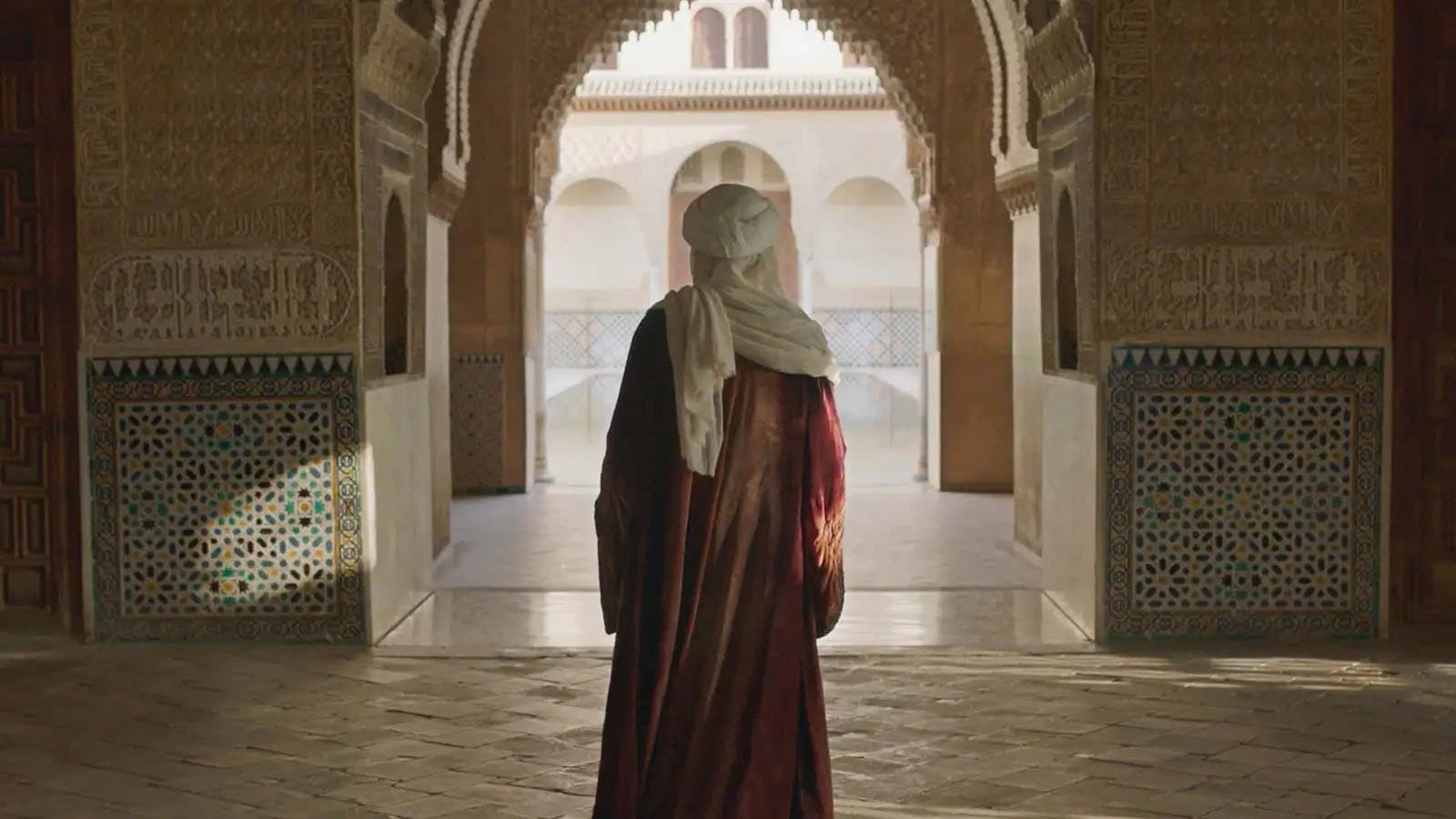

The Builders of the Alhambra
Documentary · History
Overview
Kingdom of Granada, al-Andalus, 14th century. After recognizing that his land, always under siege, is hopelessly doomed to be conquered, Sultan Yusuf I undertakes the construction of a magnificent fortress with the purpose of turning it into the landmark of his civilization and his history, a glorious monument that will survive the oblivion of the coming centuries: the Alhambra.











Amr Waked
Amr Waked
Ibn al-Khatib
Amr Waked
Ibn al-Khatib
Abdelhamid Krim
Abdelhamid Krim
Yusuf I of Granada
Abdelhamid Krim
Yusuf I of Granada

Farah Hamed
Farah Hamed
Umm al-Ḥasan
Farah Hamed
Umm al-Ḥasan

Sofian El Benaissati
Sofian El Benaissati
Ibn Zamrak
Sofian El Benaissati
Ibn Zamrak

Adil Koukouh
Adil Koukouh
Muhammad V of Granada
Adil Koukouh
Muhammad V of Granada
Similar Movies
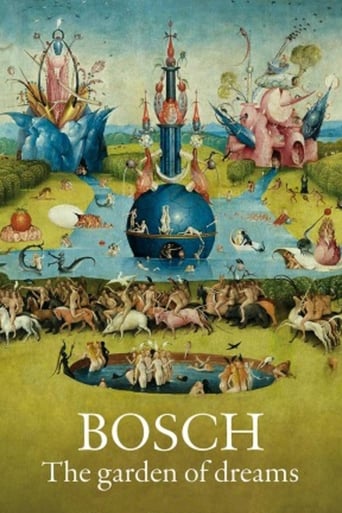
2016 marks the 500th anniversary of the death of Hieronymus Bosch. It is almost the only information about the artist of The Garden of Earthly Delights that we can put a precise date to. Bosch, the garden of dreams is a film about his most important painting and one of the most iconic paintings in the world: The Garden of Earthly Delights.
Nicknamed “Architect to the Stars,” African American architect Paul R. Williams had an incredible life. Orphaned at the age of four, Williams grew up to build mansions for movie stars and millionaires in Southern California. From the early 1920s until his retirement 50 years later, Williams was one of the most successful architects in the country. His clients included Frank Sinatra, Cary Grant, Barbara Stanwyck, William Holden, Lucille Ball and Desi Arnaz. His name is associated with icons like the Beverly Hills Hotel, the original MCA Headquarters Building and LAX Airport. But at the height of his career Paul Williams wasn’t always welcome in the restaurants and hotels he designed or the neighborhoods where he built homes, because of his race. “Hollywood’s Architect: The Paul R. Williams Story” tells the compelling, but little known story, of how he used talent and perseverance to beat the odds and create a body of work that can be found from coast to coast.
Acquired in July 1909 by art collector Wilhelm von Bode (1845-1929), director general of the Prussian Art Collections and founding director of the Kaiser-Friedrich-Museum, now the Bode-Museum, the Bust of Flora, Roman goddess of flowers, has been the subject of controversy for more than a century.
Having previously investigated the architecture of Hitler and Stalin's regimes, Jonathan Meades turns his attention to another notorious 20th-century European dictator, Mussolini. His travels take him to Rome, Milan, Genoa, the new town of Sabaudia and the vast military memorials of Redipuglia and Monte Grappa. When it comes to the buildings of the fascist era, Meades discovers a dictator who couldn't dictate, with Mussolini caught between the contending forces of modernism and a revivalism that harked back to ancient Rome. The result was a variety of styles that still influence architecture today. Along the way, Meades ponders on the nature of fascism, the influence of the Futurists, and Mussolini's love of a fancy uniform.
An intimate portrait of Christopher Alexander, a critic of modern architecture on a lifelong quest to build harmonious, livable places in today’s world. The film tells the story of two projects – a spectacular high school in Japan and an innovative homeless shelter in California. For Alexander, feelings come first, users are deeply engaged and process is paramount. We discover what happens when an architect’s unconventional method collides with standard practices in his profession.
The brothers of Yusuf (Joseph), jealous of their father Yaqub’s (Jacob's) love for him, throw him into a well. A caravan rescues Yusuf, and years later he is sold as a slave in the market of Egypt. Zulaikha, Yusuf's owner, falls in love with him, and after an incident, the Aziz of Egypt (Zulaikha’s husband) has him imprisoned. Seven years later, Yusuf is released due to his interpretation of the Pharaoh’s dream and rises to the rank of Aziz of Egypt.
Benjamina Miyar Díaz (1888-1961) led an unusual life in her house on calle del Agua in Corao, Asturias, at the foot of the Picos de Europa mountain range in northern Spain: she was a photographer and watchmaker for more than forty years, but she also fought in her own humble and heroic way against General Franco's dictatorship.