

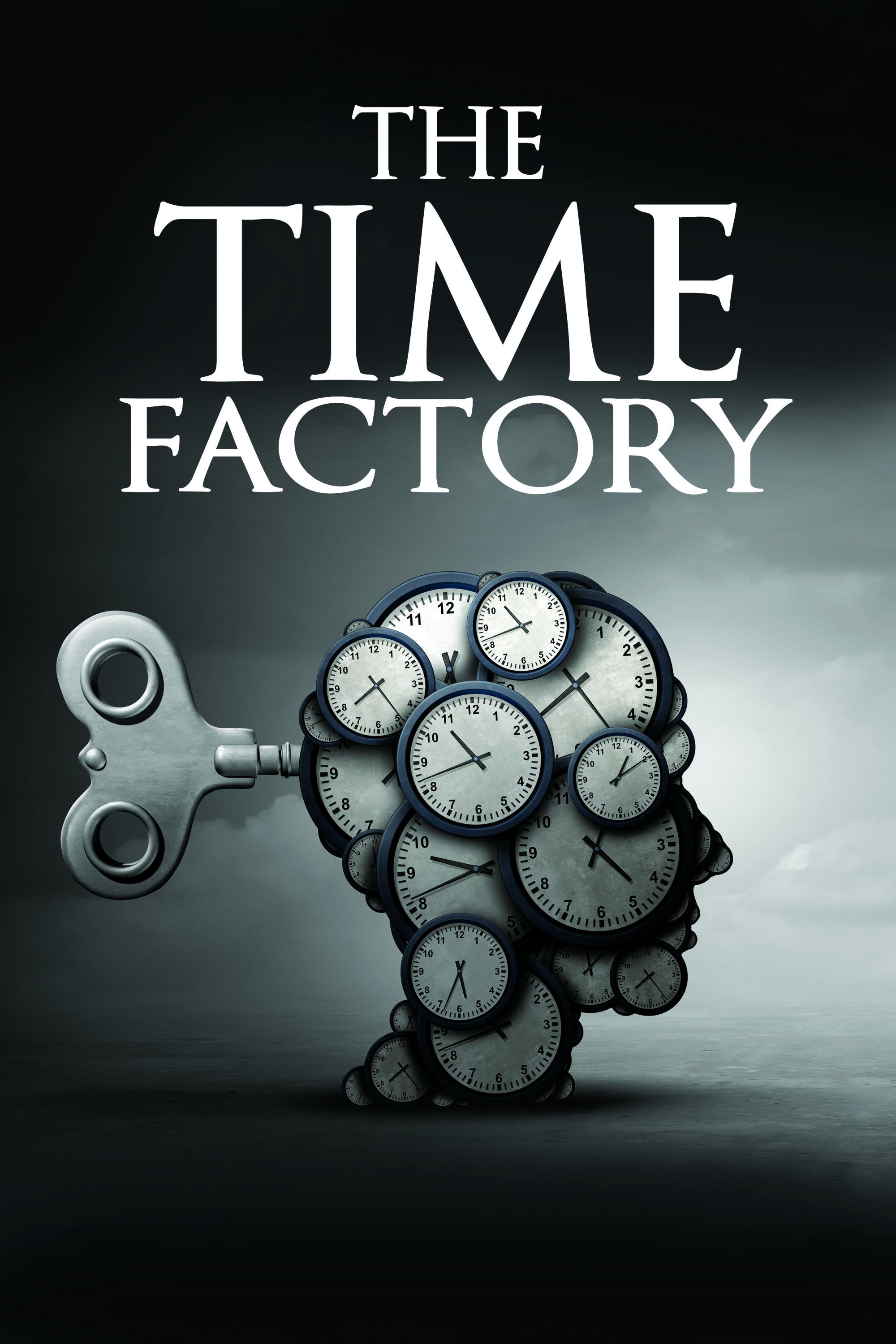
The Time Factory
Documentary · TV Movie
Overview
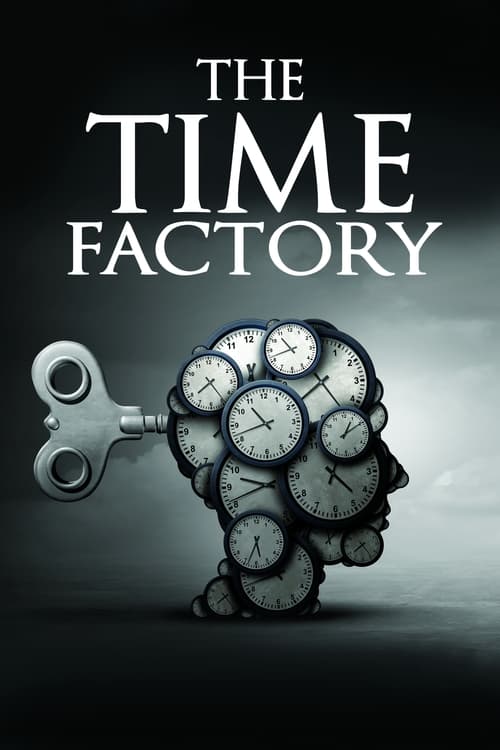
Who invented time, who invented the clock? Why 1 hour, why 60 minutes, why 60 seconds? Since prehistoric times, man has sought to measure time, to organize social and religious life, to plan food supply... Today we can surf the Internet, geolocate, pay by credit card… All our daily lives depend on time and the synchronization of clocks. The history of the invention of time and of the ways and instruments to measure it is a long story…


Nathalie Spitzer
Nathalie Spitzer
Narrator (voice)
Nathalie Spitzer
Narrator (voice)
Pacôme Delva
Pacôme Delva
Self
Pacôme Delva
Self
Denis Savoie
Denis Savoie
Self
Denis Savoie
Self
Kostas Kotsanas
Kostas Kotsanas
Self
Kostas Kotsanas
Self
Efthymios Nicolaidis
Efthymios Nicolaidis
Self
Efthymios Nicolaidis
Self
Meropi Morfouli
Meropi Morfouli
Self
Meropi Morfouli
Self
Emily Akkermans
Emily Akkermans
Self
Emily Akkermans
Self
Vanessa Haussener
Vanessa Haussener
Self
Vanessa Haussener
Self
Similar Movies
Norwegian researcher Petter Amundsen claims to have deciphered a secret code hidden in legendary playwright William Shakespeare's works that reveals a map leading to the location of certain treasures. British Shakespearean scholar Robert Crumpton embarks on a mission to prove he is spectacularly wrong. (A remake of “Shakespeare: The Hidden Truth,” including new discoveries.)
Salem, Massachusetts. A small town—with no clear governing body—became embroiled in a scandal that forever stands as one of the darkest chapters in American history. For those accused of witchcraft by their neighbors and friends, there was little chance of clearing their names; the mass paranoia that ravaged through the community took the lives of 19 innocent men and women.
Sweden, beginning of the 18th Century. Executions are popular entertainment and brothels a given. Still the executioner and the whore are both despised and shunned. The executioner became executioner against his will and the whore, only 17 years old, was forced into the brothel. This is the story of how the two meet and exchange cruelty with tenderness, guilt with innocence.
On October 11, 1424, Hussite commander Jan Žižka breathed his last breath near the castle in Přibyslav. With a little exaggeration, it can be said that he never actually died, as he immediately entered national mythology as the prototype of a brilliant military leader and a true Czech. The revolutionary events then took a slightly different course than he would have liked, but his legacy remained ever-present among the Hussites. To this day, Žižka lives on in our society, with books written and films made about him. But even after 600 years of uninterrupted interest, a significant question mark remains over the Trocnov warrior: What was he really like? A deeply religious warrior of God, or just an ordinary medieval cutthroat? Leading Czech historians, headed by Professor Petr Čornej, are attempting to answer this question.