

Rolanda Polonsky, Sculptor
Documentary
Overview
Enter the imaginative world of acclaimed sculptor Rolanda Polonsky, who had been a resident of Netherne Psychiatric Hospital in Coulsdon, Surrey for 26 years when this film was made. One of the positive aspects of her illness, described in the film as a schizophrenia, is that it "tapped a deep source of mystical vision and human feeling" which finds expression in her work.
Top Cast


Rolanda Polonsky
Rolanda Polonsky
Herself
Rolanda Polonsky
Herself
Similar Movies
From the heads of Roman Emperors to the 'blood head' of contemporary British artist Marc Quinn, the greatest figures in world sculpture have continually turned to the head to re-evaluate what it means to be human and to reformulate how closely sculpture can capture it. Witty, eclectic and insightful, this film is a journey through the most enduring subject for world sculpture, one that carves a path through politics and religion, the ancient and the modern. Actor David Thewlis has his head sculpted by three different sculptors, while the Archbishop of Canterbury Dr Rowan Williams, artist Maggi Hambling and art critic Rachel Johnston discuss art's most enduring preoccupation, ourselves.
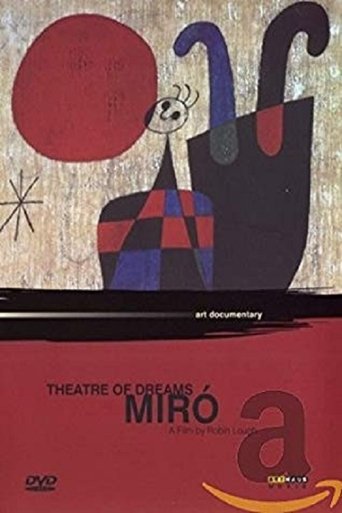
With his seemingly naïve, symbolic paintings, Joan Miró formed a new artistic language in the 20th century. Brought up in Barcelona, the painter, graphic artist and sculptor was drawn to Paris and, under the influence of the surrealists, developed his unique style and poetic imagery that unite Catalan folk art and fantastic elements. Robin Lough followed the 85-year-old Miró to theatre rehearsals and went to see him in his studio on Majorca. There he met with an amazingly creative and disciplined artist, whose visionary pictures paved the way for abstract expressionism.
THEY HEARD VOICES is a documentary film exploring the Hearing Voices Movement, chronic psychosis, and the schizophrenia label. The film is a series of wide-ranging interviews with voice hearers, medical historians, anthropologists and psychiatrists from Britain and America, presenting different people’s views. Is schizophrenia hard science or an arbitrary, catch-all term with no real meaning? What does it mean for those experiencing psychosis?
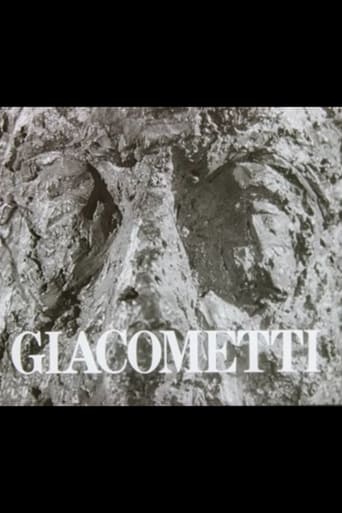
The Arts Council commissioned this film to coincide with their major retrospective of Giacometti's work at the Tate Gallery (now Tate Britain) in the summer of 1965. A similar exhibition was held concurrently at the Museum of Modern Art in New York, sealing the artist's reputation as a modern master.
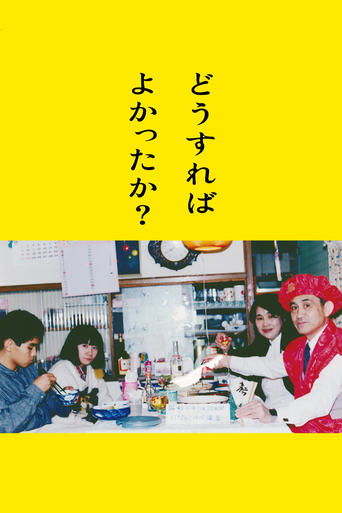
In 1983, the director’s 24-year-old sister developed symptoms of schizophrenia. Her parents couldn’t accept it—refusing to seek treatment for their sick child, they confined her to their house, to the point of even fixing a padlock on the front door to lock her in. Her younger brother, suspicious of his parents’ actions, began filming the family in an effort to openly question them. A family conflict that lasted over twenty years.

An examination of the relationship between the life and art of Maria Martins, now recognized as one of the greatest Brazilian sculptors, in addition to her engravings and texts. The film reveals the greatness of her work and her boldness when dealing directly with the feminine perspective of sexuality, a transgression that led to attacks by Brazilian critics. In parallel, her life as the wife of an important diplomat and her connection to Marcel Duchamp, in a relationship of mutual collaboration between the two artists.
Scott Panetti was tried for the capital murder of his parents-in-law on September 8, 1992 in Gillespie County, Texas. He was subsequently sentenced to death on September 22, 1995. Panetti has an extensive history of mental illness, including schizophrenia, manic depression, auditory hallucinations and paranoia. Panetti was hospitalized, both voluntarily and involuntarily for mental illness fourteen times in six different hospitals before his arrest for capital murder in 1992. Following his conviction, Panetti’s former wife, and daughter of the victims, Sonja Alvarado, filed a petition stating that Panetti never should have been tried for the crimes as he was suffering from paranoid delusions at the time of the killings.