

MERA YAAR
History · TV Movie
Overview
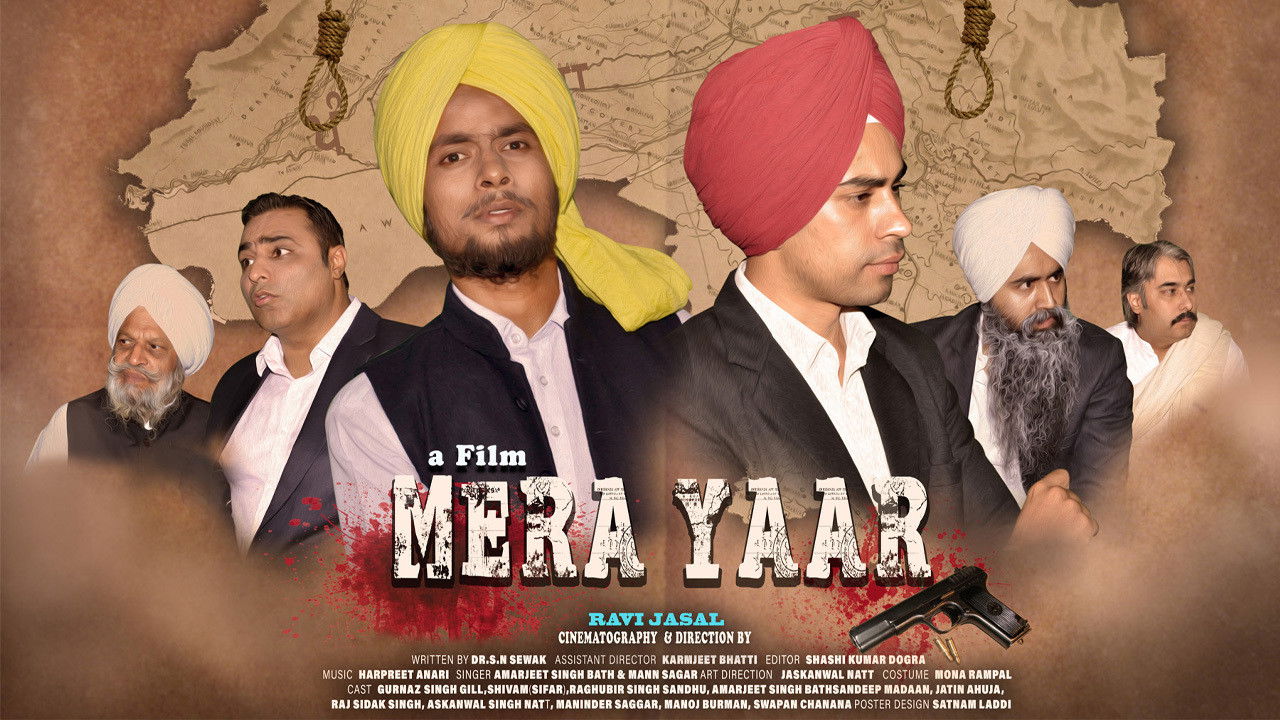
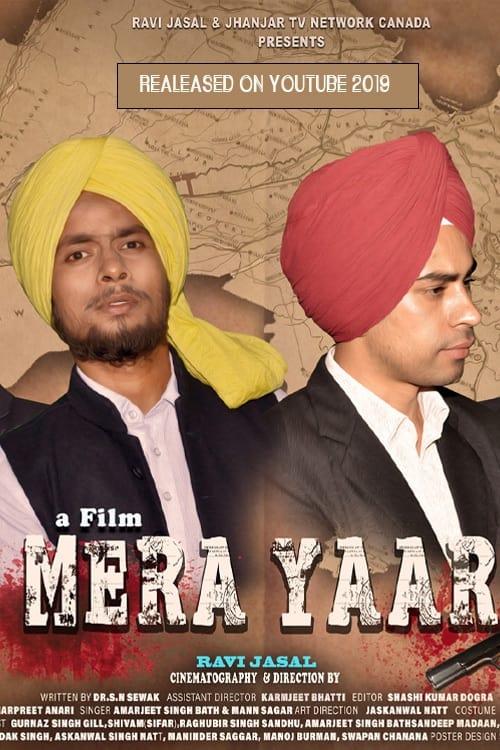
MERA YAAR" Film based On a play in Punjabi by Dr. S.N.Sewak. It deals with an important phase of the struggle for the independence of India from the colonial British rulers in the early years of the twentieth century. It depicts the role of Kartar Singh Sarabha, a young revolutionary, who had gone to the USA for higher studies, as seen through the eyes of another revolutionary of later years, Bhagat Singh, for whom he was a role model. Interestingly, Bhagat Singh kept the photograph of Kartar Singh Sarabha in his pocket because he always sought inspiration from him. Thus, Bhagat Singh is the narrator in the play which follows 'ode and episode' technique.
Top Cast
Shivam Sifar
Shivam Sifar
Bhagat Singh
Shivam Sifar
Bhagat Singh
Sandeep Madaan
Sandeep Madaan
Lala Hardiyal Singh
Sandeep Madaan
Lala Hardiyal Singh
Jatin Ahuja
Jatin Ahuja
Maulvi Barkar Ullah
Jatin Ahuja
Maulvi Barkar Ullah
Raj Sidak Singh
Raj Sidak Singh
Sohan Singh Bhakna
Raj Sidak Singh
Sohan Singh Bhakna
Jaskanwal Singh Natt
Jaskanwal Singh Natt
Giani Bhagwan Singh
Jaskanwal Singh Natt
Giani Bhagwan Singh
Maninder Saggar
Maninder Saggar
Ras Bihari Bose
Maninder Saggar
Ras Bihari Bose
Manoj Burnam
Manoj Burnam
Vishnu Ganesh Single
Manoj Burnam
Vishnu Ganesh Single
Raghuvir Singh Sandhu
Raghuvir Singh Sandhu
Badan Singh
Raghuvir Singh Sandhu
Badan Singh
Amarjeet Singh Bath
Amarjeet Singh Bath
Bakshish Singh
Amarjeet Singh Bath
Bakshish Singh
Swapan Chanana
Swapan Chanana
Parma Nand
Swapan Chanana
Parma Nand
Similar Movies
The aged rocker Igor works as a journalist and DJ at the "Radio Student" in Ljubljana. He notices that the janitor Miha works for the police, tapping the walls and observing the journalists who are critical of the regime. After a clash with his editor, Igor decides to leave for Greece by his old bike DKW from 1938, via Bosnia and Serbia. Young Rahela joins him on the trip. Traveling through Yugoslavia, Igor becomes involved in unexpected turmoil: Milosevic's "antibureaucratic revolution" starts in Serbia and Vojvodina.
In the 1950s, young revolutionary Ernesto Guevara meets Peruvian economist, intellectual and activist Hilda Gadea, whose sharp political vision and energy left a lasting mark on his path. At its core, the story delves into their romantic bond, Hilda’s journey through motherhood and the agonizing choice that ultimately shaped her life: remain by her daughter’s side or follow the call of the revolution.
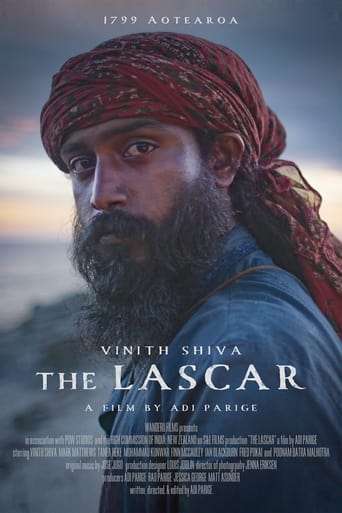
At the end of the 18th century, hundreds of Indian sailors, known as lascars, worked amongst European settlers in Aotearoa New Zealand - often under the gruesome working conditions of seal hunting gangs. The story follows a lascar, Dasa, who has been abandoned on the coast of Aotearoa NZ by the East India Company, alongside his sealing gang. When Dasa finds himself in the middle of a conflict between his abusive British superior and two Māori traders, he is faced with a choice: bend the knee or take a stand.
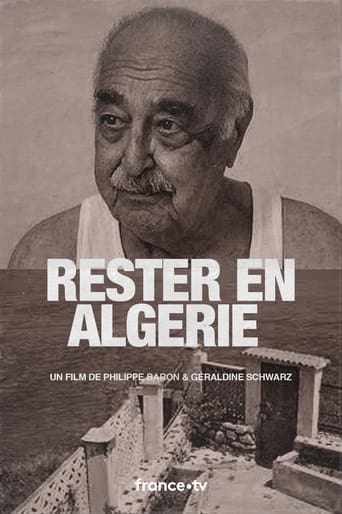
Algeria, summer 1962, eight hundred thousand French people left their native land in a tragic exodus. But 200,000 of them decided to attempt the adventure of independent Algeria. Over the following decades, political developments would push many of these pieds-noirs into exile towards France. But some never left. Germaine, Adrien, Cécile, Guy, Jean-Paul, Marie-France, Denis and Félix, Algerians of European origin, are among them. Some have Algerian nationality, others do not. Some speak Arabic, others do not. They are the last witnesses to the little-known history of these Europeans who remained out of loyalty to an ideal, a taste for adventure and an unconditional love for a land where they were born, despite all the ups and downs that the free Algeria in full construction had to go through.
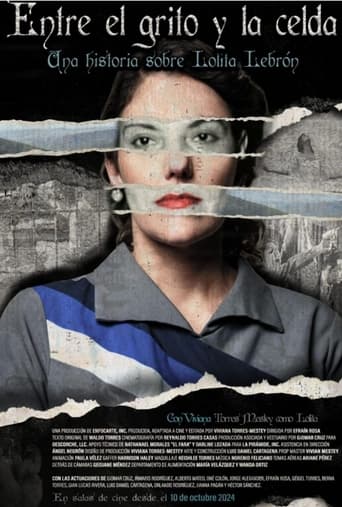
“Entre el grito y la celda” is a film adaptation of the theatrical monologue “Lolita", which has been performed locally and internationally for the past 11 years, with over 60 performances in 5 countries, 5 states in North America, and more than 40 municipalities in Puerto Rico. The story is set in late 1954, when political prisoner Lolita Lebrón had already been sentenced to 50 years in prison at the federal prison in Alderson, West Virginia, for leading an attack on the United States Congress. The film explores Lolita's life and patriotic thoughts through poetic language, intertwining her three most significant aspects: her fervent religiosity, her fight for justice from the perspective of a young woman and mother, and her patriotic bravery to risk her freedom for causes and values she firmly believed in. The movie highlights the themes of national identity and the struggles of a resilient woman who became, for many, the Mother of the Puerto Rican Nation.
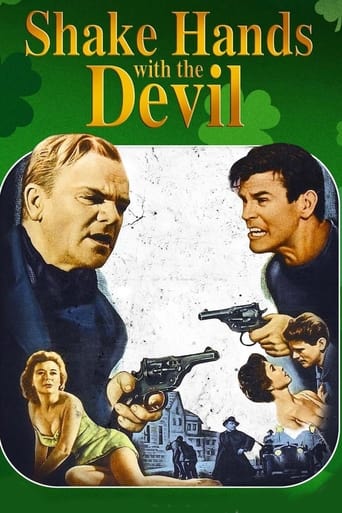
In 1921 Dublin, the IRA battles the "Black & Tans," special British forces given to harsh measures. Irish-American medical student Kerry O'Shea hopes to stay aloof, but saving a wounded friend gets him outlawed, and inexorably drawn into the rebel organization by his former professor Sean Lenihan, who has "shaken hands with the devil" and begun to think of fighting as an end in itself. Complications arise when Kerry falls for a beautiful English hostage, and the British offer a peace treaty that is not enough to satisfy Lenihan.

Fernando, a journalist, and his friend César join terrorist group MR8 in order to fight Brazilian dictatorial regime during the late sixties. César, however, is wounded and captured during a bank hold up. Fernando then decides to kidnap the American ambassador in Brazil and ask for the release of fifteen political prisoners in exchange for his life.
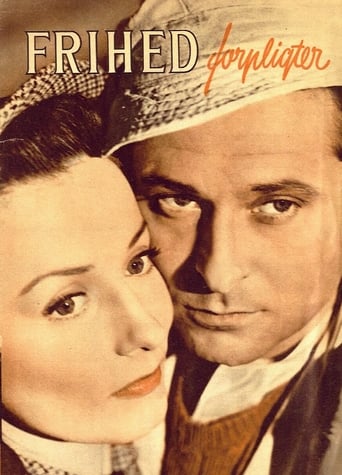
Danish social democratic propaganda film. During the Occupation, the young freedom fighter Søren had a good working relationship with a comrade in the resistance movement, despite the fact that Søren was a social democrat and his comrade a communist. After the liberation in May 1945, the differences that had been less important during the war begin to stand in Søren's way. Both his friendship with his comrade and his relationship with the wealthy Inger fall apart in the summer of liberation. But through his work in the Social Democratic Party, Søren experiences a renewed enthusiasm and resumes his relationship with Inger. Together, they actively engage in the party's work and both see it as an extension of the struggle for freedom during the occupation. Denmark's entry into NATO is particularly important.