

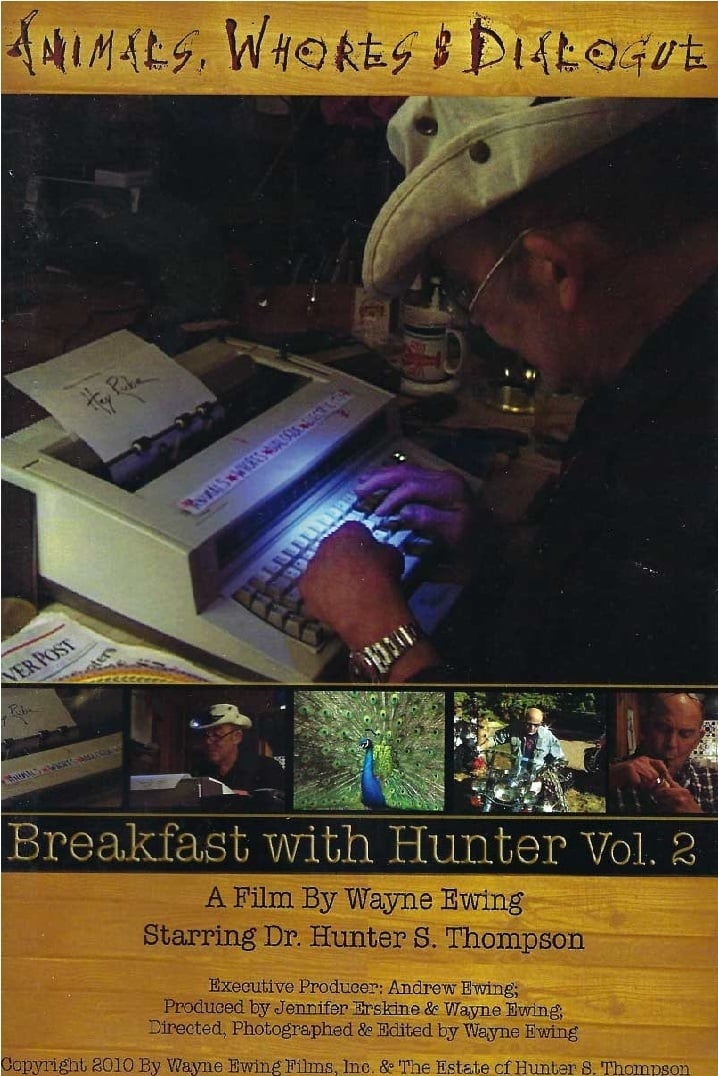
Animals, Whores & Dialogue: Breakfast with Hunter Vol. 2
Documentary
Overview
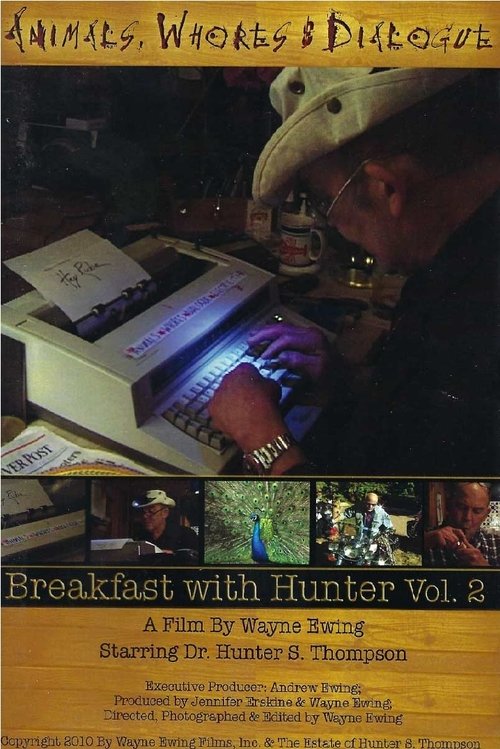
Animals, Whores & Dialogue is more than just a sequel to Wayne Ewing's 2003 Breakfast with Hunter which Variety declared to be a movie "that captures the essence of his [Hunter Thompson's] jazzy pop journalism." This new feature length documentary goes even deeper into Gonzo journalism with intimate scenes of Dr. Hunter S. Thompson at work writing, editing, and recounting the creation of classics like Hells Angels and Fear & Loathing in Las Vegas. Animals, whores & dialogue were metaphors and an element Hunter almost always wove into his writing, and the words were emblazoned on his typewriter.

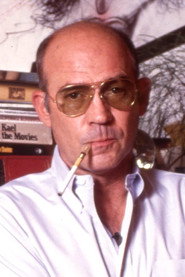
Hunter S. Thompson
Hunter S. Thompson
Self (archive footage)
Hunter S. Thompson
Self (archive footage)
Similar Movies

Armando Iannucci presents a personal argument in praise of the genius of Charles Dickens. Through the prism of the author's most autobiographical novel, David Copperfield, Armando looks beyond Dickens - the national institution - and instead explores the qualities of Dickens's work that still make him one of the best British writers. While Dickens is often celebrated for his powerful depictions of Victorian England and his role as a social reformer, this programme foregrounds the elements of his writing which make him worth reading, as much for what he tells us about ourselves in the twenty-first century as our ancestors in the nineteenth. Armando argues that Dickens's remarkable use of language and his extraordinary gift for creating characters make him a startlingly experimental and psychologically penetrating writer who demands not just to be adapted for television but to be read and read again.
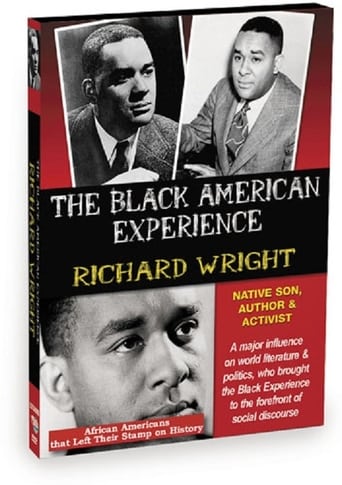
RICHARD WRIGHT was an African-American author of novels, short stories and non-fiction that dealt with powerful themes and controversial topics. Much of his works concerned racial themes that helped redefine discussions of race relations in America in the mid-20th century. Born on a plantation in Mississippi, Wright was a descendent of the first slaves who arrived in Jamestown Massachusetts. This program follows his arduous path from sharecropper to literary giant. Through authors like H.L. Menken, Sinclair Lewis, Theodore Dreiser, he discovered that literature could be used as a catalyst for social change. In 1937 Wright moved to New York and his work began to garner national attention for it's political and social commentary. Much of Wright's writing focused on the African American community and experience; his novel Native Son won him a Guggenheim Fellowship and was adapted to the Broadway stage with Orson Welles directing in 1941.
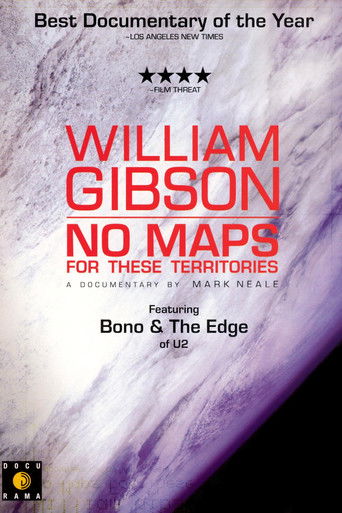
On an overcast morning in 1999, William Gibson, father of cyberpunk and author of the cult-classic novel Neuromancer, stepped into a limousine and set off on a road trip around North America. The limo was rigged with digital cameras, a computer, a television, a stereo, and a cell phone. Generated entirely by this four-wheeled media machine, No Maps for These Territories is both an account of Gibson’s life and work and a commentary on the world outside the car windows. Here, the man who coined the word "cyberspace" offers a unique perspective on Western culture at the edge of the new millennium, and in the throes of convulsive, tech-driven change.
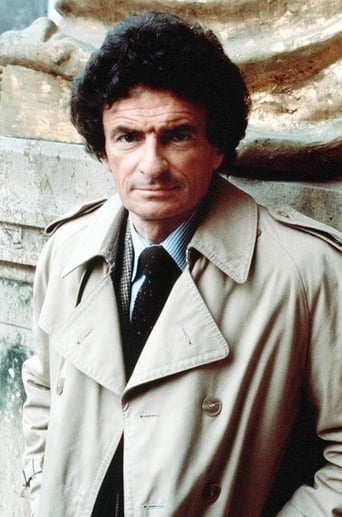
The making of Jerzy Kosinski. The BBC documentary on the life and art of enigmatic novelist Jerzy Kosinski. Through interviews with his second wife Kiki von Fraunhofer-Kosinski, friends and fellow authors, and Polish villagers who knew Kosinski when he was a child hiding from the scourge of Nazism, this program attempts to assess the verity of Kosinski's "autobiographical" fiction, the need for him to maintain a nebulous mystique about his early life, and to understand his obsession with S&M sex clubs in Manhattan during the 1970s and 1980s.
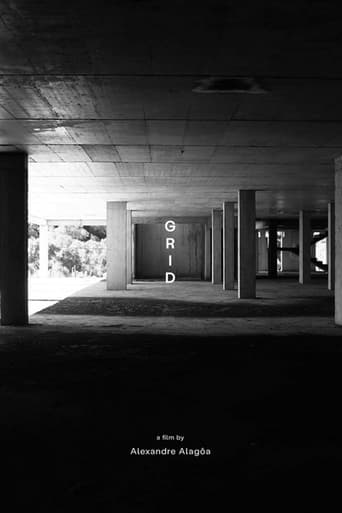
A ritual of grids, reflections and chasms; a complete state of entropy; a space that devours itself; a vertigo that destroys the gravity of the Earth; a trap that captures us inside the voids of the screen of light: «That blank arena wherein converge at once the hundred spaces» (Hollis Frampton).
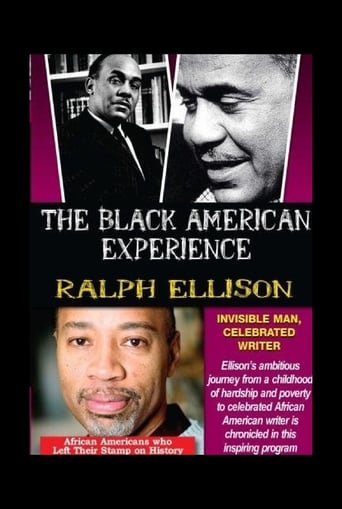
Ralph Ellison was an African-American writer and essayist, who's only novel Invisible Man (1953) gained a wide critical success. Ellison's ambitious journey from a childhood of hardship and poverty to celebrated African American writer is chronicled in this inspiring program through exclusive interviews and personal recollection.