


The Secret Centre
Documentary
Overview
The English novelist, John Le Carré discusses his life as a secret agent and writer in this documentary about spies in fact and fiction, produced for British television.

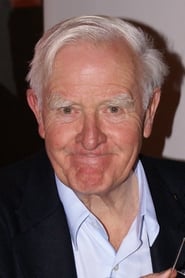
John le Carré
John le Carré
Self
John le Carré
Self
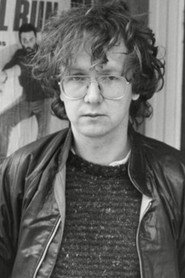
Nigel Williams
Nigel Williams
Self / Presenter
Nigel Williams
Self / Presenter
Markus Wolf
Markus Wolf
Self
Markus Wolf
Self
Similar Movies
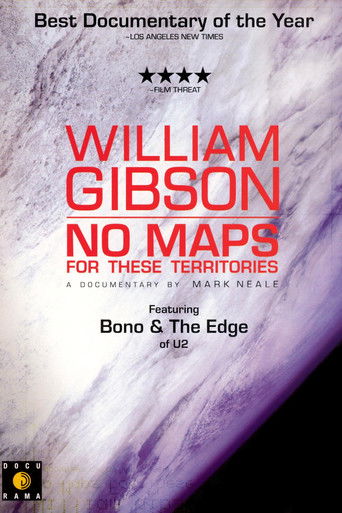
On an overcast morning in 1999, William Gibson, father of cyberpunk and author of the cult-classic novel Neuromancer, stepped into a limousine and set off on a road trip around North America. The limo was rigged with digital cameras, a computer, a television, a stereo, and a cell phone. Generated entirely by this four-wheeled media machine, No Maps for These Territories is both an account of Gibson’s life and work and a commentary on the world outside the car windows. Here, the man who coined the word "cyberspace" offers a unique perspective on Western culture at the edge of the new millennium, and in the throes of convulsive, tech-driven change.
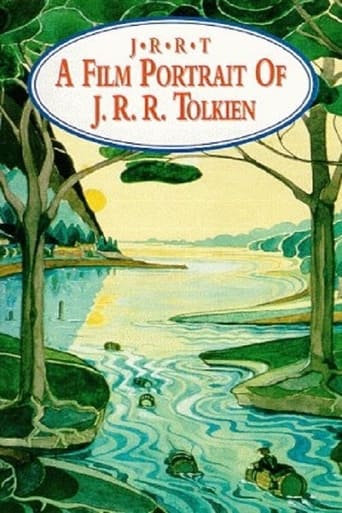
J.R.R.T.: A Study of J.R.R. Tolkien is a 1992 documentary, narrated by Judi Dench, produced to celebrate the centenary of J.R.R. Tolkien's birth. It is sometimes called "J.R.R. Tolkien: A Portrait" and "J.R.R. Tolkien - An Authorized Film Portrait". It features archive footage and audio recordings of J.R.R. Tolkien, and interviews with three of his children Priscilla, John, and Christopher. It also includes interviews with Baillie Tolkien, Robert Murray, Queen Margrethe II of Denmark, Rayner Unwin, Tom Shippey, and Verlyn Flieger.
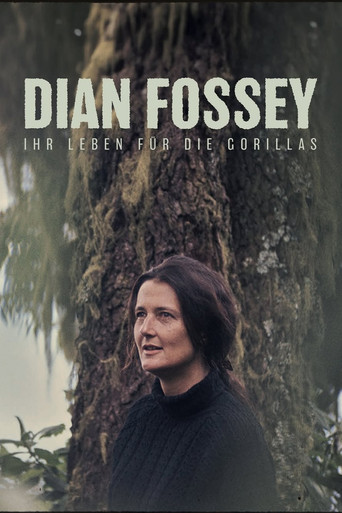
She was the first to study gorillas in their natural environment: the high mountains of Rwanda, where she settled in 1967. For nearly twenty years, Dian Fossey lived with the gorillas, observed their behavior, and changed the way people viewed them. Her relentless fight against poaching prevented the species from becoming extinct. But in December 1985, the primatologist was murdered, and the mystery surrounding her death remains unsolved. Former colleagues, scientists, and biographers shed light on the impact of her work, but also on the darker sides of her personality and her uncompromising commitment.
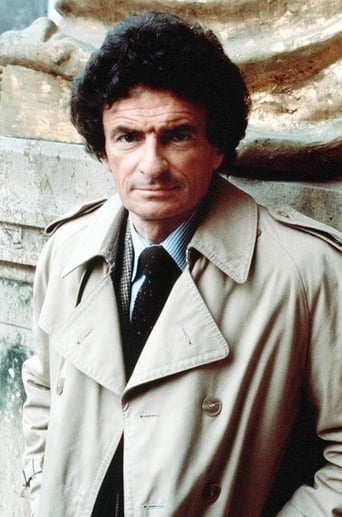
The making of Jerzy Kosinski. The BBC documentary on the life and art of enigmatic novelist Jerzy Kosinski. Through interviews with his second wife Kiki von Fraunhofer-Kosinski, friends and fellow authors, and Polish villagers who knew Kosinski when he was a child hiding from the scourge of Nazism, this program attempts to assess the verity of Kosinski's "autobiographical" fiction, the need for him to maintain a nebulous mystique about his early life, and to understand his obsession with S&M sex clubs in Manhattan during the 1970s and 1980s.
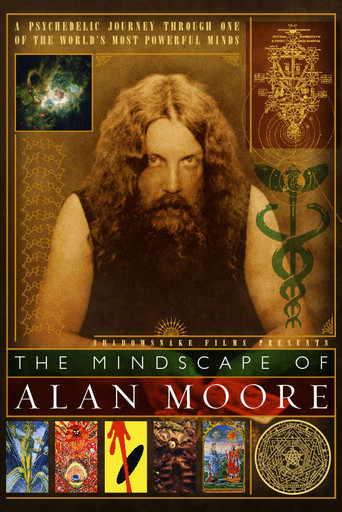
The Mindscape of Alan Moore is a psychedelic journey into one of the world's most powerful minds; chronicling the life and work of Alan Moore, author of several acclaimed graphic novels, including "From Hell," "Watchmen" and "V for Vendetta." It is the only feature film production on which Alan Moore has collaborated, with permission to use his work. Alan Moore presents the story of his development as an artist, starting with his childhood and working through to his comics career and impact on that medium, and his emerging interest in magic.
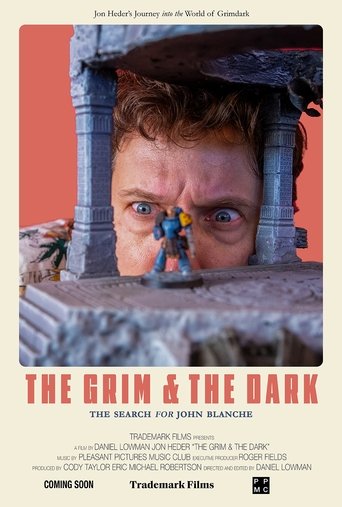
When looking for a gift for his kid, Jon Heder (Napoleon Dynamite) is introduced to the world of Grimdark. In that moment he starts down a journey that will take him all over the world and through interviews with prominent Grimdark authors, game developers, and dedicated fans, he delves into the themes that define the genre—all in an effort to find the man who started it all: John Blanche.

Armando Iannucci presents a personal argument in praise of the genius of Charles Dickens. Through the prism of the author's most autobiographical novel, David Copperfield, Armando looks beyond Dickens - the national institution - and instead explores the qualities of Dickens's work that still make him one of the best British writers. While Dickens is often celebrated for his powerful depictions of Victorian England and his role as a social reformer, this programme foregrounds the elements of his writing which make him worth reading, as much for what he tells us about ourselves in the twenty-first century as our ancestors in the nineteenth. Armando argues that Dickens's remarkable use of language and his extraordinary gift for creating characters make him a startlingly experimental and psychologically penetrating writer who demands not just to be adapted for television but to be read and read again.