

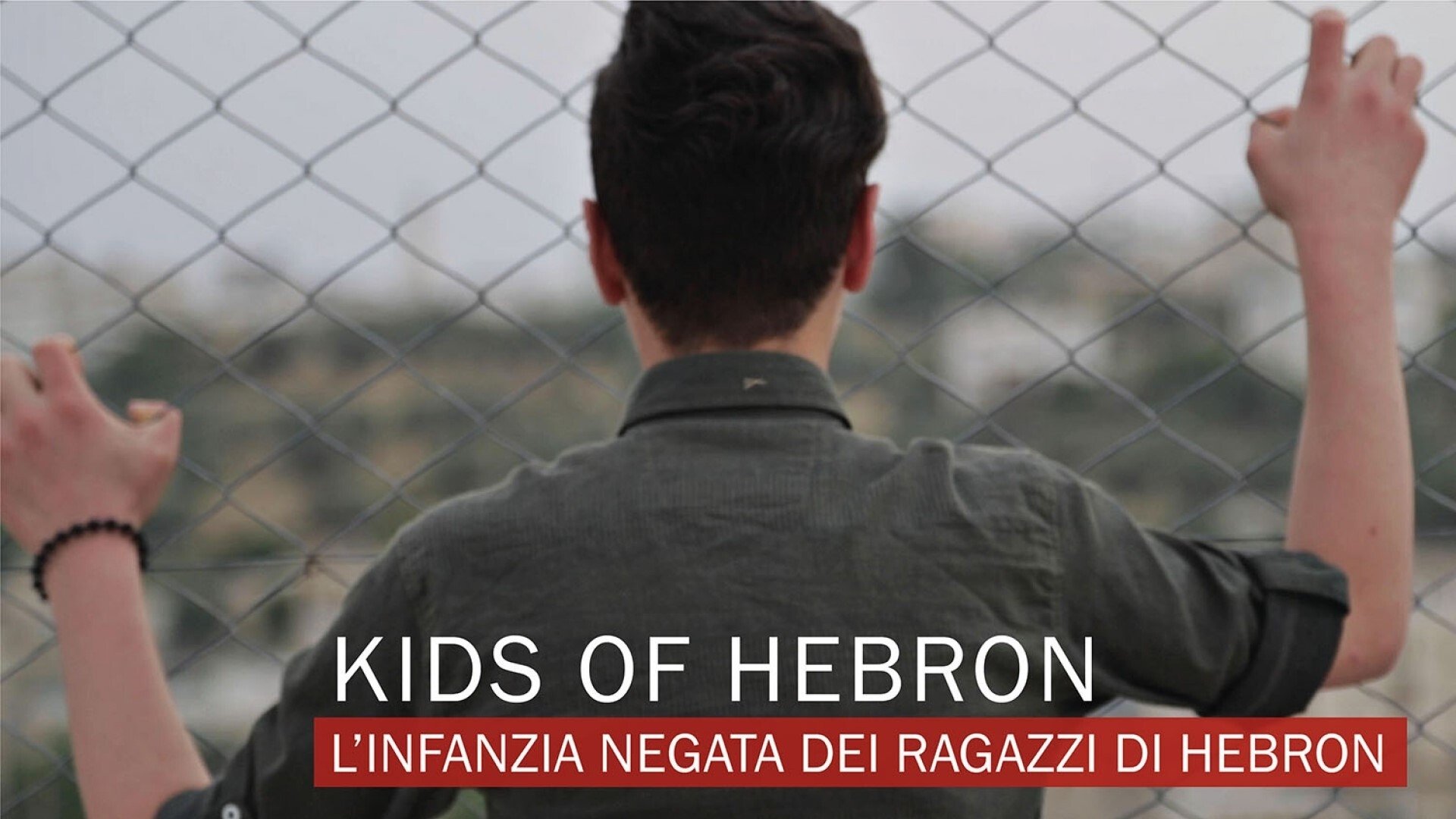
I ragazzi di Hebron
Documentary




No cast information.
Similar Movies
How US politicians and diplomats, over the past 25 years, have come close to achieving something almost impossible: securing peace between the State of Israel and its Arab and like-minded neighbors, mired in a struggle both dialectical and violent since the early 20th century, due to historical and religious reasons, entrenched offenses and prejudices, and the invisible and tyrannical hand of third countries' geopolitical interests in the area.
Piel dolor (Skin Pain) explains how power is structurally sustained in violence. Its nature and the relationships it establishes in society are based more on the imposition and use of force than on building consensus, dialogue, and respect for diversity. In that sense, power is a behavior that seeks dominance through force and man as a gender, becomes an instrument of violence that is exercised against the weakest. Extinguishing the socially constructed violence means eliminating the current power and its historical sustenance, questioning the source of origin, religion, ideology, the system and its values. Is that utopia possible?
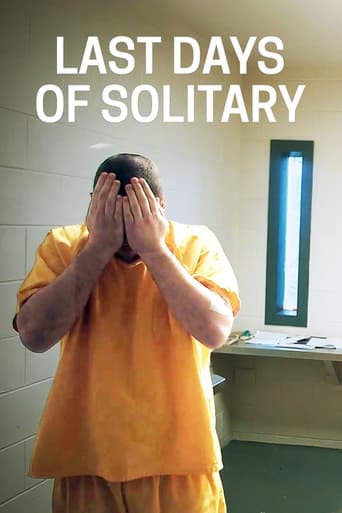
In 2011, Maine State Prison launched a pioneering reform program to scale back its use of solitary confinement. Bafta and Emmy-winning film-maker Dan Edge and his co-director Lauren Mucciolo were given unprecedented access to the solitary unit - and filmed there for more than three years. The result is an extraordinary and harrowing portrait of life in solitary - and a unique document of a radical and risky experiment to reform a prison. The US is the world leader in solitary confinement. More than 80,000 American prisoners live in isolation, some have been there for years, even decades. Solitary is proven to cause mental illness, it is expensive, and it is condemned by many as torture. And yet for decades, it has been one of the central planks of the American criminal justice system.
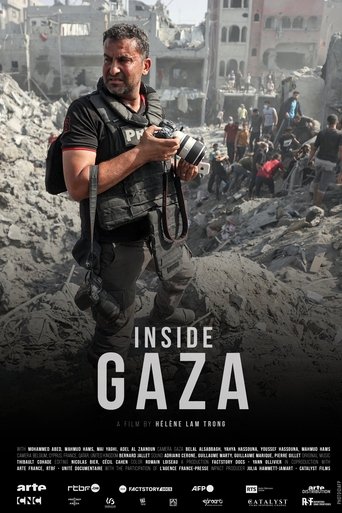
Free access to the Gaza Strip has remained closed to international journalists since the war began on October 7, 2023. AFP's permanent reporters are among the few professional witnesses to have experienced this conflict from the inside. They have watched, filmed, photographed, testified, all whilst struggling to ensure their own survival. From their exile, they recount this war, which is the deadliest ever recorded for members of the press.
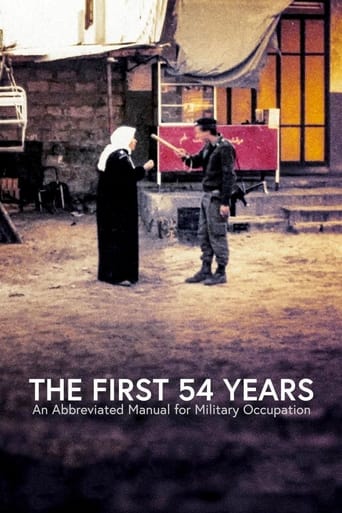
An exhaustive explanation of how the military occupation of an invaded territory occurs and its consequences, using as a paradigmatic example the recent history of Israel and the Palestinian territories, the West Bank and the Gaza Strip, from 1967, when the Six-Day War took place, to the present day; an account by filmmaker Avi Mograbi enriched by the testimonies of Israeli army veterans.
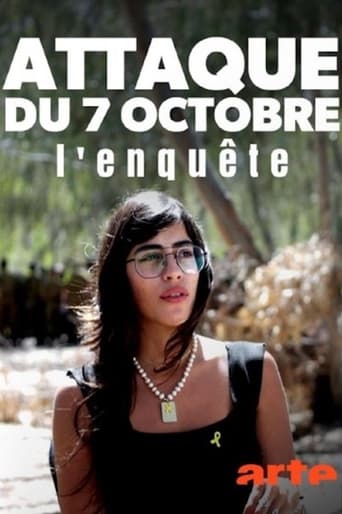
October 7, 2023: Hamas terrorists attack Israel, murder and take hostages. Israel reacts with severity. The goal: the destruction of Hamas. But with the war in Gaza, Israel is awakening the great trauma of the Palestinians: the expulsion of 1948. How can the lack of empathy on both sides be explained?
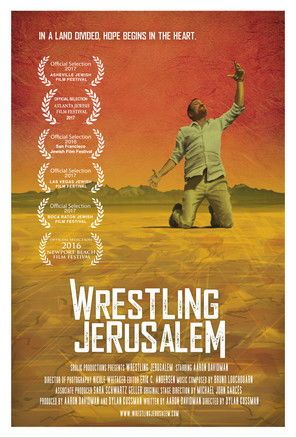
Writer-actor Aaron Davidman embodies seventeen different characters in and around the sacred city of Jerusalem as he takes us on an eye-opening journey into the heart of the Israeli-Palestinian story. Exploring universal questions of identity and human connection, the film is about one man's effort to embrace a multiplicity of conflicting viewpoints, chronicling a brave exploration of the complex humanity at the heart of one of the world's most troubling conflicts.
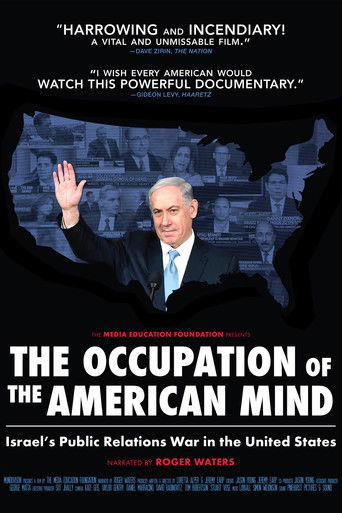
Over the past few years, Israel's ongoing military occupation of Palestinian territory and repeated invasions of the Gaza strip have triggered a fierce backlash against Israeli policies virtually everywhere in the world—except the United States. This documentary takes an eye-opening look at this critical exception, zeroing in on pro-Israel public relations efforts within the U.S.
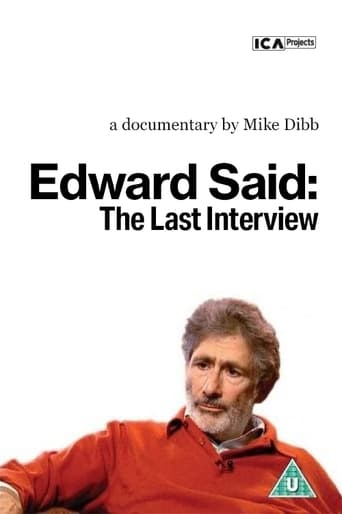
Edward Said, Professor of English & Comparative Literature at Columbia University, was a prominent literary critic of the late 20th century and a leading spokesperson for the Palestinian cause in the US. Born to a Palestinian family in Al-Quds (Jerusalem) in 1935, he and his family were dispossessed in 1948 and settled in Cairo. Educated in the US, he lived in New York for many years. Said was a member of the Palestine National Council. After resigning from the PNC in 1991, Said wrote critically about the post-Oslo peace process, the political failures of Yasser Arafat and the PLO. Said was diagnosed with leukemia in 1991 and struggled with the disease while continuing to write and teach. He stopped giving interviews but made an exception less than a year before his death in 2003, speaking about his illness, work, Palestine, politics, life, and education. The last interview is the final testament of this passionately committed intellectual.