

The Damned Of The Earth
Drama
Overview
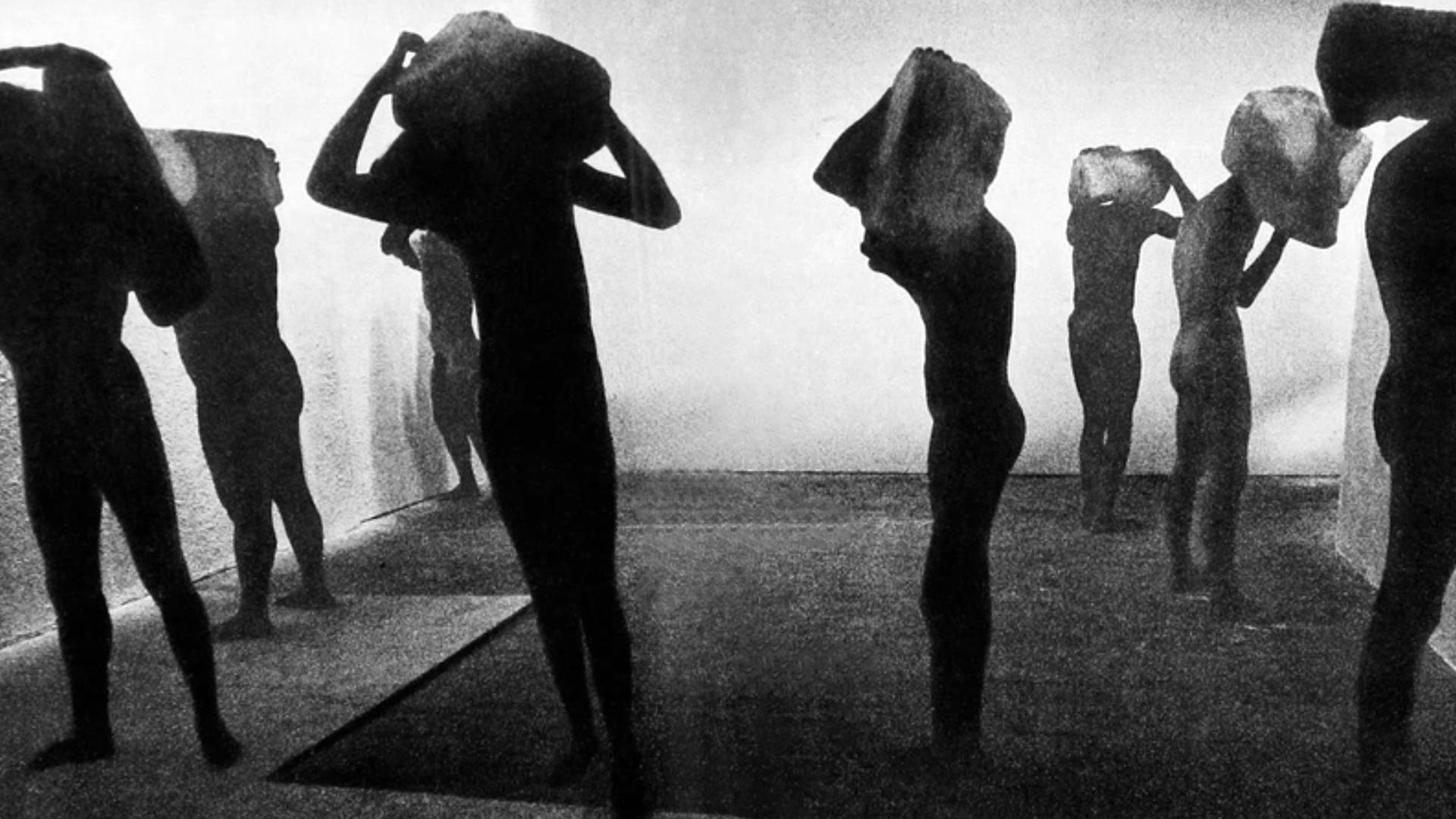
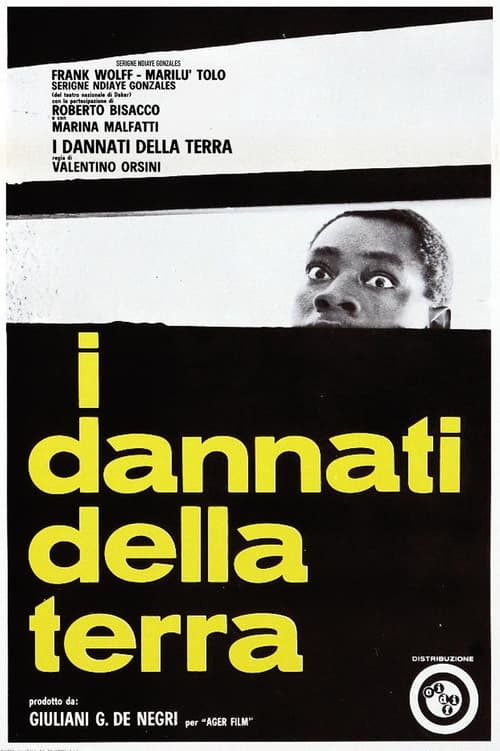
Upon his death, a young African director, Abramo Malonga, bequeathed his first and last unfinished film to his former teacher, the Italian director Fausto Morelli. Morelli, who after seeing the work, is confronted with a confusing, complex and, in part, incomprehensible work. Helped by the young widow of Abramo Malonga and by the notes left by his deceased friend, and again by his personal memories, the Italian director attempts to reconstruct and complete the film. Fausto's work progresses with difficulty, not only because of the problems the film poses for him, but because of the problems that arise in his daily life. After a long crisis, after which he returns to Pisa with his former party companions and abandons himself to love and his own solitude, Fausto takes up the work of his African friend, closing it with a final invention, in which , with a bold metaphor, has refigured the human condition of our time.





Frank Wolff
Frank Wolff
Fausto
Frank Wolff
Fausto

Marilù Tolo
Marilù Tolo
Adriana
Marilù Tolo
Adriana
Serigne Ndiaye Gonzales
Serigne Ndiaye Gonzales
Abramo
Serigne Ndiaye Gonzales
Abramo

Carlo Cecchi
Carlo Cecchi
Ingardo
Carlo Cecchi
Ingardo

Marina Malfatti
Marina Malfatti
Luciana
Marina Malfatti
Luciana

Roberto Bisacco
Roberto Bisacco
Roberto Bisacco
Elisa Kadigia Bove
Elisa Kadigia Bove
Elisa Kadigia Bove
Similar Movies
This excellent feature-length documentary - the story of the imperialist colonization of Africa - is a film about death. Its most shocking sequences derive from the captured French film archives in Algeria containing - unbelievably - masses of French-shot documentary footage of their tortures, massacres and executions of Algerians. The real death of children, passers-by, resistance fighters, one after the other, becomes unbearable. Rather than be blatant propaganda, the film convinces entirely by its visual evidence, constituting an object lesson for revolutionary cinema.

The story of two teenage extraterrestrial refugees from the planet Pluto, who escape to Earth after their planet is destroyed by the US government, as it was deemed “insignificant.” For many years prior, tensions between the Plutonians and the Earthlings had seen a steady incline, as Pluto held camps where Earthlings were experimented on and tortured. The two aliens make their crash landing, undertake human form and undergo the aliases “Hugh Jainus” and “E. Rection”. In an effort to wage revenge on the nation, with their brainwashed sidekick Potator under their wing, the trio hijack television stations worldwide and broadcast mind-numbingly stupid and ridiculous, yet insane and often violent programs to dumb down and distract the nation’s citizens from their devious plans. The tube tells the story...

Frantz Fanon, a French psychiatrist from Martinique, has just been appointed head of department at the psychiatric hospital in Blida, Algeria. His methods contrast with those of the other doctors in a context of colonization. A biopic in the heart of the Algerian war where a fight is waged in the name of Humanity.
“La Zerda and the songs of oblivion” (1982) is one of only two films made by the Algerian novelist Assia Djebar, with “La Nouba des femmes du mont Chenoua” (1977). Powerful poetic essay based on archives, in which Assia Djebar – in collaboration with the poet Malek Alloula and the composer Ahmed Essyad – deconstructs the French colonial propaganda of the Pathé-Gaumont newsreels from 1912 to 1942, to reveal the signs of revolt among the subjugated North African population. Through the reassembly of these propaganda images, Djebar recovers the history of the Zerda ceremonies, suggesting that the power and mysticism of this tradition were obliterated and erased by the predatory voyeurism of the colonial gaze. This very gaze is thus subverted and a hidden tradition of resistance and struggle is revealed, against any exoticizing and orientalist temptation.
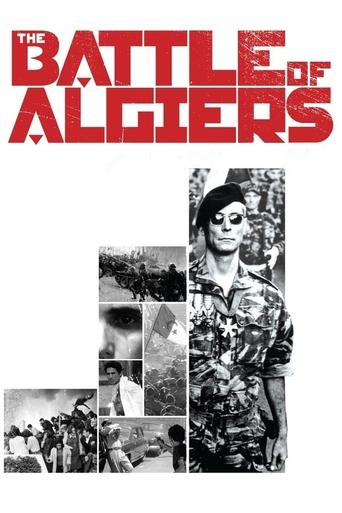
Paratrooper commander Colonel Mathieu, a former French Resistance fighter during World War II, is sent to Algeria to reinforce efforts to squelch the uprisings of the Algerian War. There he faces Ali la Pointe, a former petty criminal who, as the leader of the Algerian Front de Liberation Nationale, directs terror strategies against the colonial French government occupation. As each side resorts to ever-increasing brutality, no violent act is too unthinkable.
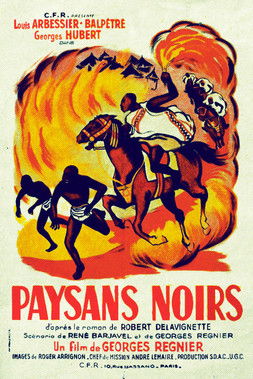
In Ivory Coast, an administrator is appointed to replace a colleague who has just been assassinated. The newly appointed administrator, Guillon, clashes with a powerful elite that extorts money from farmers who refuse to cultivate the land. A peanut processing plant, nearing completion, unfolds against a backdrop of ethnic rivalries and resistance from the rural population to the changes imposed by the colonial regime, which is striving to modernize traditional agriculture to demand increased production. Aided by a doctor and an engineer, Guillon succeeds in restoring the confidence of the Black farmers after thwarting the schemes of those who dared to stand in his way.

Madame Rosa lives in a sixth-floor walkup in the Pigalle; she's a retired prostitute, Jewish and an Auschwitz survivor, a foster mom to children of other prostitutes. Momo is the oldest and her favorite, an Algerian lad whom she raises as a Muslim. He asks about his parents; she answers evasively. As she ages and takes fewer children, Momo must do more for her; as money is tight, he tries to earn pennies on the street with a puppet. He's a beautiful man-child, and Madame Rosa makes him promise never to sell himself or become a pimp. A film editor, Nadine, befriends him, and his father appears as well. Madame Rosa reaches her last days in fear of hospitals, and Momo must act.
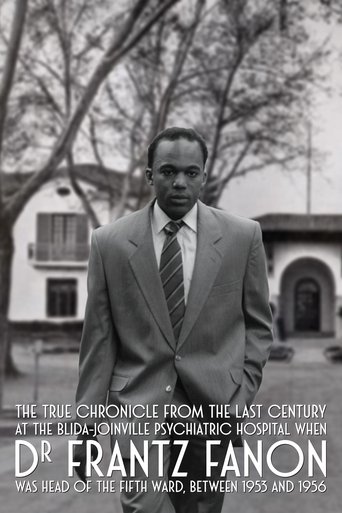
1953, colonized Algeria. Fanon, a young black psychiatrist is appointed head doctor at the Blida-Joinville Hospital. He was putting his theories of ‘Institutional Psychotherapy’ into practice in opposition to the racist theories of the Algies School of Psychiatry, while a war broke out in his own wards.