

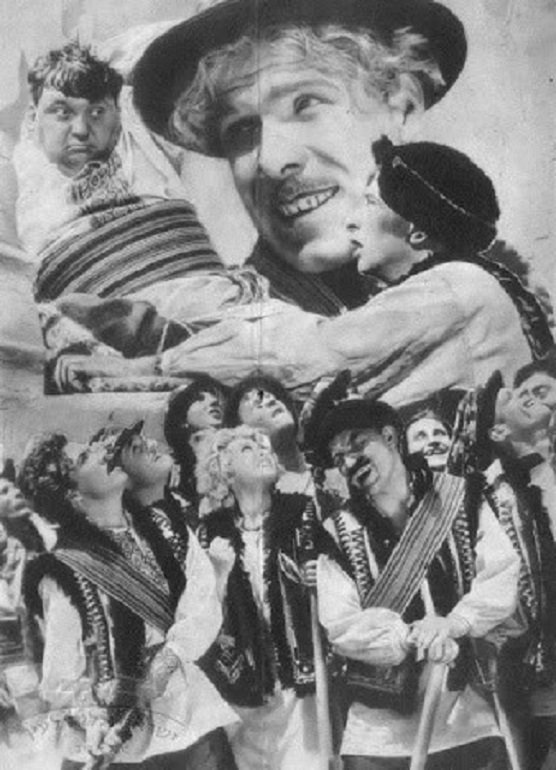
Maryjka
History
Overview
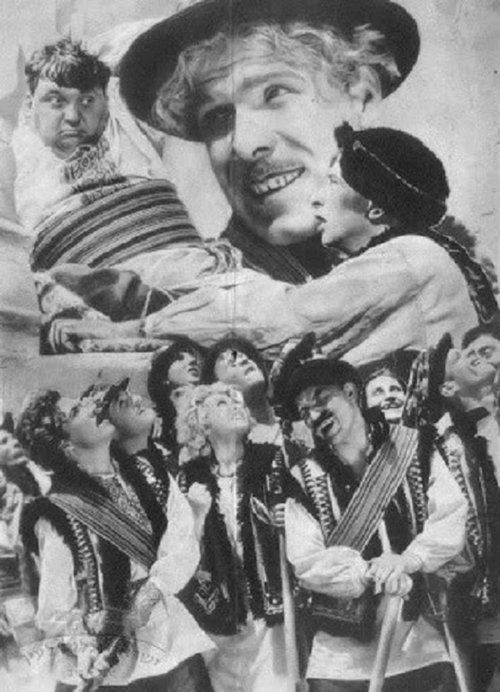
In a mountain village one woman's beauty and popularity with the men incurs the wrath of the others. AKA The Stray.



Ina Benita
Ina Benita
Ina Benita
Zbigniew Staniewicz
Zbigniew Staniewicz
Zbigniew Staniewicz
Zygmunt Chmielewski
Zygmunt Chmielewski
Zygmunt Chmielewski
Similar Movies

As Carpathian legend has it, Oleksa Dovbush was a heroic outlaw with excellent fighting skills and a gift to predict the future. He was left an orphan as a small boy after a local lord murdered Oleksa's mother. After spending his childhood in exile in the mountains, he returned as a grown man to avenge his mother's death. Oleksa gathered followers to begin a crusade against the lord, but destiny made other plans for him.

In the Carpathian Mountains of 19th-century Ukraine, love, hate, life and death among the Hutsul people are as they’ve been since time began. Ivan is drawn to Marichka, the beautiful young daughter of the man who killed his father. But fate tragically decrees that the two lovers will remain apart.
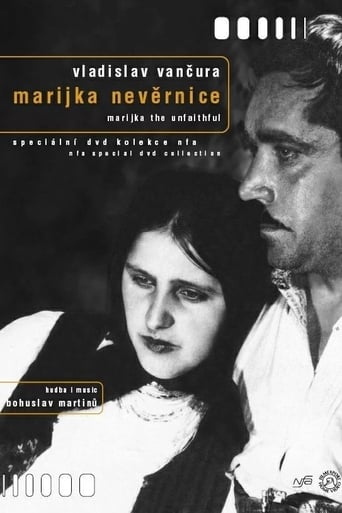
“The Carpathians are medieval!” one character bellows, and this tale of the tree-chopper Petro, his faithless wife Marijka, and various scheming businessmen and foremen does little to disprove the assertion. Interestingly filmed with a nonprofessional cast recruited from the region, Faithless Marijka may have a neorealist conceit, but its direction is utterly futuristic, filled with the lightning-fast montage techniques and low-angle camera of the Soviet avant-garde (along with its invigorating agitprop).
The three Cheremiskyi brothers live in the mountains where they don't dream of owning an iPhone7, because to earn half of its price, they have to go to bed at midnight and get up at 3 a.m. all summer long, milk a hundred sheep, make cheese, wash cauldrons... This is the usual daily routine of 9-year-old Sashko Cheremiskyi, who earned as much as 3,000 hryvnias from his "old stall" this summer. But with this money he did not buy a bike or a tablet, but paid shepherds to graze his four sheep, bought a backpack and notebooks for September 1, and donated the rest... to repair the school. His brother Yurko, at 10 years old, bakes bread, cooks borscht and braids his younger sister's hair. The eldest, 12-year-old Vasya, dreams of becoming a reporter or cameraman, but first he wants to see the big city. The three boys don't go to school because they have to chop wood for the winter. Otherwise, their large family will freeze to death...
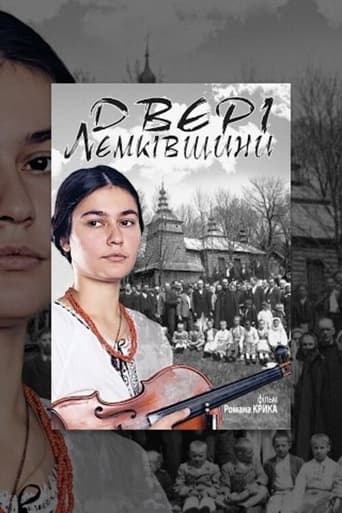
Dedicated to the Lemkos, who through their extraordinary love for the country overcame the trauma of massive deportations during the "Operation Vistula" and managed to return to their homeland. This film is a story about the fate of people from the annihilated Długie village, and it talks about Małastów village, where Lemkos, originally the dominant group, were transformed into a defenceless minority. Today, with admirable perseverance, they continue to fight for their rights. Above all, this is a film about love, which is the most precious thing.
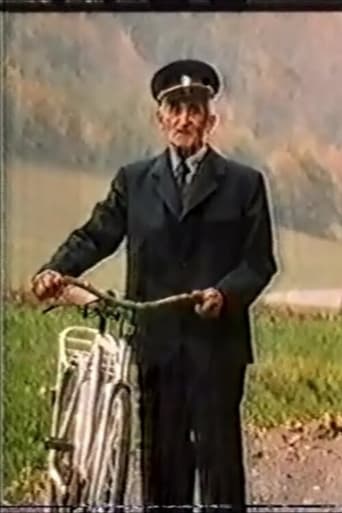
The documentary film is not a search for the survived truth of the inhabitants of the Ruthenian village Ladomírová. It captures their subjective memories, often frozen in time and in everyday life. Only strong impressions of sadness, joy, suffering, which reflect the great history of the 20th century. There is no truth about the past, it is only the human mind that actually makes morytates - bloody enlightening stories and legends.
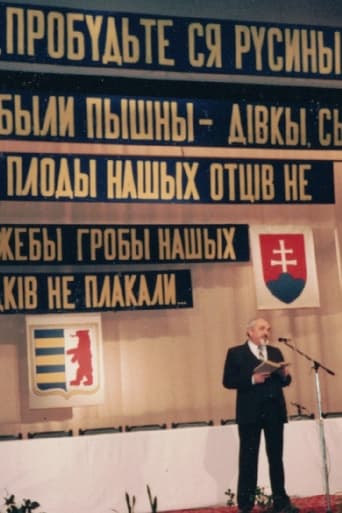
The 20th century was the roughest in history for the Carpatho-Rusyns of Central Europe. After World War II, when they were declared Ukrainians by the new Communist regimes in every country where they live, Carpatho-Rusyns in Czechoslovakia and elsewhere became extinct overnight -- and this was their existence for more than 50 years. But with the 1989 Velvet Revolution, led by the playwright and former dissident Václav Havel, Carpatho-Rusyn ethnicity revived in every country - including the United States. This is the story of that revival.