

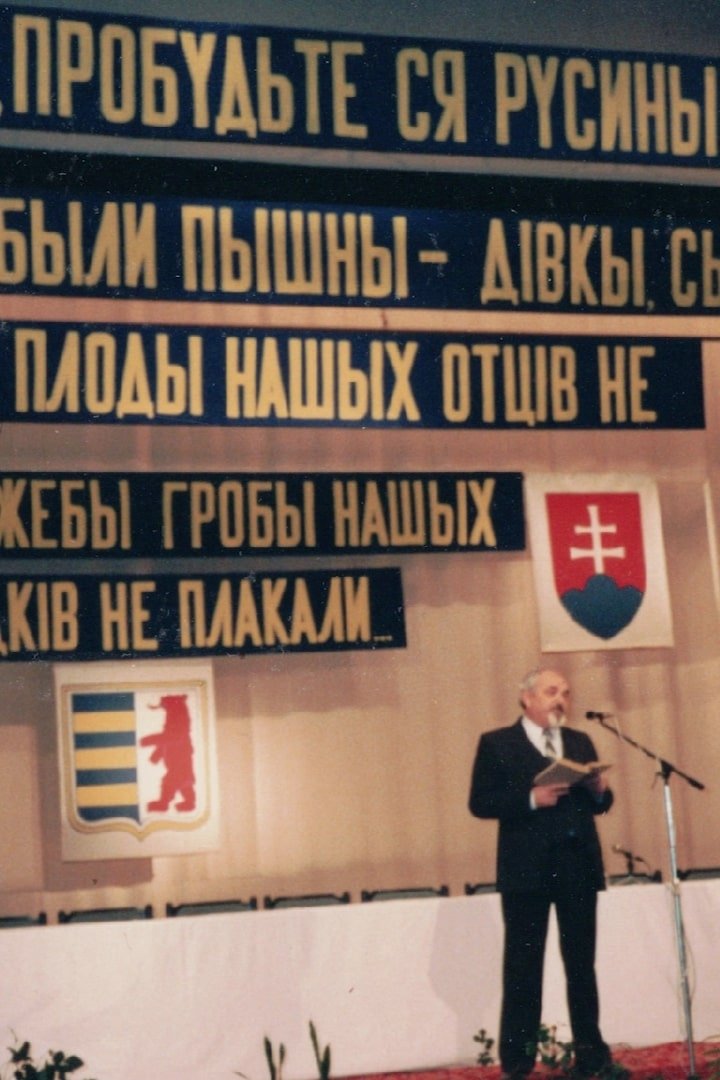
The Resurrection of a Nation
Documentary
Overview
The 20th century was the roughest in history for the Carpatho-Rusyns of Central Europe. After World War II, when they were declared Ukrainians by the new Communist regimes in every country where they live, Carpatho-Rusyns in Czechoslovakia and elsewhere became extinct overnight -- and this was their existence for more than 50 years. But with the 1989 Velvet Revolution, led by the playwright and former dissident Václav Havel, Carpatho-Rusyn ethnicity revived in every country - including the United States. This is the story of that revival.




No cast information.
Similar Movies
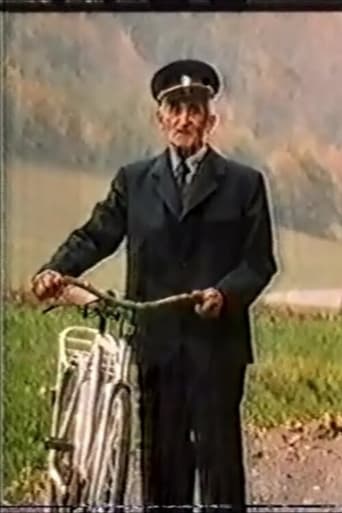
The documentary film is not a search for the survived truth of the inhabitants of the Ruthenian village Ladomírová. It captures their subjective memories, often frozen in time and in everyday life. Only strong impressions of sadness, joy, suffering, which reflect the great history of the 20th century. There is no truth about the past, it is only the human mind that actually makes morytates - bloody enlightening stories and legends.
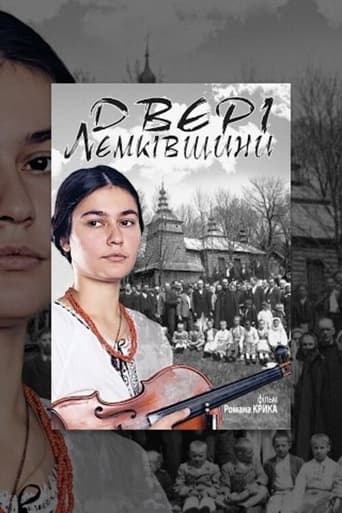
Dedicated to the Lemkos, who through their extraordinary love for the country overcame the trauma of massive deportations during the "Operation Vistula" and managed to return to their homeland. This film is a story about the fate of people from the annihilated Długie village, and it talks about Małastów village, where Lemkos, originally the dominant group, were transformed into a defenceless minority. Today, with admirable perseverance, they continue to fight for their rights. Above all, this is a film about love, which is the most precious thing.

In the Carpathian Mountains of 19th-century Ukraine, love, hate, life and death among the Hutsul people are as they’ve been since time began. Ivan is drawn to Marichka, the beautiful young daughter of the man who killed his father. But fate tragically decrees that the two lovers will remain apart.
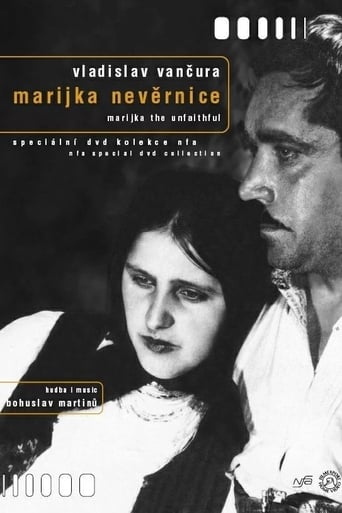
“The Carpathians are medieval!” one character bellows, and this tale of the tree-chopper Petro, his faithless wife Marijka, and various scheming businessmen and foremen does little to disprove the assertion. Interestingly filmed with a nonprofessional cast recruited from the region, Faithless Marijka may have a neorealist conceit, but its direction is utterly futuristic, filled with the lightning-fast montage techniques and low-angle camera of the Soviet avant-garde (along with its invigorating agitprop).
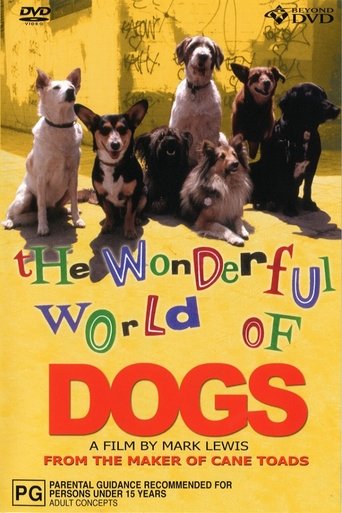
A woman obsessed by dogs crapping on her small piece of lawn. A pelican hungry enough to eat a small Chihuahua. A dog who enjoys dressing up in women’s clothing. And another with a penchant for rubber… Discover the wonderful world of dogs… barkers, bullies, crappers, and roamers. Meet Boris, Pebbles, Piglet, Molly and the delinquent dog, Fugly. Meet the people – the devoted dog-lovers and those less enthusiastic about the canine breed. The Wonderful World of Dogs looks at the myths and obsessions surrounding the domestic dog and their doting owners. A story about dogs who just want to be dogs and people who want their dogs to be just like people.
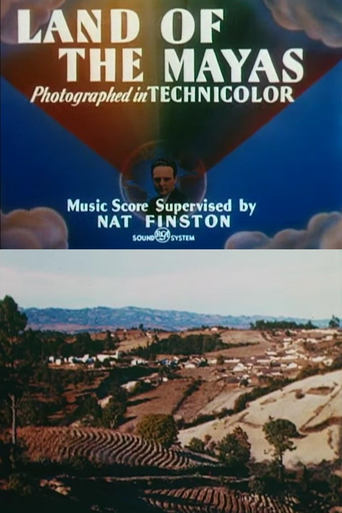
This Traveltalk series short visits the village of Chichicastenango, Guatemala and emphasizes the influence of the Mayan culture on its people. It shows how the residents intermingle ancient religious practices with Catholic teachings. Narrator James FitzPatrick introduces, and greets on camera, Father Ildefonso Rossbach, a Catholic priest who ministers to the local population in the village and outlying areas.
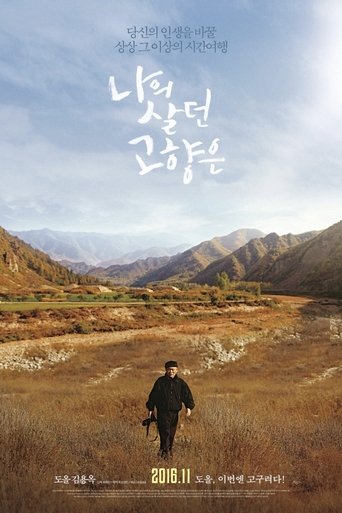
A wonderful time travel exploring. The Kingdom of Goguryeo. Oh! Goguryeo!, Oh! Balhae! A travel to find the warmth of ancient history with Do-Ohl Kim-Yong-Ok, A representative philosopher of our modern age! We couldn't help but crying when we saw the towering Heul-Seung-Gohl-Seong, the first seat of government of Ju-Mong, through out the celadon-colored sunrise... From the top of the Mt. Baek-Du to Manchuria, The Scent of Goguryeo and Balhae that has been scattered all over the wild field wake our hearts up from a long, deep sleep!
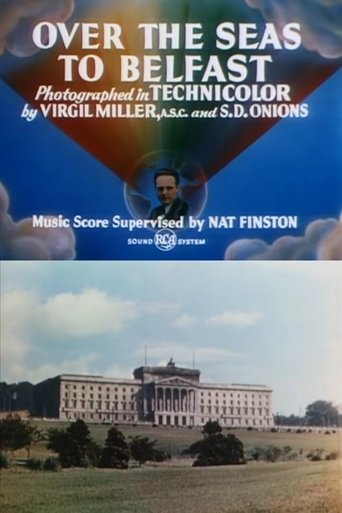
This Traveltalk series short begins aboard the RMS Scythia as it exits Halifax Harbor. The Scythia is a cruise ship that was converted to a troop transport during World War II; in 1940 it carried children from Liverpool to New York as part of an evacuation program set up by the Children's Overseas Reception Board. The present voyage is among the first to carry civilian passengers from North America to the British Isles following the end of the war. Among the passengers are 150 child evacuees, who have spent several years growing up in Canada or the USA.
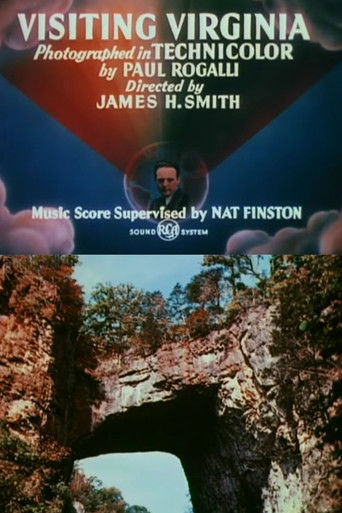
This Traveltalk series short visits the State of Virginia. In 1947, agriculture was the mainstay of the economy. Tobacco, molasses from cane and peanuts were the agricultural mainstays. The State capitol, Richmond, can boast the oldest legislature in the Western Hemisphere. There are many attractions including old caverns with beautiful rock displays.