

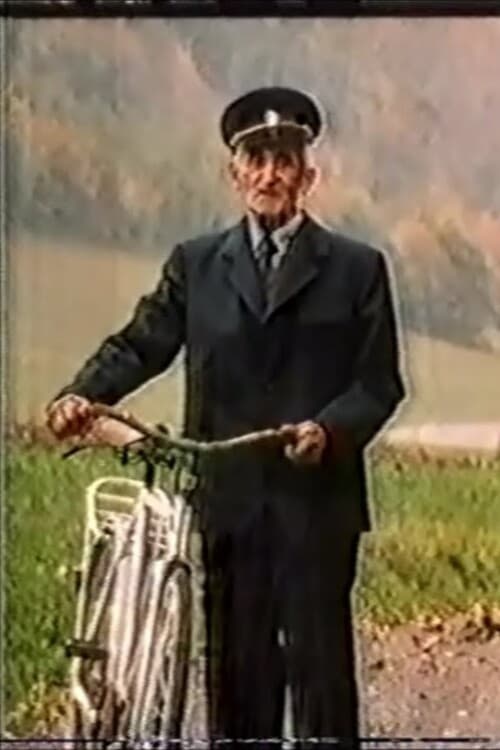
Murder Ballads and Other Legends from Ladomírová
Documentary
Overview
The documentary film is not a search for the survived truth of the inhabitants of the Ruthenian village Ladomírová. It captures their subjective memories, often frozen in time and in everyday life. Only strong impressions of sadness, joy, suffering, which reflect the great history of the 20th century. There is no truth about the past, it is only the human mind that actually makes morytates - bloody enlightening stories and legends.



No cast information.
Similar Movies
Dedicated to the Lemkos, who through their extraordinary love for the country overcame the trauma of massive deportations during the "Operation Vistula" and managed to return to their homeland. This film is a story about the fate of people from the annihilated Długie village, and it talks about Małastów village, where Lemkos, originally the dominant group, were transformed into a defenceless minority. Today, with admirable perseverance, they continue to fight for their rights. Above all, this is a film about love, which is the most precious thing.
The 20th century was the roughest in history for the Carpatho-Rusyns of Central Europe. After World War II, when they were declared Ukrainians by the new Communist regimes in every country where they live, Carpatho-Rusyns in Czechoslovakia and elsewhere became extinct overnight -- and this was their existence for more than 50 years. But with the 1989 Velvet Revolution, led by the playwright and former dissident Václav Havel, Carpatho-Rusyn ethnicity revived in every country - including the United States. This is the story of that revival.

In the Carpathian Mountains of 19th-century Ukraine, love, hate, life and death among the Hutsul people are as they’ve been since time began. Ivan is drawn to Marichka, the beautiful young daughter of the man who killed his father. But fate tragically decrees that the two lovers will remain apart.
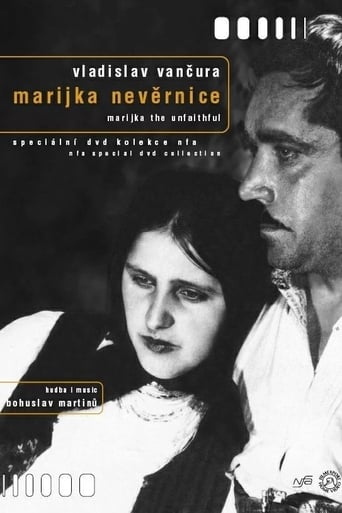
“The Carpathians are medieval!” one character bellows, and this tale of the tree-chopper Petro, his faithless wife Marijka, and various scheming businessmen and foremen does little to disprove the assertion. Interestingly filmed with a nonprofessional cast recruited from the region, Faithless Marijka may have a neorealist conceit, but its direction is utterly futuristic, filled with the lightning-fast montage techniques and low-angle camera of the Soviet avant-garde (along with its invigorating agitprop).
Study of the relationship between observer and landscape in the contemplative experience. The view building the landscape from the necessary distance. The delimitation of its borders against the total continuum of nature. The observer immersed in the path of his gaze across the landscape. Resting the gaze in the details that make the globallity. The view selecting the space included as a landscape.
A documentary portrait of Tiit Pääsuke, the most prominent painter in contemporary Estonia. Artist per excellence, creator of the imaginary picture-landscapes, a charming person, adorer of the woman’s beauty, gentleman and a colonel in local whisky club - Tallinn Uisge Beatha Club. “When painting, I compose the details of my pictures, my human models not as traditional painter, but more like film or theatre director works with actors, my compositions are as performances, theatrical happenings”. - Tiit Pääsuke

In 1931 the rains stopped and the "black blizzards" began. Powerful dust storms carrying millions of tons of stinging, blinding black dirt swept across the Southern Plains — the panhandles of Texas and Oklahoma, western Kansas, and the eastern portions of Colorado and New Mexico. Topsoil that had taken a thousand years per inch to build suddenly blew away in only minutes. One journalist traveling through the devastated region dubbed it the "Dust Bowl." This American Experience film presents the remarkable story of the determined people who clung to their homes and way of life, enduring drought, dust, disease — even death — for nearly a decade. Less well-known than those who sought refuge in California, typified by the Joad family in John Steinbeck's "The Grapes of Wrath," the Dust Bowlers who stayed overcame an almost unbelievable series of calamities and disasters.
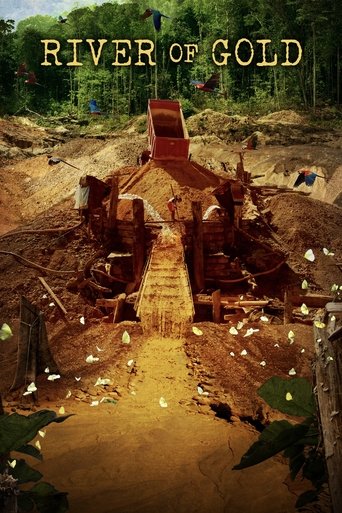
Narrated by Academy Award winners Sissy Spacek and Herbie Hancock, River of Gold is the disturbing account of a clandestine journey into Peru's Amazon rainforest to uncover the savage unraveling of pristine jungle. What will be the fate of this critical region of priceless biodiversity as these extraordinarily beautiful forests are turned into a hellish wasteland?