


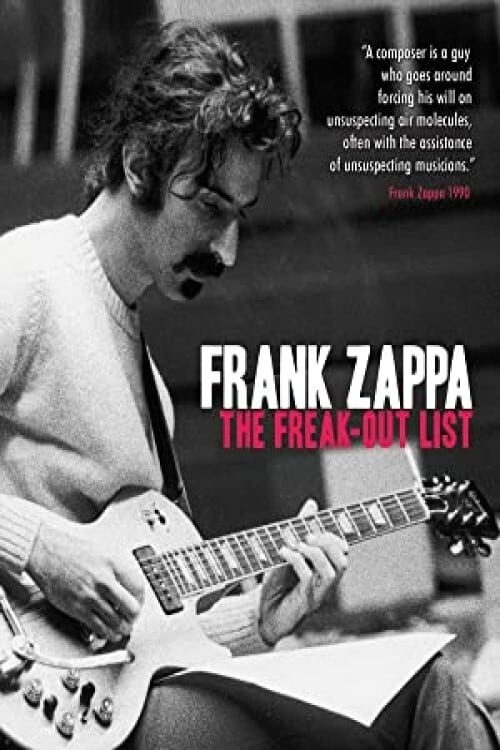
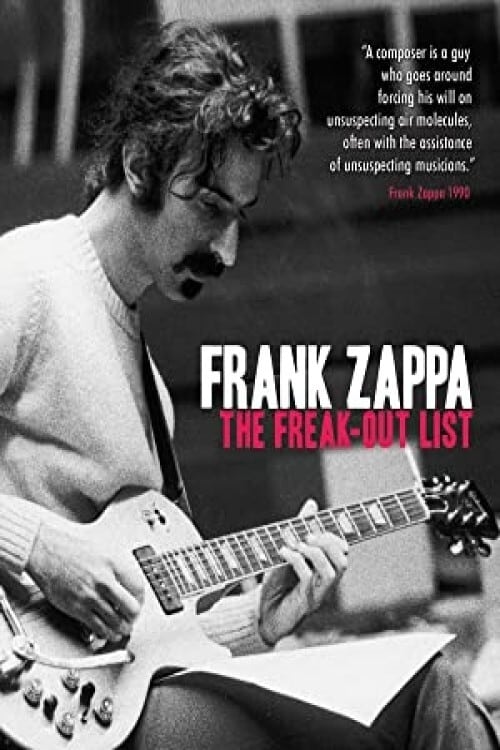
Frank Zappa: The Freak Out List
Documentary · Music
Overview
On the liner notes to Freak Out!, the 1967 debut album by Zappa's original band the Mothers of Invention, Zappa listed some seventy-two names on the liner notes and cited them as influences. The Freak Out List intends to explore who these artists are and what influence they had on Zappa's music. This listing encompasses all sorts of music, from classical composer Edgar Varese to R&B star Johnny "Guitar" Watson to jazzman Eric Dolphy to flamenco guitarist Sabicas. You can hear for instance, how the esoteric classical influence of Varese shaped Zappa's long-form epics like "Lumpy Gravy" or how Dolphy's instrumental prowess led Zappa to incorporate jazz-fusion on albums like Weasels Ripped My Flesh! (1970), which even included a song titled "The Eric Dolphy Memorial Barbecue." Interviews with various Zappa biographers and music historians as well as musicians George Duke, Ian Underwood, and Don Preston, all of whom played in the Mothers at one time or another, help add additional context.



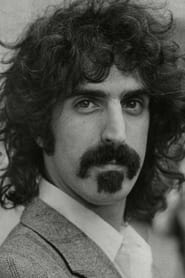
Frank Zappa
Frank Zappa
Himself
Frank Zappa
Himself

George Duke
George Duke
Himself
George Duke
Himself
Ian Underwood
Ian Underwood
Himself
Ian Underwood
Himself
Don Preston
Don Preston
Himself
Don Preston
Himself
Similar Movies
Through concerts and interviews, folk-progressive group Harmonium takes Quebec culture to California. This documentary full of colour and sound, filmed in California in 1978, recounts the ups and downs of the journey of the Quebec musical group Harmonium, who came to feel the pulse of Americans and see if culture, their culture, can succeed in crossing borders.
This film traces the path Floyd took after the recording of the Animals album - an era when cracks in the band first started to show - and brings the strange story of the group and the intense relationship between Waters and Gilmour right up to date with the unexpected collaboration of these two maverick musicians at a 2010 charity event. Featuring numerous interviews.
A ritual of grids, reflections and chasms; a complete state of entropy; a space that devours itself; a vertigo that destroys the gravity of the Earth; a trap that captures us inside the voids of the screen of light: «That blank arena wherein converge at once the hundred spaces» (Hollis Frampton).
In 1919 an art school opened in Germany that would change the world forever. It was called the Bauhaus. A century later, its radical thinking still shapes our lives today. Bauhaus 100 is the story of Walter Gropius, architect and founder of the Bauhaus, and the teachers and students he gathered to form this influential school. Traumatised by his experiences during the Great War, and determined that technology should never again be used for destruction, Gropius decided to reinvent the way art and design were taught. At the Bauhaus, all the disciplines would come together to create the buildings of the future, and define a new way of living in the modern world.
From Paris to Venice to Broadway to Hollywood, the lives of Cole Porter and his wife, Linda Lee Thomas were never less than glamorous and wildly unconventional. And though Cole's thirst for life strained their marriage, Linda never stopped being his muse, inspiring some of the greatest songs of the twentieth century.
Released to coincide with the 30th anniversary of this classic album, learn how Pink Floyd assembled "Dark Side of the Moon" with the aid of original engineer Alan Parsons. All four band members--Roger Waters, David Gilmour, Nick Mason, and Richard Wright--are interviewed at length, giving valuable insights into the recording process. The themes of the album are discussed at length, and the band take you back to the original multi track tapes to illustrate how they pieced together the songs. With individual performances of certain tracks from Roger, David, and Richard included, this is an essential purchase for any Pink Floyd fans, and a fascinating artefact for rock historians everywhere.
An anthology of one-minute films created by 51 international filmmakers on the theme of the death of cinema. Intended as an ode to 35mm, the film was screened one time only on a purpose-built 20x12 meter public cinema screen in the Port of Tallinn, Estonia, on 22 December 2011. A special projector was constructed for the event which allowed the actual filmstrip to be burnt at the same time as the film was shown.