

Stalin In Color
Documentary · History
Overview
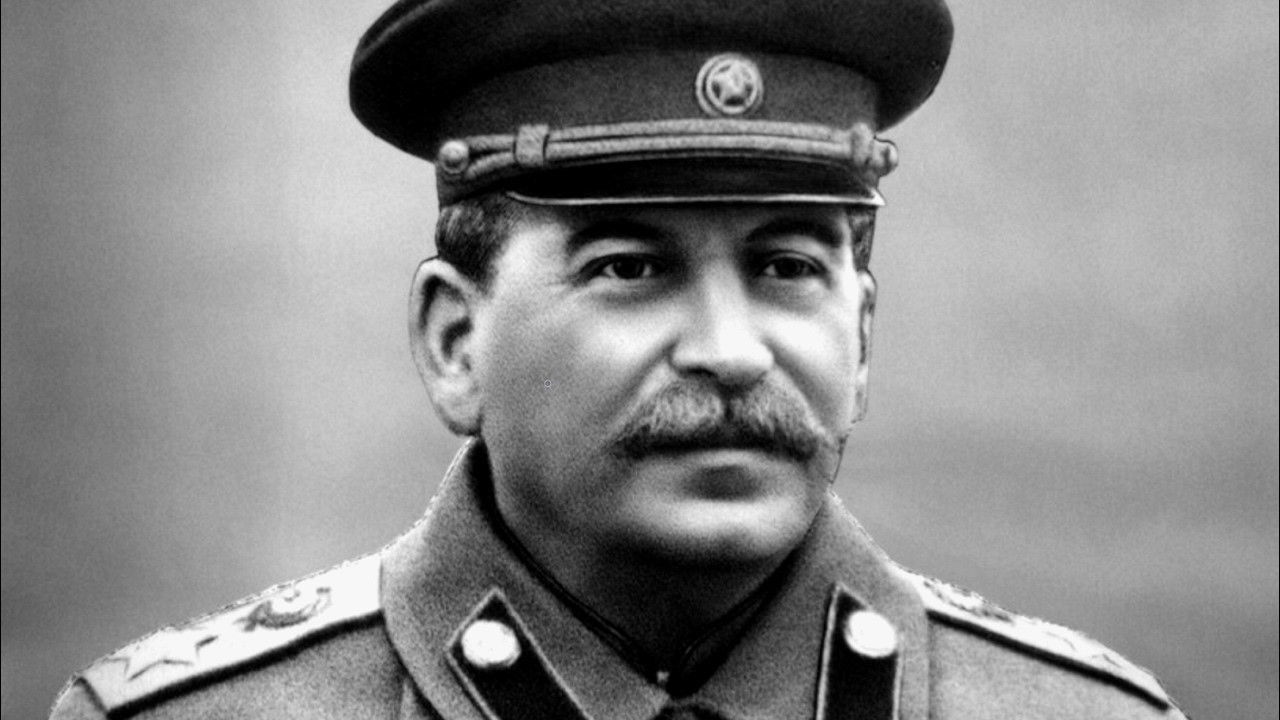
March 9th, 1953, 5 million people attend Stalin’s funeral. A revolutionary lacking in both charisma and stature, Stalin came to power almost by chance, and his 30-year reign saw him become the most Machiavellian and bloodthirsty of dictators. The man who insisted on being called “The Father of the People” massacred his own countrymen, and was responsible for the death of some 20 million people. Soon forgetting his former ideological stance, he mercilessly crushed anyone who opposed him, in both word and deed. His camps for reform through hard labor – known as “gulags” – turned 18 million Russians into slaves. He not only murdered his opponents but his best friends too, and even sometimes members of his own family. His cruelty knew no bounds. Through colorized archive material rich in previously unseen footage, and many accounts from the period including some from Stalin himself, this documentary tells the story of a man who turned a dream into a nightmare.


Serge de Sampigny
Serge de Sampigny
Self - Narrator (voice)
Serge de Sampigny
Self - Narrator (voice)
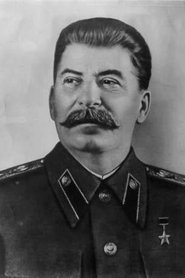
Joseph Stalin
Joseph Stalin
Self (archive footage)
Joseph Stalin
Self (archive footage)
Similar Movies
New York Times reporter Sydney Schanberg is on assignment covering the Cambodian Civil War, with the help of local interpreter Dith Pran and American photojournalist Al Rockoff. When the U.S. Army pulls out amid escalating violence, Schanberg makes exit arrangements for Pran and his family. Pran, however, tells Schanberg he intends to stay in Cambodia to help cover the unfolding story — a decision he may regret as the Khmer Rouge rebels move in.
A dramatic history of Pu Yi, the last of the Emperors of China, from his lofty birth and brief reign in the Forbidden City, the object of worship by half a billion people; through his abdication, his decline and dissolute lifestyle; his exploitation by the invading Japanese, and finally to his obscure existence as just another peasant worker in the People's Republic.
At the peak of Perestroika, in 1987, in the village of Gorki, where Lenin spent his last years, after a long construction, the last and most grandiose museum of the Leader was opened. Soon after the opening, the ideology changed, and the flow of pilgrims gradually dried up. Despite this, the museum still works and the management is looking for ways to attract visitors. Faithful to the Lenin keepers of the museum as they can resist the onset of commercialization. The film tells about the modern life of this amazing museum-reserve and its employees.
Alex Jones interviews Walter Burien, commodity trading adviser (CTA) of 15 years about the biggest game in town. There are over 85,000 federal and regional governmental institutions: school districts, water and power authorities, county and city governments – and they own over 70 percent of the stock market.
As the Communist Party of China celebrates its 100th anniversary, this documentary looks back at the party’s history, from the 1920’s, to the Civil War, the Great Leap Forward, the Great Famine, the Cultural Revolution and the reforms by Mao Zedong and Deng Xiaoping. Did the Great Famine cost more than 15 million lives? How does the Cultural Revolution continue to shape Chinese politics today? What was capitalism like after Mao’s death? Through rare and never-before-seen historical footage, expert interviews and eyewitness accounts of the Great Famine, Tiananmen incident, and the Cultural Revolution, get to know how one party has so profoundly shaped China.
When the Soviet Army marched into Romania in 1944, a part of the Romanian population went “into the mountains” – a diverse assortment of nationalists and fascists, liberals, apolitical farmers and members of the middle-class, who were affected by the Communists’ expropriations. Over a thousand armed resistance groups took refuge in the inaccessible forests of the Carpathian Mountains where they waited in vain for the support of the Western Allies. One of them was led by Ion Gavrilă-Ogoranu, who managed to remain undetected until 1976 when he was arrested. This film depicts the daily existence of this group. It tells the story of a struggle that became an end in itself, as the enemy was constantly in pursuit and arrest meant torture and often liquidation. Hungry and emotionally withdrawn, the group of young men got entangled in a partisan war that could not be won, lost in the landscape of the South Carpathians, accompanied by a vigilant secret police, the Securitate.