


Kymatica
Documentary
Overview
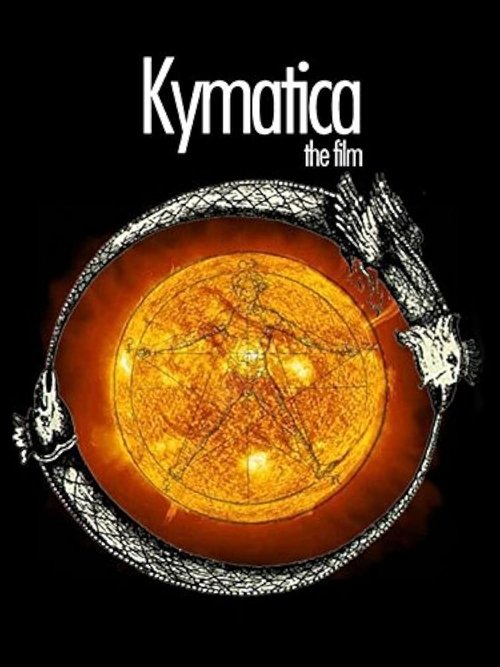
Ben Stewart, the bright young musician and philosopher who brought us the sleeper hit "Esoteric Agenda", unveils his new work, Kymatica!. Kymatica will venture into the realm of Cymatics and Shamanic practices. It will offer insight into the human psyche and discuss matters of spirituality, altered states of consciousness and much more! Not to be missed!
Top Cast










Ben Stewart
Ben Stewart
Narrator
Ben Stewart
Narrator
Similar Movies
Amanda is a divorced woman who makes a living as a photographer. During the Fall of the year Amanda begins to see the world in new and different ways when she begins to question her role in life, her relationships with her career and men and what it all means. As the layers to her everyday experiences fall away insertions in the story with scientists, and philosophers and religious leaders impart information directly to an off-screen interviewer about academic issues, and Amanda begins to understand the basis to the quantum world beneath. During her epiphany as she considers the Great Questions raised by the host of inserted thinkers, she slowly comprehends the various inspirations and begins to see the world in a new way.
Why wouldn't you? Is there any reason not to? We've got so much at our disposal, so, why don't you? Won't you tell me? Won't you please tell me? To have you down is simply unacceptable. Just look at this; or this; at all these hallmarks to guide you and convey to you the prime ways to feel lovely. Just follow them and you'll be set. So, I ask you again... Don't you feel lovely today?
Procreation is the social duty of all fertile women, was the political thinking during the 1960s and 1970s in Romania. In 1966, Ceaucescu issued Decree 770, in which he forbade abortion for all women unless they were over forty or were already taking care of four children. All forms of contraception were totally banned. The New Romanian Man was born. By 1969, the country had a million babies more than the previous average. Romanian society was rapidly changing. By using very interesting archival footage and excerpts from old fiction films and by interviewing famous personalities from that time – gynecologists or mothers who were part of the new society - the director revives this period of tremendous oppression of personal freedom. Many deaths were caused by the mere fact that women, including wives of secret Romanian agents, famous TV presenters, and actresses, had to undergo illegal abortions. Many women were jailed for having them.
In 2016, DEFA celebrates its 70th anniversary: the film embarks on a journey into the exciting film history of the GDR. In a comprehensive kaleidoscope, the importance of DEFA productions is illuminated, the relevance of the films as propaganda productions for the GDR, which socio-political themes were in the foreground, but also which heroes DEFA brought to the screen and celebrated as people from the people.
Paul Robeson was a celebrated African-American Actor, Athlete, Singer, Writer, and Civil Rights Activist. Robeson's many achievements are chronicled in this program, ranging from playing with the NFL to graduating from Columbia Law School, performing on Broadway and in Hollywood films to founding the American Crusade against Lynching as well as Council on African Affairs. Robeson was one of the most talented performers of his time and a dedicated humanitarian who ultimately sacrificed fame and fortune for what he believed in. His association with Leftist Politics during the era of the Cold War, and frequent denouncing of American political parties led to his eventual blacklisting with other prominent writers and artists during the McCarthy Era. His talents in all areas are remarkable, and his dedication to attaining a peaceful coexistence between all the people of the world is truly admirable.
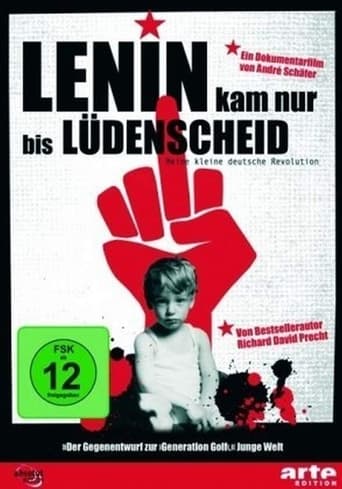
The free, almost naive view from the perspective of a child puts the "68ers" in a new, illuminating light in the anniversary year 2008. The film is a provocative reckoning with the ideological upbringing that seemed so progressive and yet was suffocated by the children's desire to finally grow up. With an ironic eye and a feuilletonistic style, author Richard David Precht and Cologne documentary film director André Schäfer trace a childhood in the West German provinces - and place the major events of those years in completely different, smaller and very private contexts.
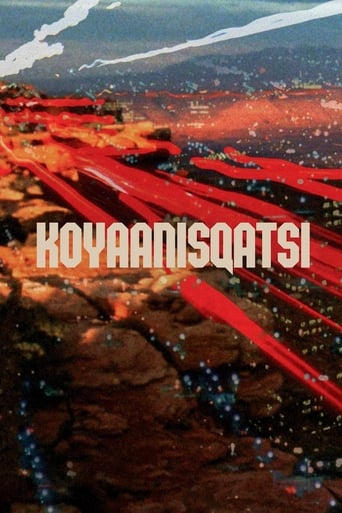
Takes us to locations all around the US and shows us the heavy toll that modern technology is having on humans and the earth. The visual tone poem contains neither dialogue nor a vocalized narration: its tone is set by the juxtaposition of images and the exceptional music by Philip Glass.
Taking stock of the extraordinary adventure of "Pif Gadget", a French publishing phenomenon of the 1970s-80s and even of the whole history of children's press. For the comic-strip magazine with the iconic dog, created in 1969 by the French Communist Party, often reached a million copies. With editions available for all of Europe (including Germany, under the title Yps), and on both sides of the Iron Curtain.
Charlie Marx and the Chocolate Factory started as an investigation of the link between politics and chocolate, at the Karl Marx Confectionary Factory in Kiev, Ukraine. Since access to the factory was denied, the project had to be re-considered, re-invented or re-enacted. Mostly made of archival footage and re-enacted performances based on the company's website, the film merges what was left of the initial idea with what has been collected and realized instead. It borrows from the genres of video art, 'Man on the street' interview, direct address, corporate film, essay, and music video, without legitimately belonging to any of them. The film unravels as a reflection on its own failure, and yet keeps on investigating what has always been at stake: the shift from public to private property (and from analog to digital technology), dialectics of permanence and change, language as a mirror of ideology, and post-Soviet oligarchy culture.