


DNA
Drama
Overview
A woman has a close bond with her beloved Algerian grandfather, who protected her from a toxic home life as a child; his death triggers a deep identity crisis as tensions between her extended family members escalate, revealing new depths of resentment and bitterness.








Fanny Ardant
Fanny Ardant
Caroline
Fanny Ardant
Caroline

Louis Garrel
Louis Garrel
François
Louis Garrel
François

Dylan Robert
Dylan Robert
Kevin
Dylan Robert
Kevin

Marine Vacth
Marine Vacth
Lilah
Marine Vacth
Lilah

Caroline Chaniolleau
Caroline Chaniolleau
Françoise
Caroline Chaniolleau
Françoise
Alain Françon
Alain Françon
Pierre
Alain Françon
Pierre

Florent Lacger
Florent Lacger
Ali
Florent Lacger
Ali

Henri-Noël Tabary
Henri-Noël Tabary
Matteo
Henri-Noël Tabary
Matteo

Maïwenn
Maïwenn
Neige
Maïwenn
Neige
Anne Berest
Anne Berest
Anne
Anne Berest
Anne
Similar Movies
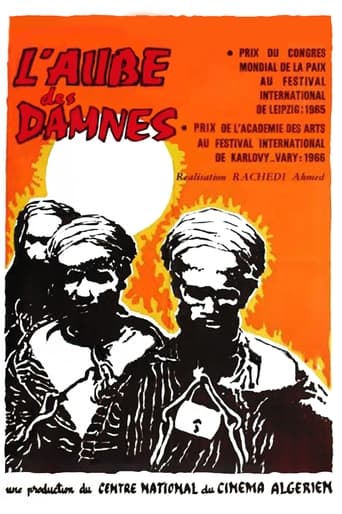
This excellent feature-length documentary - the story of the imperialist colonization of Africa - is a film about death. Its most shocking sequences derive from the captured French film archives in Algeria containing - unbelievably - masses of French-shot documentary footage of their tortures, massacres and executions of Algerians. The real death of children, passers-by, resistance fighters, one after the other, becomes unbearable. Rather than be blatant propaganda, the film convinces entirely by its visual evidence, constituting an object lesson for revolutionary cinema.
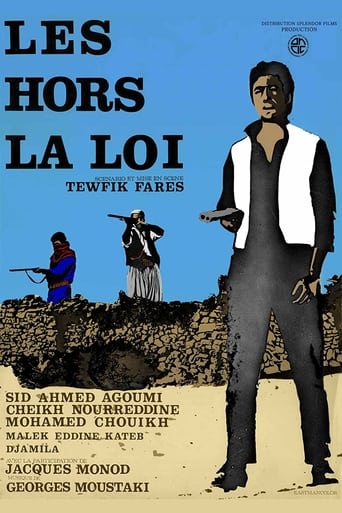
In prison in colonial Algeria, shortly after the end of the Second World War, three indigenous cellmates make out. Once free, they attack the authority represented by the triad of the boss, the gendarme and the administrator. “Living the colonial condition,” confided Tewfik Farès, “is something! It’s not sociologically or historically speaking. It’s life. And I think that’s all there in it. [...] For a hundred and thirty years, we wait. We hold back. We push back. We hope. At the same time, on different occasions, there are skirmishes, unrest.
Djamila, a young Algerian woman living with her brother Hadi and her uncle Mustafa in the Casbah district of Algiers under the French occupation of Algeria, sees the full extent of injustice, tyranny and cruelty on his compatriots by French soldiers. Jamila's nationalist spirit will be strengthened when French forces invade her university to arrest her classmate Amina who commits suicide by ingesting poison. Shortly after the prominent Algerian guerrilla leader Youssef takes refuge with her, she realizes that her uncle Mustafa is part of this network of anti-colonial rebel fighters. Her uncle linked her to the National Liberation Front (FLN). A series of events illustrate Jamila's participation in resistance operations against the occupier before she was finally captured and tortured. Finally, despite the efforts of her French lawyer, Jamila is sentenced to death...
An Algerian social satire that tells the story of Boujemaa, who marries a second wife in addition to his first wife, who is ill and with whom he has a son and a daughter. Living all under the same roof, the new wife imposes her authority in the house. The lives of the family members are then turned upside down.
60 years ago, in the Algerian desert, an atomic bomb, equivalent to three or even four times Hiroshima, exploded. Named the “Blue Gerboise”, it was the first atomic bomb tested by France, and of hitherto unrivaled power. This 70 kiloton plutonium bomb was launched in the early morning, in the Reggane region, in southern Algeria, during the French colonial era. If this test allowed France to become the 4th nuclear power in the world, it had catastrophic repercussions. France had, at the time, certified that the radiation was well below the standard safety threshold. However, in 2013, declassified files revealed that the level of radioactivity had been much higher than announced, and had been recorded from West Africa to the south of Spain.
Omar, better known as Omar the Strawberry, is an old-fashioned bandit. Forced to flee to Algeria, he makes a living out of petty crime, accompanied by his famous sidekick Roger. After decades of ruling the French criminal underworld, they must come to terms with their new life together, which until now has been one of debauchery and violence.
In the 1970s, groups of young Europeans ventured into the Sahara Desert with the intention of crossing it and experiencing “an adventure”. Unprepared, reckless and ignorant of the terrain they were crossing, they faced extreme situations with unexpected consequences. From the passion of these young people for adventure, the most famous rally in the world was born. “End of the Journey, Sahara” tells the story of one of these adventures.
The story of the post-independence nationalization of the mill of Monsieur Fabre, an old man attached to the land of Algeria where he was born. In this small town in eastern Algeria, there was nothing else to nationalize and they were actively preparing for the arrival of high dignitaries who would elevate the mill to the rank of an industrial flour mill even though it was threatened with ruin. The comedy gets worse when the football player from the local team withdraws for love, the officials' visit is canceled and Mr. Fabre returns.
Parisian authorities clash with the Front de Libération Nationale (FLN) in director Alain Tasma’s recounting of one of the darkest moments of the Algerian War of Independence. As the war wound to a close and violence persisted in the streets of Paris, the FLN and its supporters adopted the tactic of murdering French policemen in hopes of forcing a withdrawal. When French law enforcement retaliated by brutalizing Algerians and imposing a strict curfew, the FLN organizes a peaceful demonstration that drew over 11,000 supporters, resulting in an order from the Paris police chief to take brutal countermeasures. Told through the eyes of both French policemen as well as Algerian protestors, Tasma’s film attempts to get to the root of the tragedy by presenting both sides of the story.