

The Island of Tsar Samuil
Documentary
Overview
An island in northwest Greece keeps memories of the Bulgarian past.


No cast information.
Similar Movies
A film about the dramatic and extraordinary fate of the lonely man who confronted the meat grinder of the communist regime. Georgy Konstantinov, 19 years old, blew up Stalin's monument in Sofia and death passed him by only because the dictator died two days later. He miraculously survived 10 years in prison and psychiatric wards and managed to escape to France. His State Security file numbers more than 40,000 pages. Even today, he does not cease to expose the crimes of the regime with the strength of truth and of his character.
A film pioneer, Binka Zhelyazkova was at the forefront of political cinema under Bulgaria's Communist dictatorship. Though she remained faithful to the communist ideals she became an avid critic of the regime and brought upon herself the wrath of its censorship. As a result four of her nine films were shelved and released to the public only after the fall of the regime in 1989, and Binka Zhelyazkova became known as the bad girl of Bulgarian cinema. A provocative portrait that reveals the pressures and complexities that arise when art is made under totalitarianism.
In the weeks and months surrounding the overthrowing of Bulgaria's socialist dictatorship, the public's taste for democratic discussion begs to be sated. Kiryakov's camera walks through Sofia's South Park as it turns into a hotbed for ideological debate and picketing, where citizens from all walks of life share their hopes despite the winter weather.
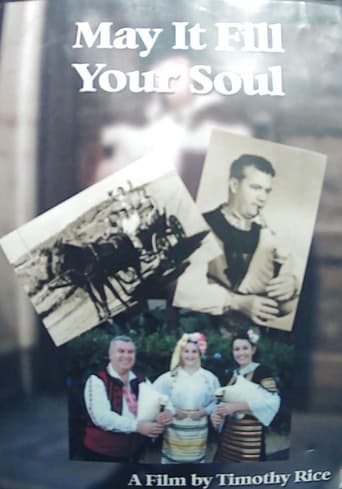
May It Fill Your Soul is a film about Bulgarian traditional music, about the pain of emigration and the promise of immigration, and about a family with a century-long musical history. Bulgaria's astonishingly rich village music traditions include strong women's singing, musical instruments with roots its millennia-old pastoral lifestyle and its 500-year history in the Ottoman Empire, and its lively dancing in additive meters of 5, 7, 9, and 11 beats to the measure. These practices are presented through the lens of a musical family trained during Bulgaria's communist regime (1944-1989) to represent the best that Bulgaria had to offer the world, but who made the wrenching decision in the post-communist period to immigrate to the United States for the sake of their daughters' futures. From that vantage point they have been able to teach their art to, and "fill the souls" of, singers, dancers, musicians, and audiences all over the world.
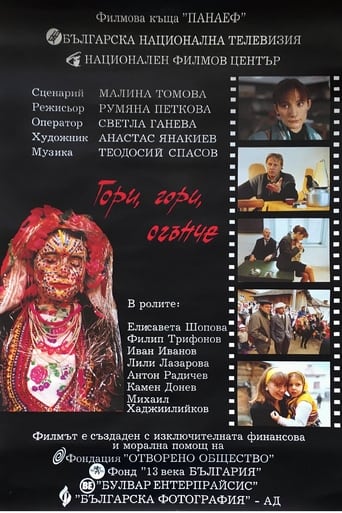
A new teacher - Marina - arrives in a small Pomak village in the late 1960s. She is a woman trying to live and think independently. Marina finds herself in a world unknown to her, at once pure and immaculate, but with the signs of the deformation of natural life that is typical of the whole country. After meeting the Doctor, Bai Mnogoznai, Mariana, the mayor, the internationalist Yosko, she discovers that each resists authority in their own way. And when the government starts changing the non-Bulgarian names of the Pomak villagers, the heroine realizes she is in a prison - with high mountains, forests, rivers - a prison of tragic beauty.
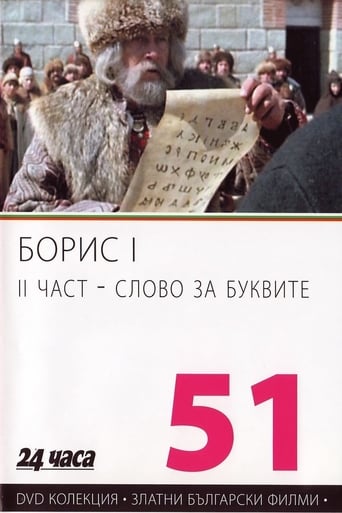
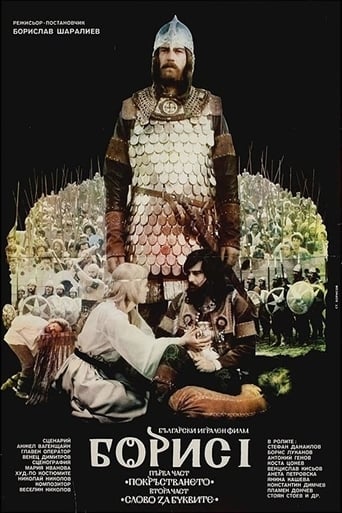
Knyaz Boris I reached the most important spiritual insight - the country needed a single language and script. It accepts students of Cyril and Methodius, creating Ohrid and Preslav Literary School. What other nations took centuries, for bulgarians takes place only about 20 years after their baptizing - introduced a Slavonic Alphabet.