

The Seventh Door
Drama · Fantasy
Overview
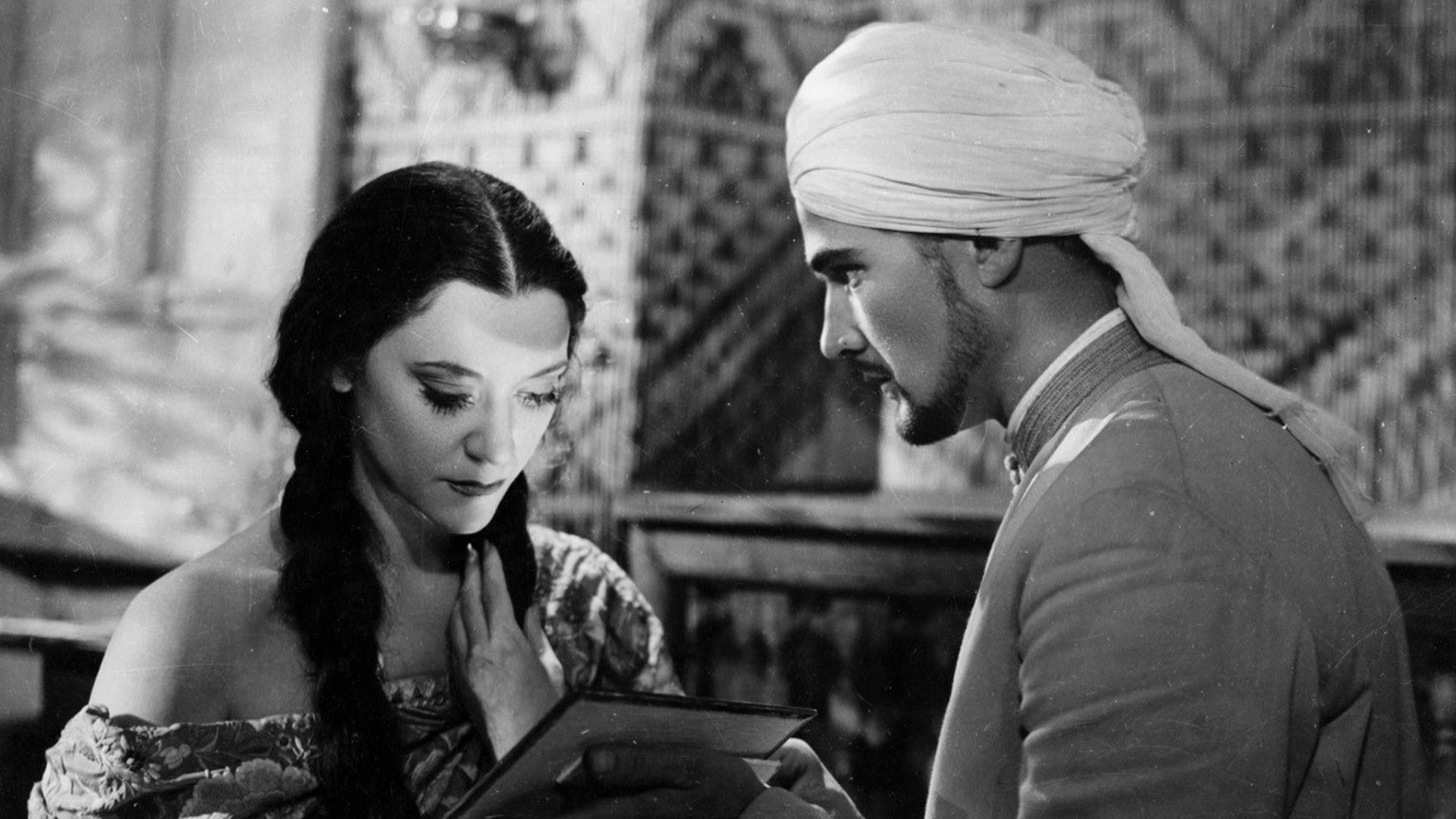
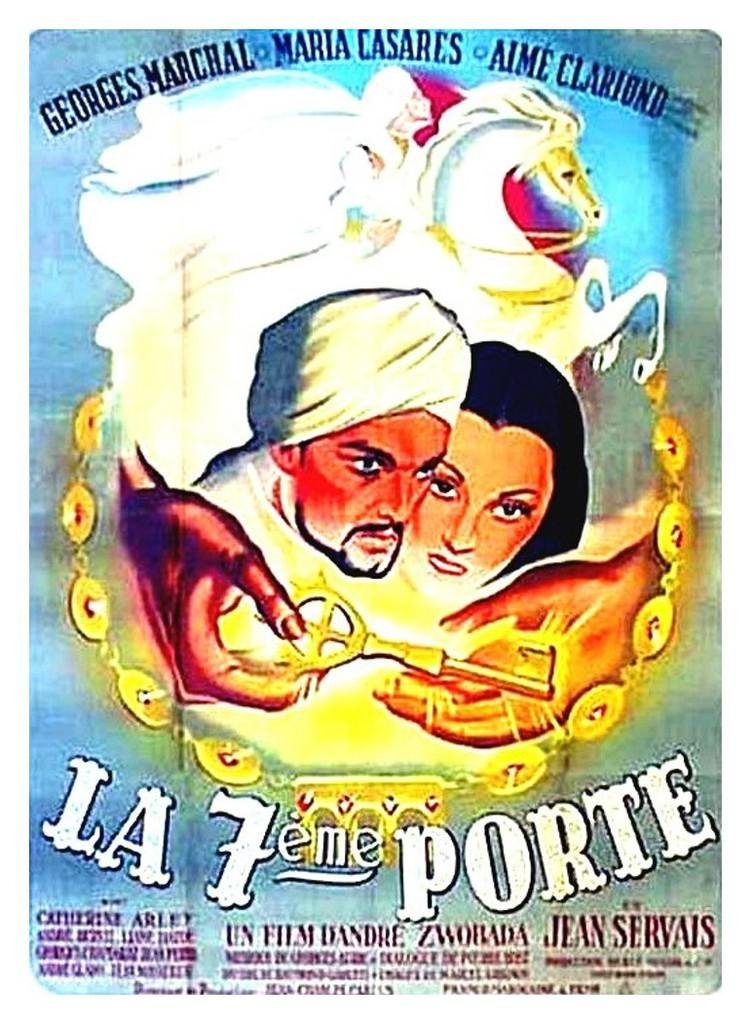
An old man about to die gives all his fortune to a young beggar he meets in an Arabian town. He takes him to his house (now the poor man's property) and he strongly advises him not to open one of the doors, the seventh door. "I could throw the key into the sea" says the young lad" No use, you'd dive to get it back". The young man is curious and he cannot resist temptation: he opens the forbidden door. A strange world is waiting for him where a girl, Leila, will be his guide .








Georges Marchal
Georges Marchal
Ali
Georges Marchal
Ali

María Casares
María Casares
Léila
María Casares
Léila
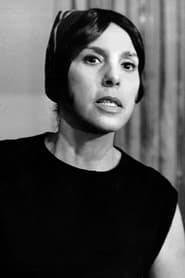
Keltoum (Aïcha Adjouri)
Keltoum (Aïcha Adjouri)
Keltoum (Aïcha Adjouri)
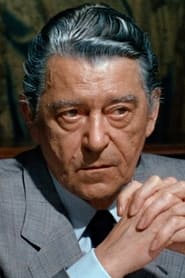
Jean Servais
Jean Servais
The bus driver
Jean Servais
The bus driver
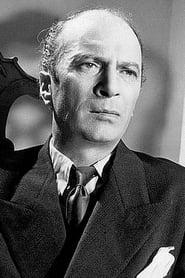
Aimé Clariond
Aimé Clariond
The official
Aimé Clariond
The official
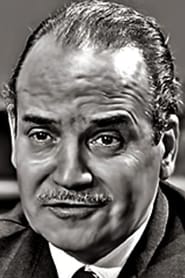
André Bervil
André Bervil
André Bervil
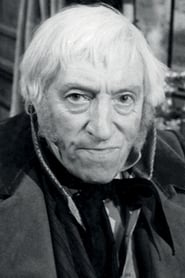
Georges Chamarat
Georges Chamarat
Georges Chamarat
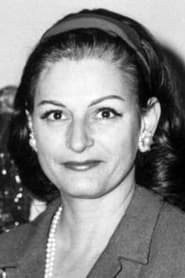
Catherine Arley
Catherine Arley
Aicha
Catherine Arley
Aicha

Jean Périer
Jean Périer
The Arab old man
Jean Périer
The Arab old man
Jean Nosserot
Jean Nosserot
Jean Nosserot
Similar Movies
An Algerian social satire that tells the story of Boujemaa, who marries a second wife in addition to his first wife, who is ill and with whom he has a son and a daughter. Living all under the same roof, the new wife imposes her authority in the house. The lives of the family members are then turned upside down.
Abderrahim is a mechanic and singer in his spare time. One day, he receives a car to repair, driven by a very beautiful girl. It's love at first sight. They want to get married and start a family, but the girl's parents do not view this love favorably. They decide to marry their daughter to another man. Subsequently, Abderrahim became a famous singer. The loss of her love leaves the young girl in a state of silence from which only Abderrahim can break her.
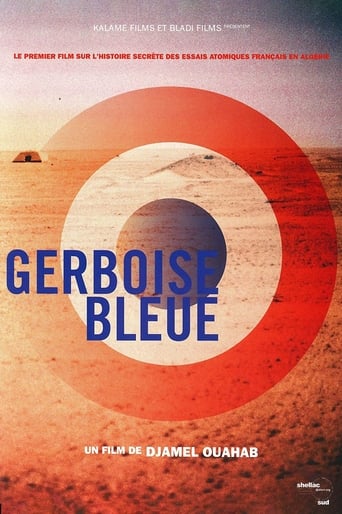
60 years ago, in the Algerian desert, an atomic bomb, equivalent to three or even four times Hiroshima, exploded. Named the “Blue Gerboise”, it was the first atomic bomb tested by France, and of hitherto unrivaled power. This 70 kiloton plutonium bomb was launched in the early morning, in the Reggane region, in southern Algeria, during the French colonial era. If this test allowed France to become the 4th nuclear power in the world, it had catastrophic repercussions. France had, at the time, certified that the radiation was well below the standard safety threshold. However, in 2013, declassified files revealed that the level of radioactivity had been much higher than announced, and had been recorded from West Africa to the south of Spain.
Néfissa, a student in Algiers, returns to her village in the south in the summer. Her father wants her to marry the mayor but she wants to continue her studies. Confronting her father and the opinion of the villagers who do not understand her, she decides to flee to Algiers. The shepherd Rabah discovering her wounded and lost in the mountains, has her treated by her mother. In contact with Nefissa, Rabat becomes aware of his exploited condition and discovers the possibilities offered to him by the cooperatives of the agrarian revolution. The two young people will go through the decisive stage together which will allow them to escape obscurantism and exploitation. Based on the novel "Le vent du sud" by Abdelhamid Benahouga
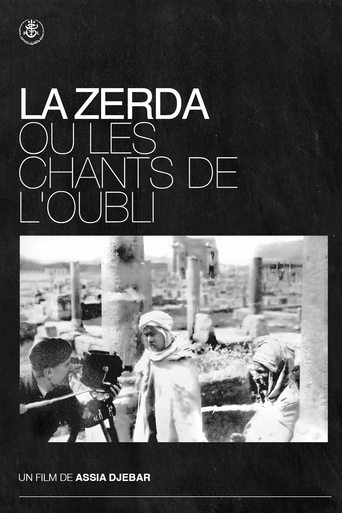
“La Zerda and the songs of oblivion” (1982) is one of only two films made by the Algerian novelist Assia Djebar, with “La Nouba des femmes du mont Chenoua” (1977). Powerful poetic essay based on archives, in which Assia Djebar – in collaboration with the poet Malek Alloula and the composer Ahmed Essyad – deconstructs the French colonial propaganda of the Pathé-Gaumont newsreels from 1912 to 1942, to reveal the signs of revolt among the subjugated North African population. Through the reassembly of these propaganda images, Djebar recovers the history of the Zerda ceremonies, suggesting that the power and mysticism of this tradition were obliterated and erased by the predatory voyeurism of the colonial gaze. This very gaze is thus subverted and a hidden tradition of resistance and struggle is revealed, against any exoticizing and orientalist temptation.
Djamila, a young Algerian woman living with her brother Hadi and her uncle Mustafa in the Casbah district of Algiers under the French occupation of Algeria, sees the full extent of injustice, tyranny and cruelty on his compatriots by French soldiers. Jamila's nationalist spirit will be strengthened when French forces invade her university to arrest her classmate Amina who commits suicide by ingesting poison. Shortly after the prominent Algerian guerrilla leader Youssef takes refuge with her, she realizes that her uncle Mustafa is part of this network of anti-colonial rebel fighters. Her uncle linked her to the National Liberation Front (FLN). A series of events illustrate Jamila's participation in resistance operations against the occupier before she was finally captured and tortured. Finally, despite the efforts of her French lawyer, Jamila is sentenced to death...
A legend that begins with the magic words: "Once upon a time." Once upon a time, there was a little girl nicknamed Mimezrane for her beauty and especially for her beautiful braids. She was beautiful but had strangely sad eyes. She was orphaned at a very young age. Her boyfriend and confidant was Hennouche, a mischievous little boy with big black eyes. They lived together a carefree childhood. Time passed. They grew up. Hennouche became a goat herder with a melodious voice; Mimezrane, for her part, became a washerwoman and, on occasion, a water carrier. Both accepted their fate without ever complaining. Yet, even in her poverty, Mimezrane was the most beautiful of all.