


American Reds: The Failed Revolution
Documentary · History
Overview
The documentary AMERICAN REDS provides a historical overview of 20th century Communism and the growth, decline and contemporary relevance of the Communist Party, USA (CPUSA). Since its founding in 1919, the CPUSA has championed the struggles for democracy, labor rights, women’s equality, and racial justice. During its heyday in the 1930s and 1940s, it attracted millions of Americans to support its causes and almost 100,000 men and women to enlist in its ranks. The film begins with the Party's emergence as a small militant sect in the 1920s and documents its rise to the foremost radical group in the United States during the Great Depression, fighting against racism, sexism and fascism, as well as for the rights of workers to organize. It ends with the decline of the Party during the Cold War under the assaults of the FBI and anti- communist crusades.
Top Cast






Wayne June
Wayne June
Narrator
Wayne June
Narrator
Gus Hall
Gus Hall
Self/Archive Footage
Gus Hall
Self/Archive Footage
Gil Green
Gil Green
Self
Gil Green
Self
Henry Winston
Henry Winston
Self
Henry Winston
Self
Bettina Aptheker
Bettina Aptheker
Self
Bettina Aptheker
Self
Sam Darcy
Sam Darcy
Self
Sam Darcy
Self
Robert Schrank
Robert Schrank
Self
Robert Schrank
Self
Similar Movies

Vladimir Ilyich Ulyanov, better known as Lenin, is remembered as the instigator of the October Revolution of 1917 and, therefore, as one of the men who changed the shape of the world at that time and forever, but perhaps the actual events happened in a way different from that narrated in the history books…

Masao Adachi, the author and director of experimental works and pinku-eiga in the 1960s, was a member of the Japanese New Left that shifted from being a filmmaker to a guerrilla fighter. In 1974, he joined the Japanese Red Army in Lebanon, which worked closely with the Popular Front for the Liberation of Palestine. Filmmaker Lutz Dammbeck met Adachi in Tokyo in 2018 and talked with him about a wide range of topics, including art, revolution, the influence of western avant-garde art and American underground; the Japanese Red Army; collaboration with secret services; the role of the Left after 1968; and the reasons for failures of leftist ideas and strategies.
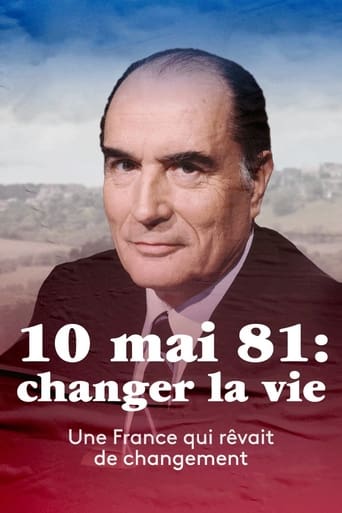
Fourty years ago, in May 1981, with François Mitterrand's election, some people were letting themselves dream about a better life while others were predicting the coming of soviet tanks upon the Champs-Élysées. If we gladly remember the turning point of austerity in 83, there were also the wage rises, the fifth week of paid leave, the abolition of death penalty, the decriminalisation of homosexuality, or the advent of independent radio stations. Rare archives and accounts by those who were at the heart of this story give an overview of it and shed light on lesser-known aspects.
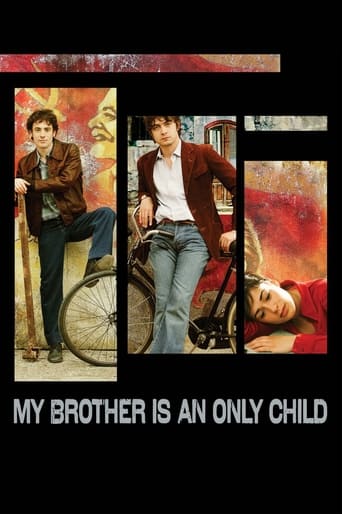
Accio and Manrico are siblings from a working-class family in 1960s Italy: older Manrico is handsome, charismatic, and loved by all, while younger Accio is sulky, hot-headed, and treats life as a battleground — much to his parents' chagrin. After the former is drawn into left-wing politics, Accio joins the fascists out of spite, but his flimsy beliefs are put to test when he falls for Manrico's like-minded girlfriend.
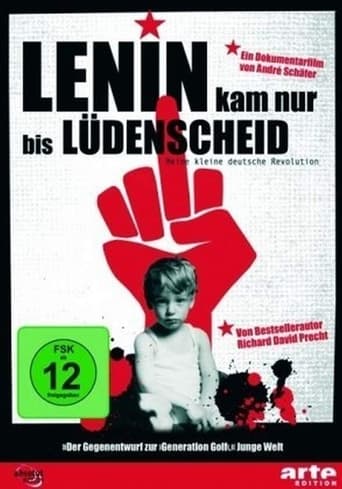
The free, almost naive view from the perspective of a child puts the "68ers" in a new, illuminating light in the anniversary year 2008. The film is a provocative reckoning with the ideological upbringing that seemed so progressive and yet was suffocated by the children's desire to finally grow up. With an ironic eye and a feuilletonistic style, author Richard David Precht and Cologne documentary film director André Schäfer trace a childhood in the West German provinces - and place the major events of those years in completely different, smaller and very private contexts.
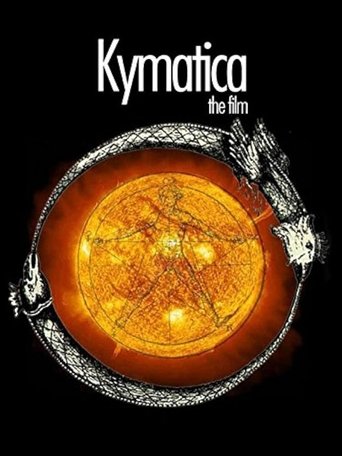
Ben Stewart, the bright young musician and philosopher who brought us the sleeper hit "Esoteric Agenda", unveils his new work, Kymatica!. Kymatica will venture into the realm of Cymatics and Shamanic practices. It will offer insight into the human psyche and discuss matters of spirituality, altered states of consciousness and much more! Not to be missed!
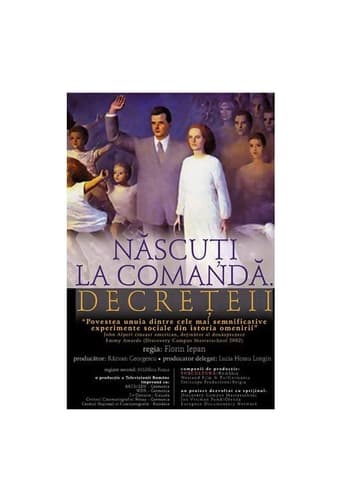
Procreation is the social duty of all fertile women, was the political thinking during the 1960s and 1970s in Romania. In 1966, Ceaucescu issued Decree 770, in which he forbade abortion for all women unless they were over forty or were already taking care of four children. All forms of contraception were totally banned. The New Romanian Man was born. By 1969, the country had a million babies more than the previous average. Romanian society was rapidly changing. By using very interesting archival footage and excerpts from old fiction films and by interviewing famous personalities from that time – gynecologists or mothers who were part of the new society - the director revives this period of tremendous oppression of personal freedom. Many deaths were caused by the mere fact that women, including wives of secret Romanian agents, famous TV presenters, and actresses, had to undergo illegal abortions. Many women were jailed for having them.