


The Taste of Life
Overview
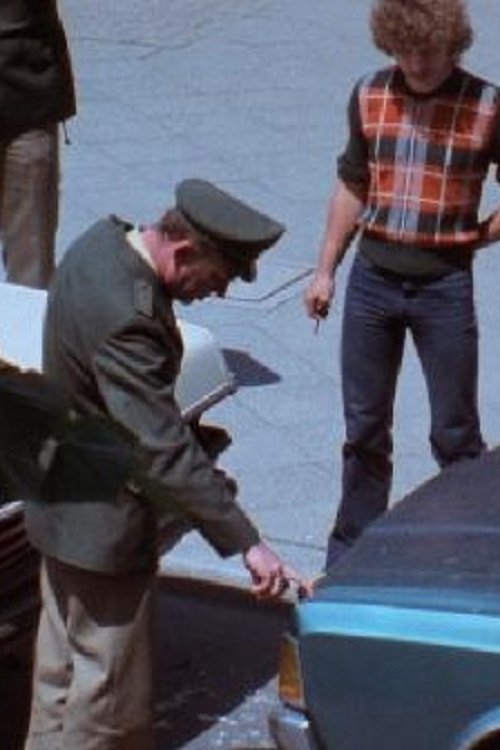
For years I've been looking for the means to capture everyday life just as it is perceived through a glance from the street. Twenty years ago, you could see young people standing with their bicycles on street corners, in fact, if the bicycles where there, you could be sure to find the young people standing there talking. I would like to document these kinds of events. On this occasion, I was presented with the opportunity to do so. For two and a half weeks, I walked around different parts of the city with my camera and collected images for the film. (Harun Farocki, 1979)















No cast information.
Similar Movies
A day in the city of Berlin, which experienced an industrial boom in the 1920s, and still provides an insight into the living and working conditions at that time. Germany had just recovered a little from the worst consequences of the First World War, the great economic crisis was still a few years away and Hitler was not yet an issue at the time.
In 17th-century Tuscany, a church play is performed for the benefit of young aristocrat Cosimo. In the play, a grotesque old woman gives birth to a beautiful baby boy. The child's older sister is quick to exploit the situation, selling blessings from the baby, and even claiming she's the true mother by virgin birth. However, when she attempts to seduce the bishop's son, the Church exacts a terrible revenge.
Kang Aries and Kang Oca are two cultural observers of Kujang who try to provide a justification perspective on the Kujang Philosophy made by one of the blacksmiths named Abah Jajang, where the general public often considers that Kujang is a sharp weapon. The two of them "Kang Aris & Kang Oca" entered the realm of the trial to defend the essence of Kujang, so as not to be considered misunderstood by the general public.
Arriving in the US with a background in abstract art, opera, and film—including work with German director Werner Schroeter—Vogl began making Super8 films in New York that stripped away the stylistic markers of Hollywood, New Wave cinema of the 1960s and ’70s, and classic avant-garde film, leaving only traces of their generic conventions. For the first hour of OK Today Tomorrow, he stages a series of fraught encounters around the city between four gentrified New Yorkers before abandoning his vague narrative of youthful angst altogether in favor of documenting the urban landscape itself. The dusk-to-dawn “city symphony” that ends the film resembles similar Super8 social studies by Vogl’s uptown contemporary John Ahearn; both recorded the daily lives of working-class black and immigrant communities on the streets of a city on the verge of the corporate takeover and sweeping gentrification that followed in the 1980s and ’90s. Preserved by The Museum of Modern Art, New York.
Each day after work, Carlos, a language school teacher, frequents the heady surroundings of his local cruising ground. One evening he encounters a teenage boy from his class named Toni, and the two engage in a brief sexual tryst. As the relationship between teacher and student begins to develop, some dark truths emerge about the young man and his mysterious group of friends.