

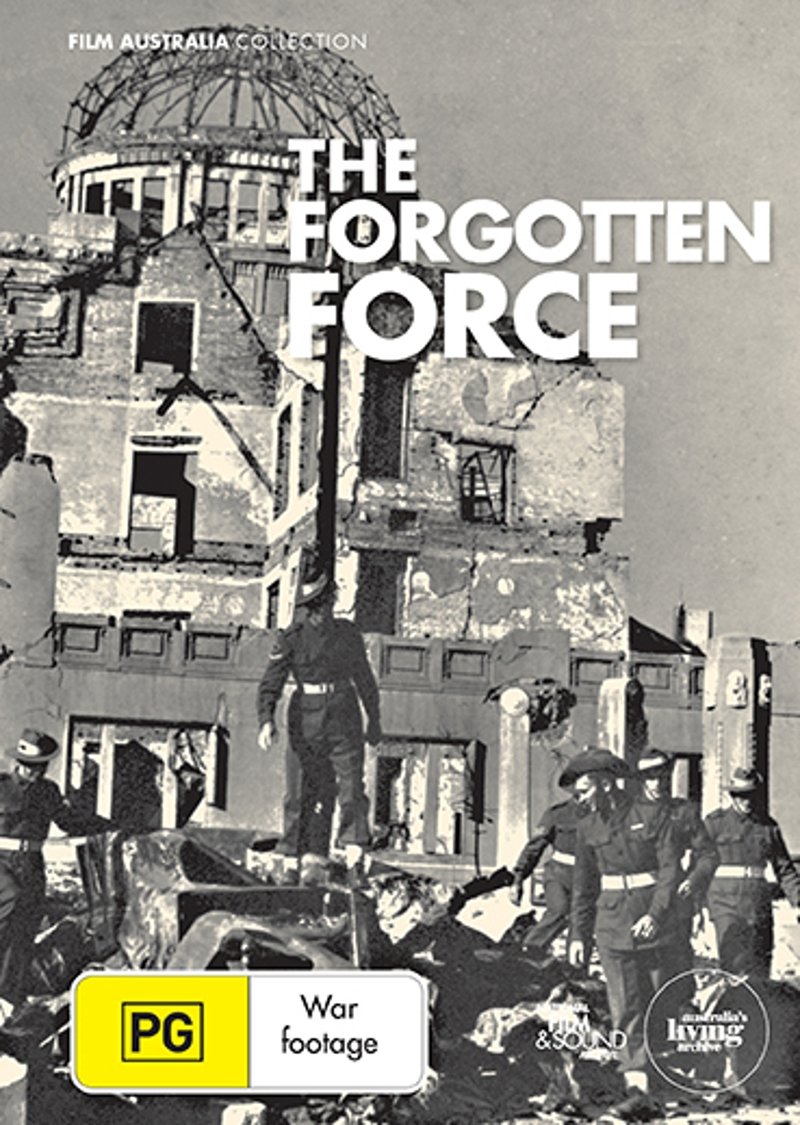
The Forgotten Force
Documentary · History · War
Overview
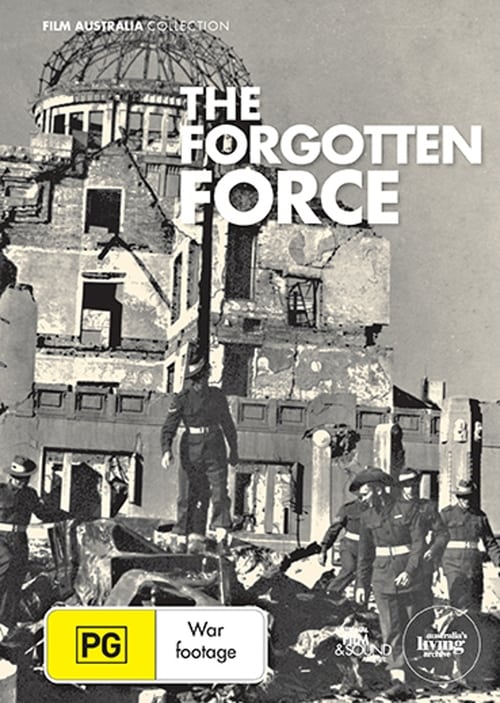
After the atomic obliteration of Hiroshima and Nagasaki, over 36,000 Australian men and women, part of the British Commonwealth Occupation Force (BCOF), marched onto Japanese soil. They were assigned the toughest and most dangerous area of Japan: Hiroshima Prefecture, which included the atom-bombed city. The Forgotten Force tells for the first time the story of Australia's role in Japan. Rare archival and private footage, photographs and eyewitness accounts from both sides vividly recreate the atmosphere of post-war Japan - the horror of Hiroshima and its aftermath; the struggle to build a new "democratic" society while under the heel of military rule; the growth from suspicion and fear to friendship and trust between foes.
Top Cast



Hugo Weaving
Hugo Weaving
Narrator
Hugo Weaving
Narrator
Similar Movies
In 150 years, twice marked by total destruction —a terrible earthquake in 1923 and incendiary bombings in 1945— followed by a spectacular rebirth, Tokyo, the old city of Edo, has become the largest and most futuristic capital in the world in a transformation process fueled by the exceptional resilience of its inhabitants, and nourished by a unique phenomenon of cultural hybridization.
This was the only documentary made in the aftermath of the atomic bombings of 1945. Japanese filmmakers entered the two cities intent on making an appeal to the International Red Cross, but were promptly arrested by newly arriving American troops. The Americans and Japanese eventually worked together to produce this film, a science film unemotionally displaying the effects of atomic particles, blast and fire on everything from concrete to human flesh. No other filmmakers were allowed into the cities, and when the film was done the Americans crated everything up and shipped it to an unknown location. That footage is now lost. However, an American and a Japanese filmmaker each stole and hid a copy of the film, fearful that the reality of Hiroshima and Nagasaki would be hidden from history. Eventually, these prints surfaced and became our only precious archive of the aftermath of nuclear warfare -- a film that everyone knows in part, yet has rarely seen in its entirety.
The documentary recounts the world's first nuclear attack and examines the alarming repercussions. Covering a three-week period from the Trinity test to the atomic bombing of Hiroshima, the program chronicles America's political gamble and the planning for the momentous event. Archival film, dramatizations, and special effects feature what occurred aboard the Enola Gay (the aircraft that dropped the bomb) and inside the exploding bomb.
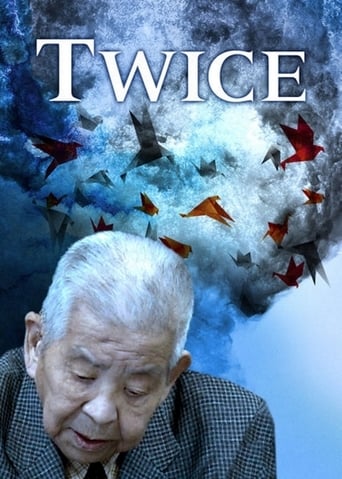
Tsutomu Yamaguchi is a hibakusha. A survivor of both atomic bomb blasts in 1945. First at Hiroshima, then again at Nagasaki. Now nearing 90, Yamaguchi finally speaks out. Breaking taboos of shame and sorrow, he responds to a call to fight for a world without nuclear weapons by telling his story, so that no one else will ever have to tell one like it again. Twice reconstructs Yamaguchi’s experiences in 1945 Japan, interviews him on the after-effects of exposure and documents the last five years of the late-blooming activist’s life.
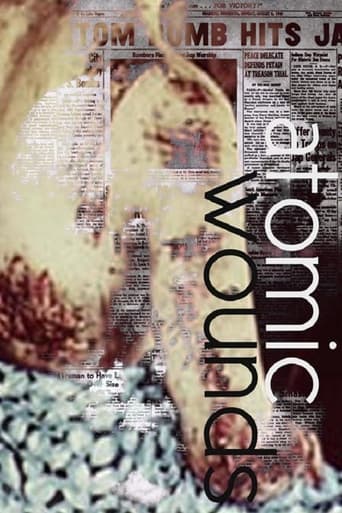
At 89, Doctor Hida, a survivor of the 1945 atomic bomb at Hiroshima, continues to care for some of the other quarter of a million survivors. Atomic Wounds retraces his dedicated journey and highlights how the terrible danger of radiation was concealed by successive American administrations in the 50's - 70's so that nuclear power could be freely developed, with no concern for public health.