


Caligari: When Horror Came to Cinema
Documentary · History · TV Movie
Overview
On February 26, 1920, Robert Wiene's world-famous film The Cabinet of Dr. Caligari premiered at the Marmorhaus in Berlin. To this day, it is considered a manifesto of German expressionism; a legend of cinema and a key work to understand the nature of the Weimar Republic and the constant political turmoil in which a divided society lived after the end of the First World War.
Top Cast






Martin Engler
Martin Engler
Self - Narrator (voice)
Martin Engler
Self - Narrator (voice)
Elisabeth Bronfen
Elisabeth Bronfen
Self
Elisabeth Bronfen
Self
Erika Gregor
Erika Gregor
Self
Erika Gregor
Self
Ulrich Gregor
Ulrich Gregor
Self
Ulrich Gregor
Self
Rosa von der Schulenberg
Rosa von der Schulenberg
Self
Rosa von der Schulenberg
Self
Similar Movies
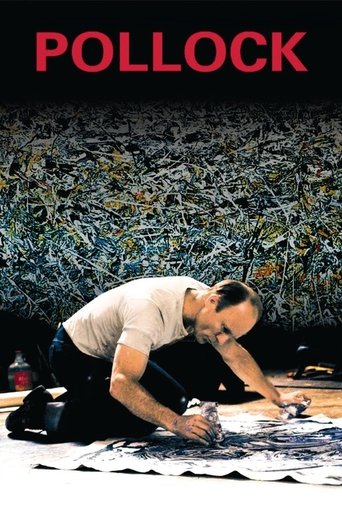
In August of 1949, Life Magazine ran a banner headline that begged the question: "Jackson Pollock: Is he the greatest living painter in the United States?" The film is a look back into the life of an extraordinary man, a man who has fittingly been called "an artist dedicated to concealment, a celebrity who nobody knew." As he struggled with self-doubt, engaging in a lonely tug-of-war between needing to express himself and wanting to shut the world out, Pollock began a downward spiral.

A tribute to a fascinating film shot by Alfred Hitchcock in 1958, starring James Stewart and Kim Novak, and to the city of San Francisco, California, where the magic was created; but also a challenge: how to pay homage to a masterpiece without using its footage; how to do it simply by gathering images from various sources, all of them haunted by the curse of a mysterious green fog that seems to cause irrepressible vertigo…

In the late sixties, Spanish cinema began to produce a huge amount of horror genre films: international markets were opened, the production was continuous, a small star-system was created, as well as a solid group of specialized directors. Although foreign trends were imitated, Spanish horror offered a particular approach to sex, blood and violence. It was an extremely unusual artistic movement in Franco's Spain.

This documentary captures the sounds and images of a nearly forgotten era in film history when African American filmmakers and studios created “race movies” exclusively for black audiences. The best of these films attempted to counter the demeaning stereotypes of black Americans prevalent in the popular culture of the day. About 500 films were produced, yet only about 100 still exist. Filmmaking pioneers like Oscar Micheaux, the Noble brothers, and Spencer Williams, Jr. left a lasting influence on black filmmakers, and inspired generations of audiences who finally saw their own lives reflected on the silver screen.
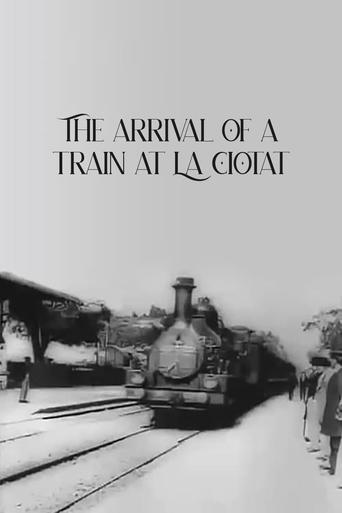
A group of people are standing along the platform of a railway station in La Ciotat, waiting for a train. One is seen coming, at some distance, and eventually stops at the platform. Doors of the railway-cars open and attendants help passengers off and on. Popular legend has it that, when this film was shown, the first-night audience fled the café in terror, fearing being run over by the "approaching" train. This legend has since been identified as promotional embellishment, though there is evidence to suggest that people were astounded at the capabilities of the Lumières' cinématographe.
Four lives that could not be more different and a single passion that unites them: the unconditional love for their cinemas, somewhere at the end of the world. Comrades in Dreams brings together six cinema makers from North Korea, America, India and Africa and follows their efforts to make their audiences dream every night.
A TV adaptation of Zuzka Zguriška's novel of the same name. The story takes place in a characterful Slovak village. It shows a picture of the inhabitants of Myjava in the 1920s, where there is no lack of freshness, brightness, liveliness and cheerfulness. The main character, a wealthy patriarchal ruler, orders her three adult sons around. She refuses to acknowledge her son's love; she does not want a poor bride. She enjoys the rich Susanna, whom the second son marries. After many convoluted and humorous transformations, the poor girl nevertheless wins the seemingly stony heart of the Scourge.