

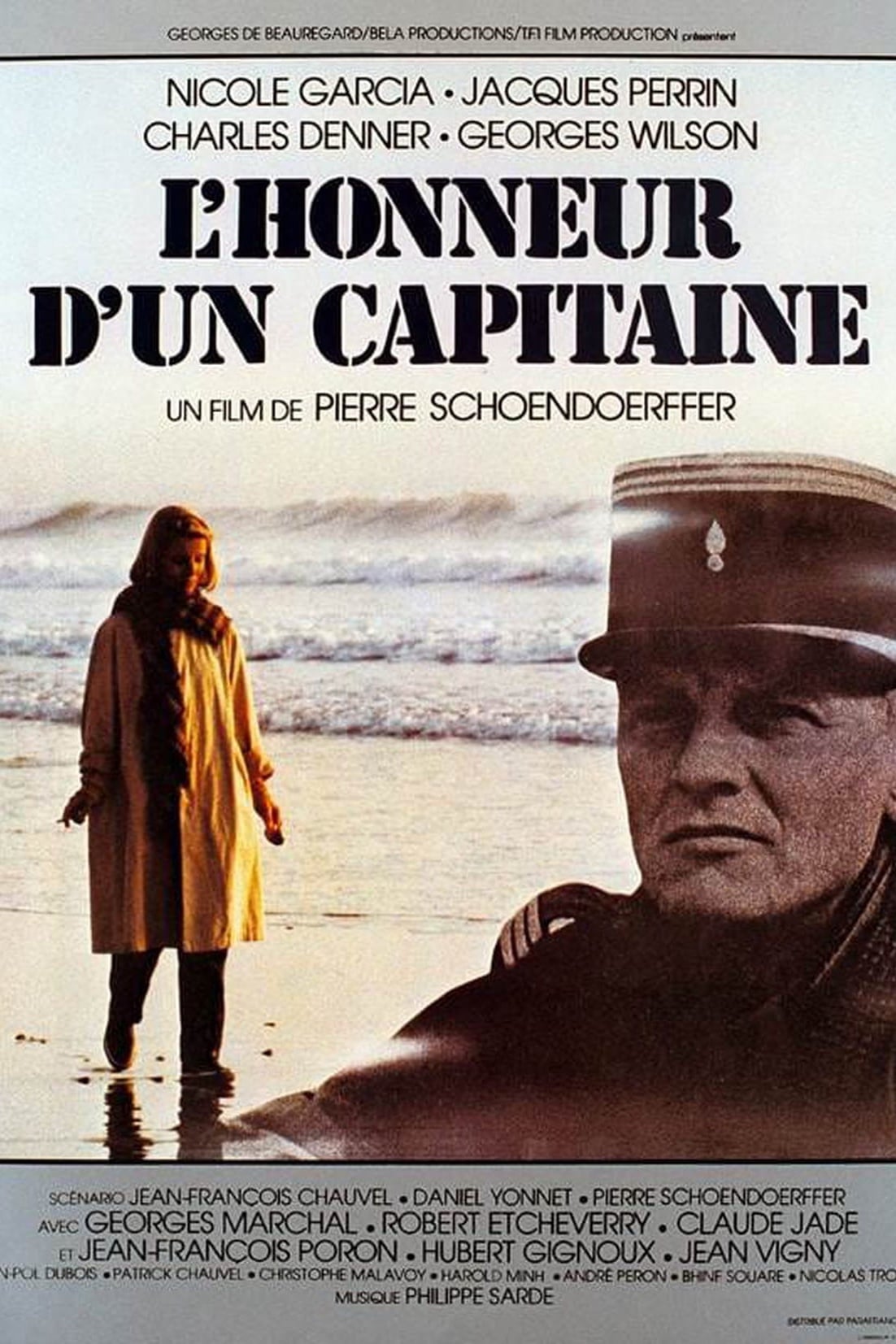
A Captain's Honor
Drama · History · War
Overview
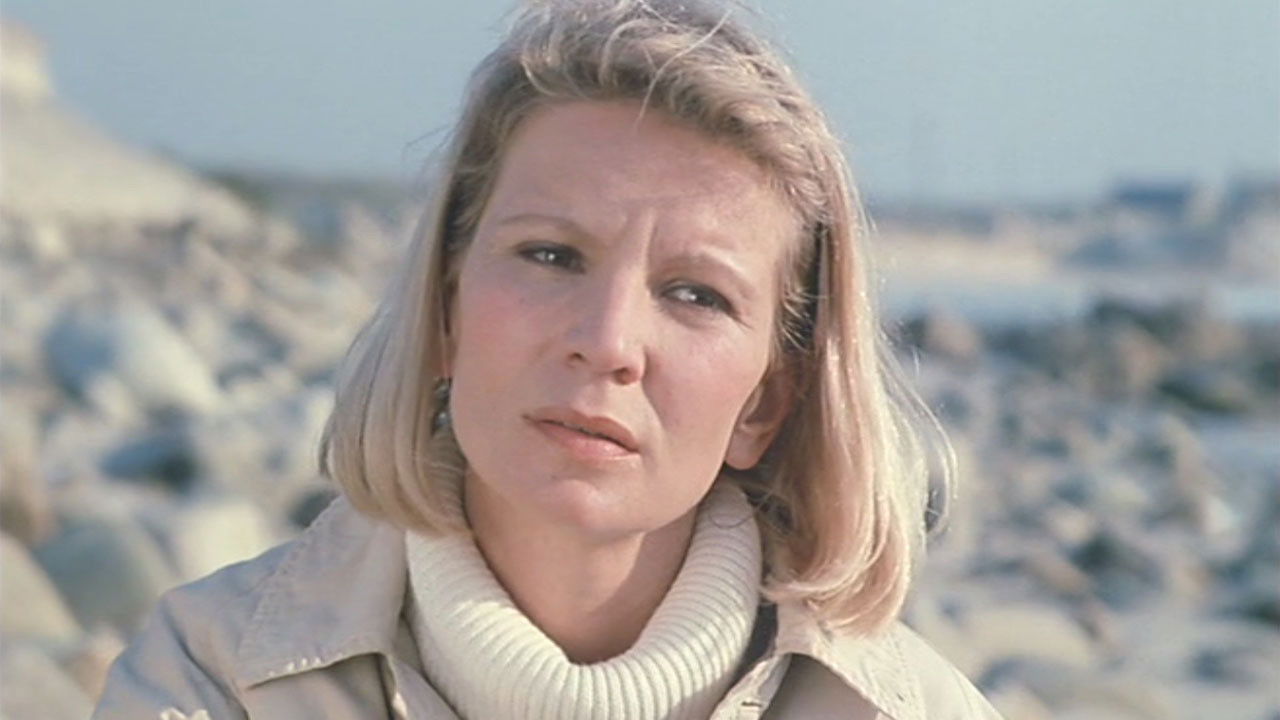
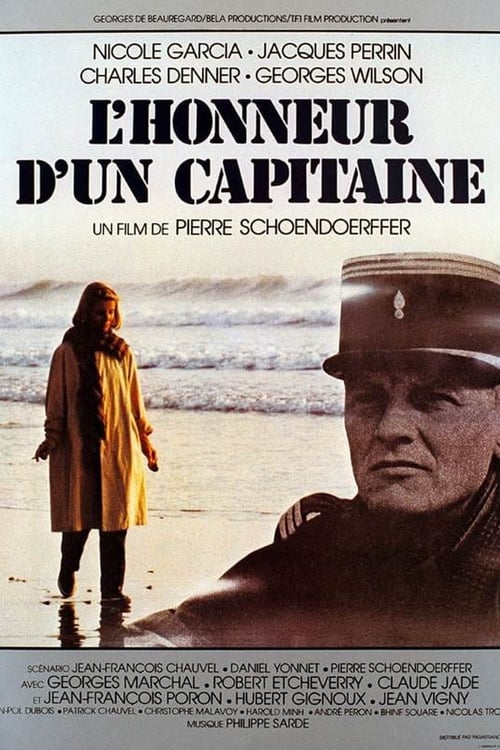
During a televised debate on the Algerian war in the early 1980s, Professor Paulet denounced the methods of Captain Caron, killed in action in 1957. The widow of the captain, Patricia, decided to file a defamation suit.
Top Cast
Nicole Garcia
Patricia Caron
Jacques Perrin
Marcel Caron

Claude Jade
Maître Valouin
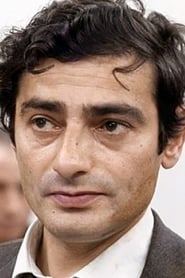
Charles Denner
Maître Gillard
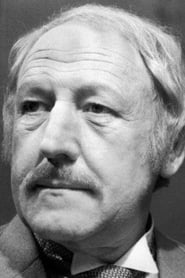
Georges Wilson
Bâtonnier
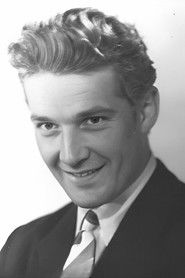
Georges Marchal
General Keller
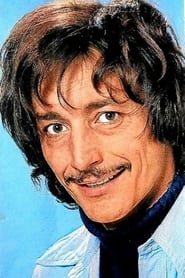
Robert Etcheverry
Commandant Guilloux

Christophe Malavoy
Automarchi
Patrick Chauvel
Schuster
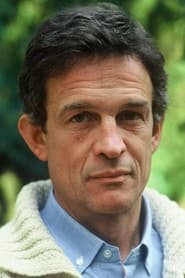
Jean-François Poron
Jakez
Jean Vigny
Paulet
Alain Bastien-Thiry
Pierre Caron





Nicole Garcia
Nicole Garcia
Patricia Caron
Nicole Garcia
Patricia Caron
Jacques Perrin
Jacques Perrin
Marcel Caron
Jacques Perrin
Marcel Caron
Claude Jade
Claude Jade
Maître Valouin
Claude Jade
Maître Valouin
Charles Denner
Charles Denner
Maître Gillard
Charles Denner
Maître Gillard
Georges Wilson
Georges Wilson
Bâtonnier
Georges Wilson
Bâtonnier
Georges Marchal
Georges Marchal
General Keller
Georges Marchal
General Keller
Robert Etcheverry
Robert Etcheverry
Commandant Guilloux
Robert Etcheverry
Commandant Guilloux
Christophe Malavoy
Christophe Malavoy
Automarchi
Christophe Malavoy
Automarchi
Patrick Chauvel
Patrick Chauvel
Schuster
Patrick Chauvel
Schuster
Jean-François Poron
Jean-François Poron
Jakez
Jean-François Poron
Jakez
Similar Movies
Happily married with a daughter, Marc is a successful real estate agent in Aix-en-Provence. One day, he has an appointment with a woman to view a traditional country house. A few hours later, Marc finally puts a name to her face. It's Cathy, the girl he was in love with growing up in Oran, Algeria, in the last days of the French colonial regime. Marc hurries to her hotel. They spend the night together. Then she's gone again. And Marc's mother tells him Cathy never left Algeria. She was killed with her father in a bombing just before independence...
Djamila, a young Algerian woman living with her brother Hadi and her uncle Mustafa in the Casbah district of Algiers under the French occupation of Algeria, sees the full extent of injustice, tyranny and cruelty on his compatriots by French soldiers. Jamila's nationalist spirit will be strengthened when French forces invade her university to arrest her classmate Amina who commits suicide by ingesting poison. Shortly after the prominent Algerian guerrilla leader Youssef takes refuge with her, she realizes that her uncle Mustafa is part of this network of anti-colonial rebel fighters. Her uncle linked her to the National Liberation Front (FLN). A series of events illustrate Jamila's participation in resistance operations against the occupier before she was finally captured and tortured. Finally, despite the efforts of her French lawyer, Jamila is sentenced to death...
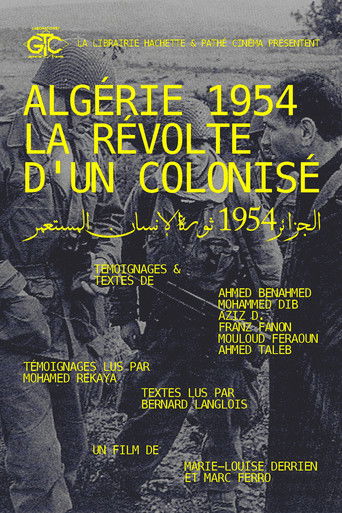
This film presents the point of view of an Arab from Algeria who rebels against colonization. He analyzes the process of awareness, the transition to revolt, to armed insurrection. Algeria and the settlers are seen through this lens and not the way a Frenchman saw the country. He gives voice to the Arabs at a time when this word was not heard: sometimes it was not even produced, at least publicly. The testimonies are based on real propositions, most of them were made to the author during his stay in Algeria from 1948 to 1956, then in 1958 and 1959. The comments are borrowed from the texts of Arab theorists of the revolution Algerian. This film thus completely evacuates the point of view of those who are not insurgents; he does not give the opinion of the colonists. It is the direct expression of what was the revolt of a colonized person: it thus constitutes the very type of the historical document.
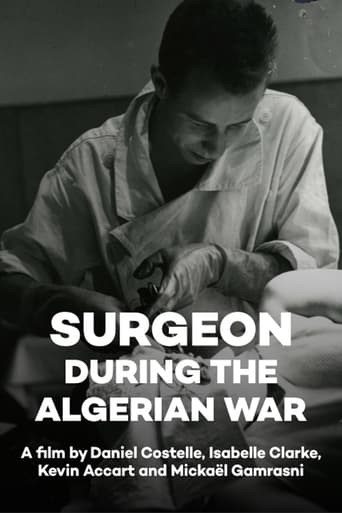
Has everything really been said about the Algerian war? Although the archives are opening up, almost fifty years after the signing of the Evian Agreements (March 18, 1962), direct witnesses are beginning to disappear. They are, however, unique bearers of history, often the only ones able to illustrate the harsh reality of a long-hidden period. Gérard Zwang, surgeon of the contingent between May 1956 and June 1958, is one of these essential witnesses who help us discover an original history of the Algerian War. During his service, in charge of treating the most atrocious wounds of his fellow soldiers, he sees the war from the side of its victims. He did not fight with a machine pistol in his hand, but behind the closed doors of an operating room where life gives way to death in a matter of seconds.
Algiers, a few years after the civil war. Amal and Samir have decided to celebrate their twentieth wedding anniversary in a restaurant. While on their way, their share their views on Algeria: Amal talks about lost illusions and Samir about the necessity to cope with them. At the same time, their son Fahim and his friends Feriel and Reda are wandering about in a hostile Algiers about to steal their youth.
In 1958 in Paris, during the Algerian War, a young trainee lawyer, Maître Chabrier, was assigned to defend an Algerian garbage collector against paratroopers who had beaten him. Stay out of Algerian affairs, his peers advise him because the trial is taking a political turn. Chabrier acquired the reputation of the Fellaghas' lawyer.