

Fadhma N'Soumer
War · History
Overview
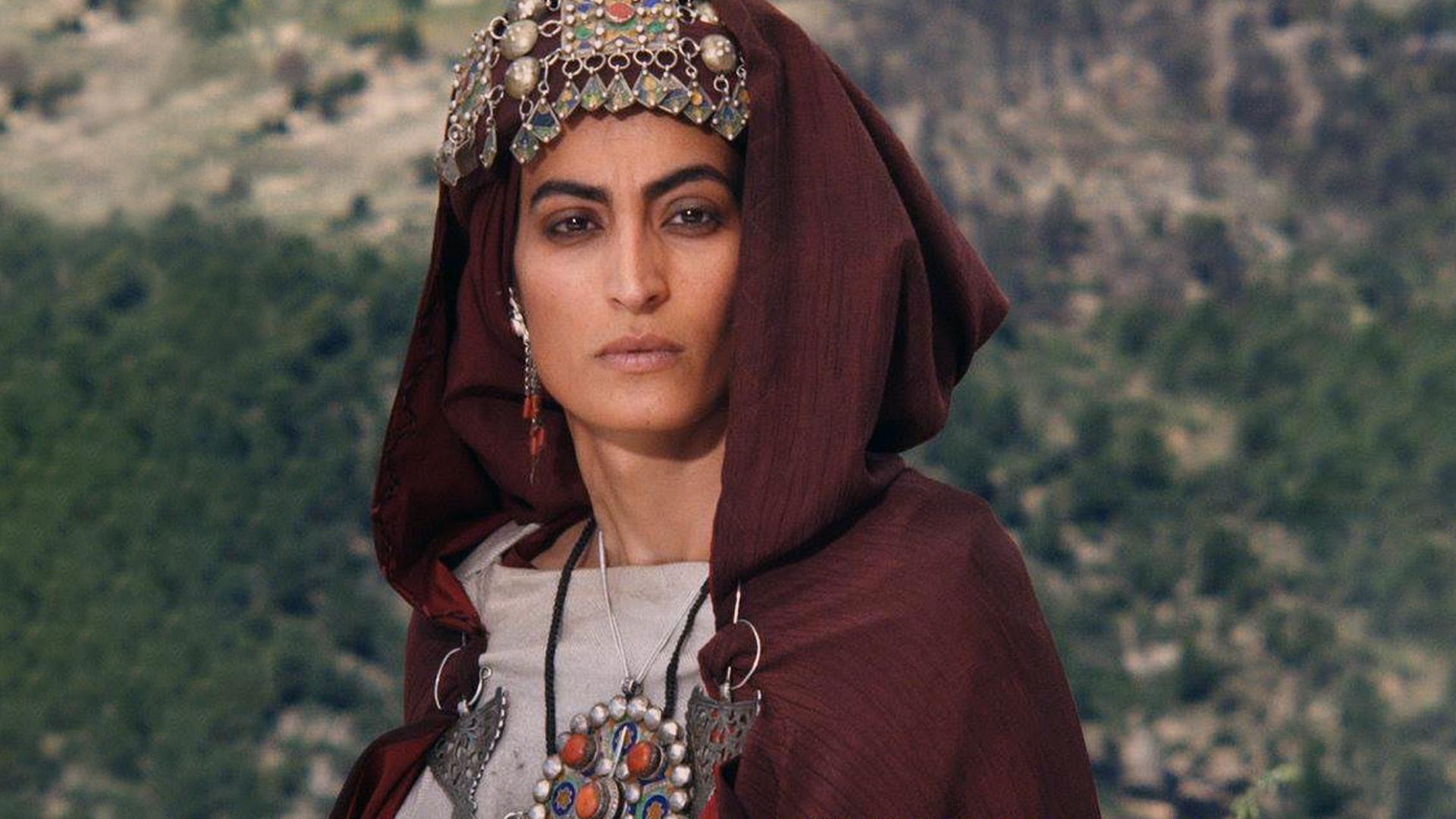
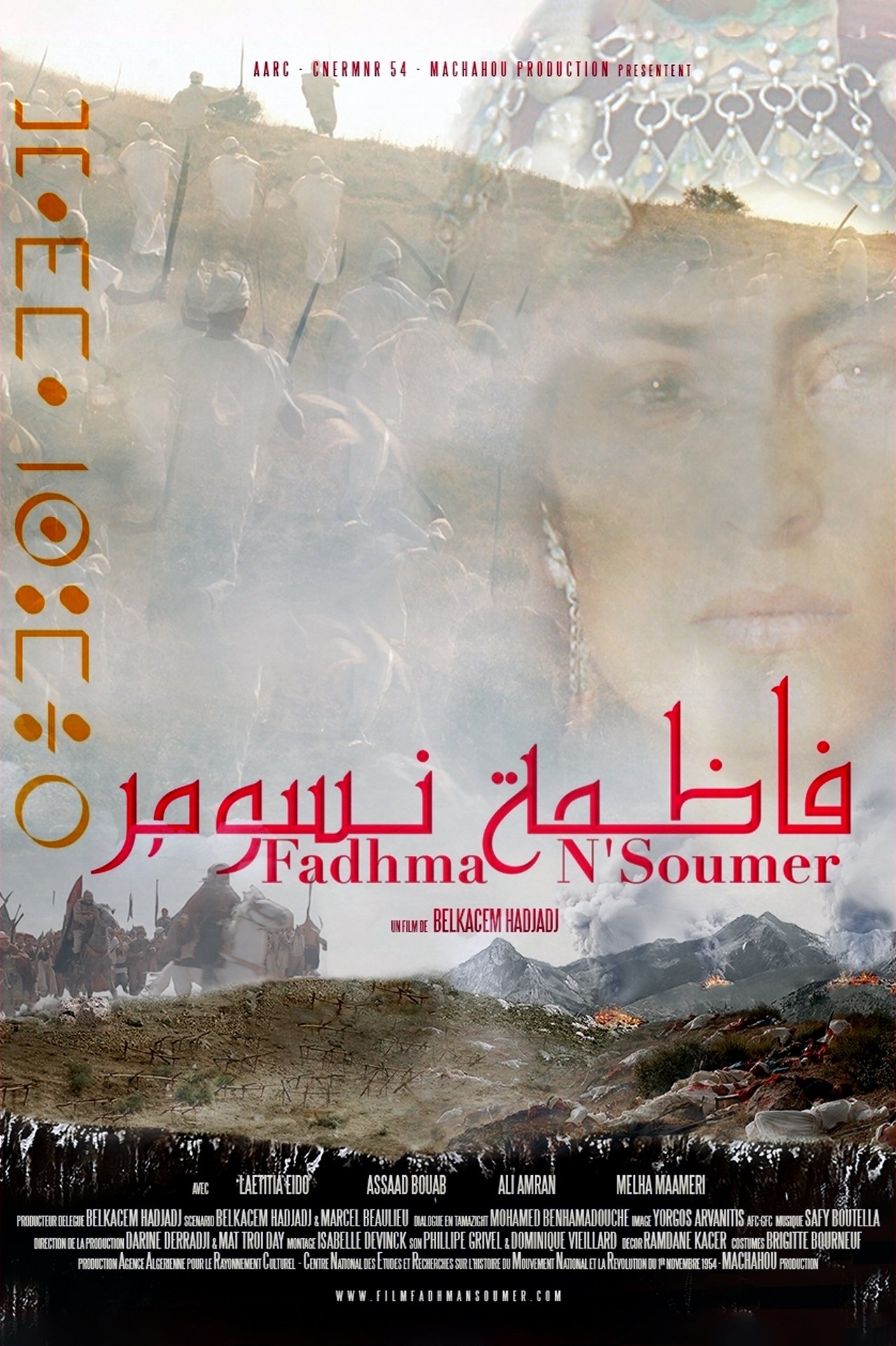
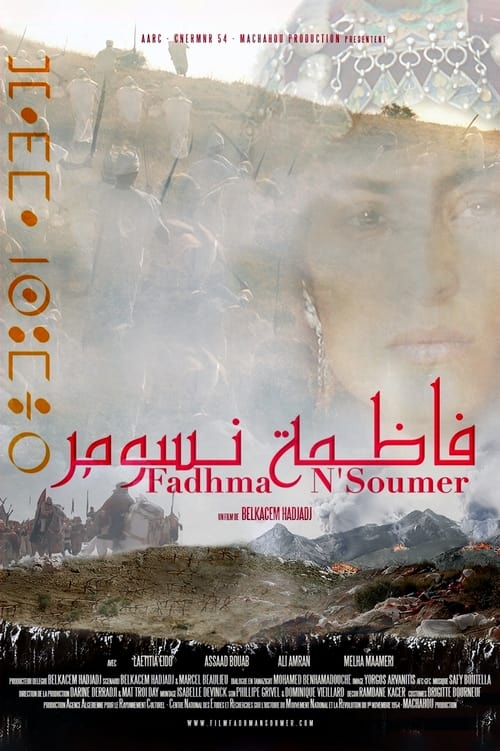
This film, is about the courage and the determination of a young woman in djurdjur"as mountain in Algeria, fighting for her ancestor land during the earlier years of french occupation.


Laëtitia Eïdo
Laëtitia Eïdo
Fadhma
Laëtitia Eïdo
Fadhma

Salem Ait Ali Belkacem
Salem Ait Ali Belkacem
Salem Usalas
Salem Ait Ali Belkacem
Salem Usalas
Ali Amrane
Ali Amrane
Anzar
Ali Amrane
Anzar
Ahcène Kherabi
Ahcène Kherabi
Rabah
Ahcène Kherabi
Rabah
Farid Cherchari
Farid Cherchari
Tahar
Farid Cherchari
Tahar
Menad Embarek
Menad Embarek
Moulay Ibrahim
Menad Embarek
Moulay Ibrahim
Saïd Bensalama
Saïd Bensalama
Hadj Tahar
Saïd Bensalama
Hadj Tahar
Farid Amroun
Farid Amroun
Tayeb
Farid Amroun
Tayeb

Jean-Claude Caron
Jean-Claude Caron
Randon
Jean-Claude Caron
Randon
Christophe Vandevelde
Christophe Vandevelde
Mac Mahon
Christophe Vandevelde
Mac Mahon
Similar Movies
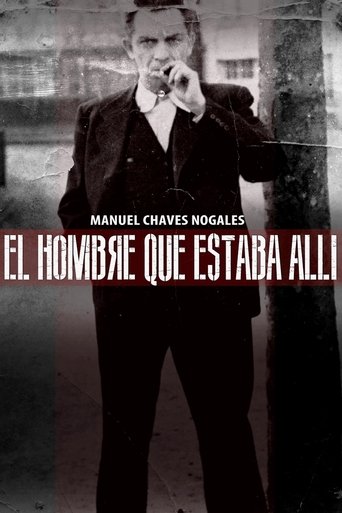
The Spanish journalist Manuel Chaves Nogales (1897-1944) was always there where the news broke out: in the fratricidal Spain of 1936, in Bolshevik Russia, in Fascist Italy, in Nazi Germany, in occupied Paris or in the bombed London of World War II; because his job was to walk, see and tell stories, and thus fight against tyrants, at a time when it was necessary to take sides in order not to be left alone; but he, a man of integrity to the bitter end, never did so.
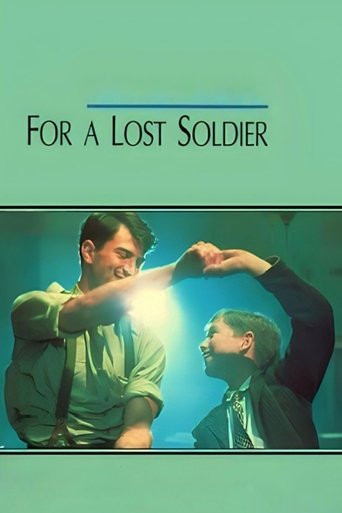
In the occupied Netherlands near the end of WWII, a young teenager, Jeroen Boman (Maarten Smit) is sent to the Dutch countryside to avoid the war in Amsterdam. While living with his adopted family, Jeroen meets and becomes friends with a Canadian soldier named Walt Cook, who is stationed at the same town he is staying at. Joroen and Walt spend a lot of time playing around and eventually a romantic relationship develops between them. The boy’s sexual curiosity leads him to have a sexual experience with Walt, an encounter that is shown with some vague detail but without actually showing any nudity, even though sexual intimacy between the two of them is implied. Overall, the movie handles this difficult subject with an elegant style and feeling, without having the adult-child relationship overwhelm the viewer and thus allowing the movie to be seen as just a wartime relationship between two people that marks an important time in a young boy’s life.
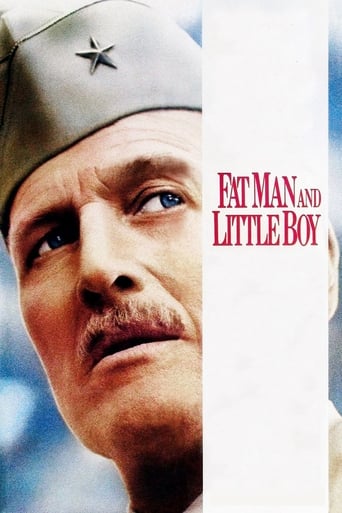
Assigned to oversee the development of the atomic bomb, Gen. Leslie Groves is a stern military man determined to have the project go according to plan. He selects J. Robert Oppenheimer as the key scientist on the top-secret operation, but the two men clash fiercely on a number of issues. Despite their frequent conflicts, Groves and Oppenheimer ultimately push ahead with two bomb designs — the bigger "Fat Man" and the more streamlined "Little Boy."
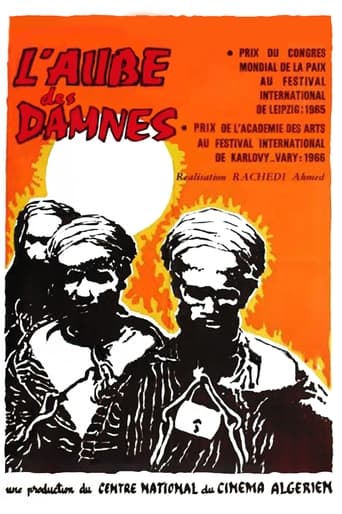
This excellent feature-length documentary - the story of the imperialist colonization of Africa - is a film about death. Its most shocking sequences derive from the captured French film archives in Algeria containing - unbelievably - masses of French-shot documentary footage of their tortures, massacres and executions of Algerians. The real death of children, passers-by, resistance fighters, one after the other, becomes unbearable. Rather than be blatant propaganda, the film convinces entirely by its visual evidence, constituting an object lesson for revolutionary cinema.
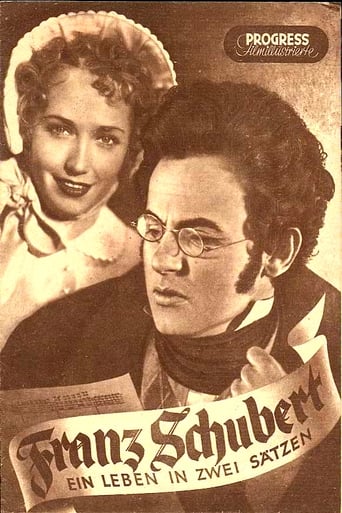
Franz Schubert toils by day as his father’s clerk while secretly composing in Beethoven’s shadow, gaining little recognition until friends persuade publisher Diabelli to host a public performance where he meets and falls for soprano Therese Grob. Abandoning a teaching career, he moves in with artist and poet friends, finds inspiration for the “Erlkönig,” and together with Therese sustains himself by performing his songs.

We are with Pasolini during the last hours of his life, as he talks with his beloved family and friends, writes, gives a brutally honest interview, shares a meal with Ninetto Davoli, and cruises for the roughest rough trade in his gun-metal gray Alfa Romeo. Over the course of the action, Pasolini’s life and his art are constantly refracted and intermingled to the point where they become one.