

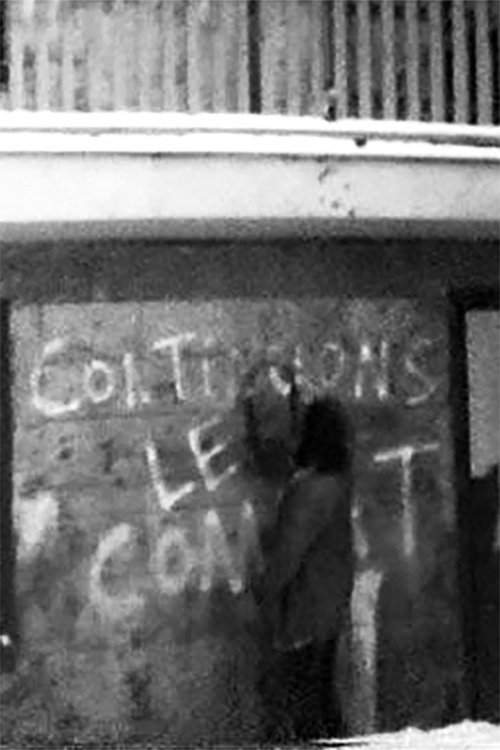
Don't Give Up The Fight
Documentary
Overview
The television footage of a wrestling match is employed here as a metaphor for Quebec society. Using voice-over narration, Falardeau presents a compelling analysis of the structure of wrestling and its rituals. The good guy against the evil antagonist, the forces of order and the desires of the crowd. The audience becomes part of the spectacle in this powerful show where wrestlers confront one another under the watchful eye of the referee. It is a ritual of catharsis. The documentary begins with the words, images and sounds of Quebec's political struggle, "SOS F.L.Q. Continuons le combat". Produced right after the October Crisis in 1970, a crucial moment in Quebec's struggle to become a sovereign state, independent of Canada, the tape is charged with the bitter experience and political aspirations of the period. We recognize in this tape, the "Falardeau style" evident through a very strong narration that supports the images till the end, when the video abruptly closes.
Top Cast


Larry Shreve
Larry Shreve
Larry Shreve
Similar Movies
Jean-Luc Godard brings his firebrand political cinema to the UK, exploring the revolutionary signals in late '60s British society. Constructed as a montage of various disconnected political acts (in line with Godard's then appropriation of Soviet director Dziga Vertov's agitprop techniques), it combines a diverse range of footage, from students discussing The Beatles to the production line at the MG factory in Oxfordshire, burnished with onscreen political sloganeering.
Chile is the only country that has privatized its waters, in favor of large corporations, to the detriment of homes in rural and urban communities. Secos is a short that makes this reality visible, through the dialog between anonymous fighters from the most heavily affected provinces, with renowned actors and actresses in the country. The objective is to activate the topic of water as a human right, to achieve in the future the recovery of this vital element as a common good for all communities and territories.
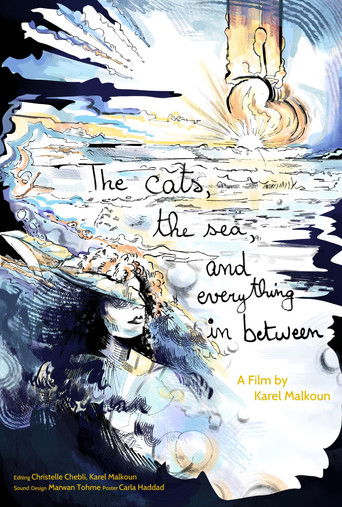
In 2022, when the economic crisis in her native country was at its peak, she decided to visit her family there. She turned her short trip into a collage-like diary in which she reflects on her relationship with her homeland, which is in a state of protracted decay. The film is composed of spontaneous snapshots capturing the author's stay, interspersed with inserted captions serving as personal, often poetically formulated comments and observations. As a result, the film does not hide its strongly subjective perspective, but at the same time builds on it to make an important statement that shows the transformation of Lebanese society in everyday details such as the appearance of the city itself or in the intimate sphere of the author's family life.
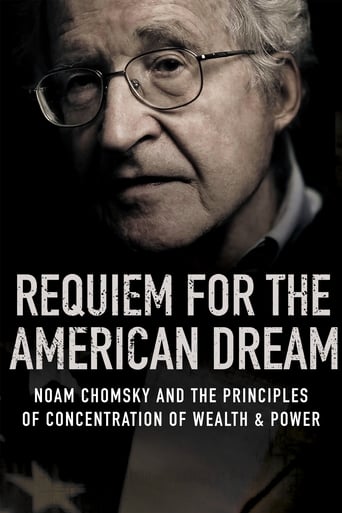
Through interviews filmed over four years, Noam Chomsky unpacks the principles that have brought us to the crossroads of historically unprecedented inequality – tracing a half-century of policies designed to favor the most wealthy at the expense of the majority – while also looking back on his own life of activism and political participation. He provides penetrating insight into what may well be the lasting legacy of our time – the death of the middle class, and swan song of functioning democracy.
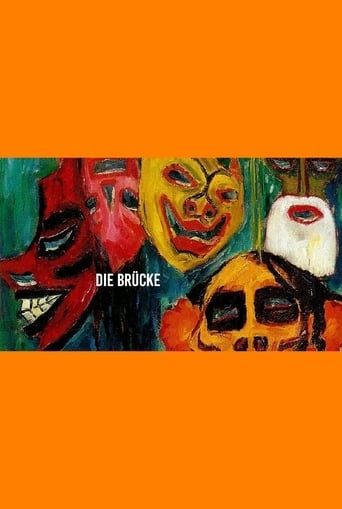
This movement marks the beginning of modern art in Germany. It is the German equivalent of French Fauvism, from which it draws its main inspiration, but it carries an Expressionist and social emphasis that is characteristic of Nordic 'angst.' The artists of Die Brucke were restless creatures, over-sensitive, haunted by religious, sexual, political or moral obsessions. Dramatic landscapes and nudes, mystical and visionary compositions, scenes of the countryside, the streets, the circus, the cafe-dansants and the demi-monde were their principal subjects. Their pure colours blaze in acid stridency, encompassed by rough, dry contours which show the influence of African art and primitive woodcuts. The work of the following is shown: Kirchner, Fritz Bleyl, Erich Heckel, Schmidt-Rottluff, Otto Muller, Emil Nolde and Max Pechstein.
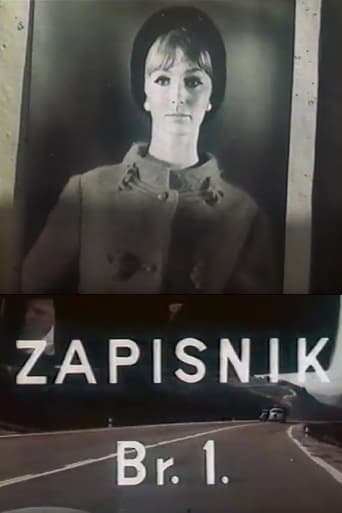
Another early Aleksandar Petrovic documentary, done for Dunav film in 1964. It is made as a kind of a road movie through socialist Yugoslavia, registering numerous bizarre sites and events, with strong irony both in the selection of scenes and in the background commentaries. Originally filmed in 16mm.