

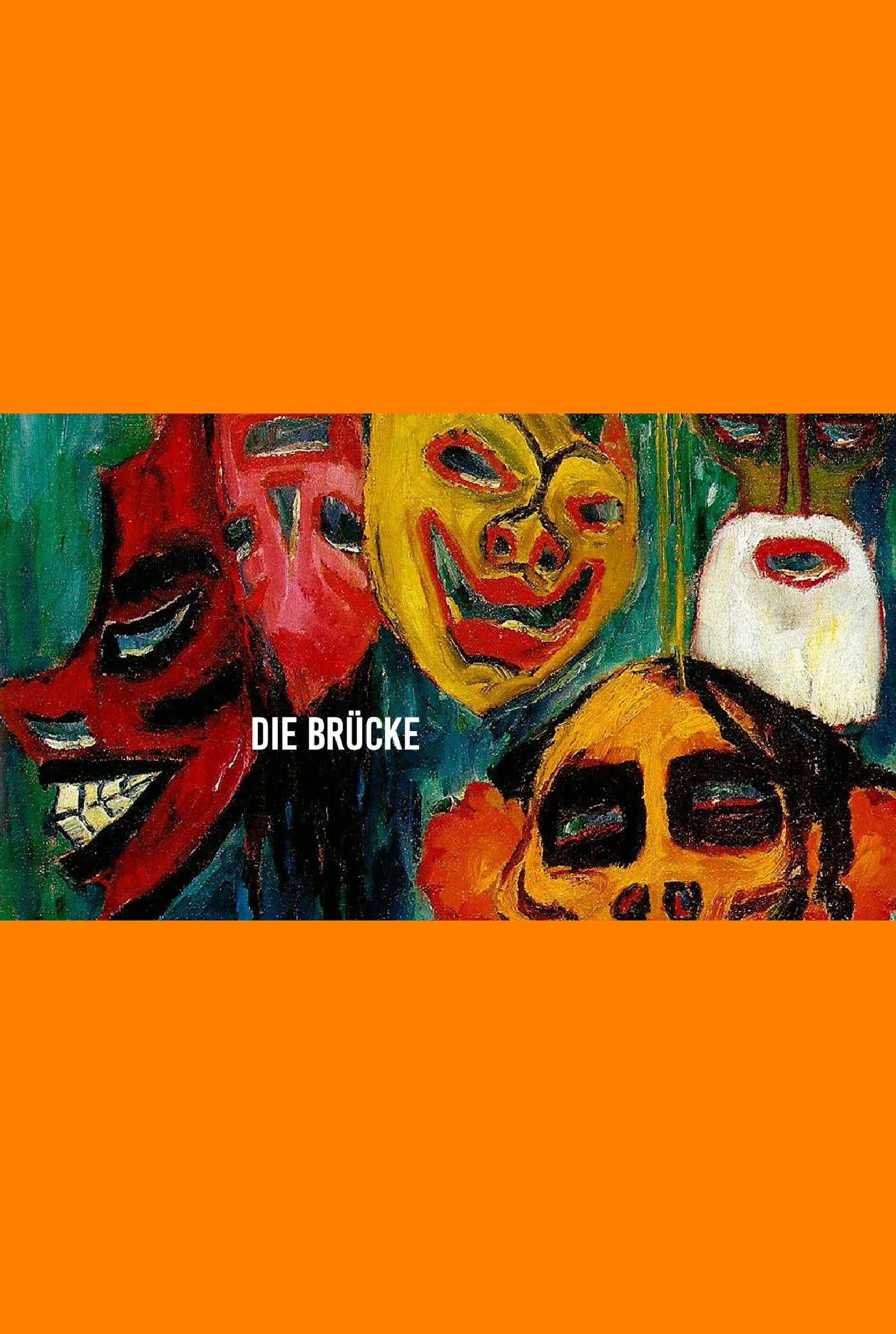
Die Brücke: The Birth of Modern Art in Germany
Documentary
Overview
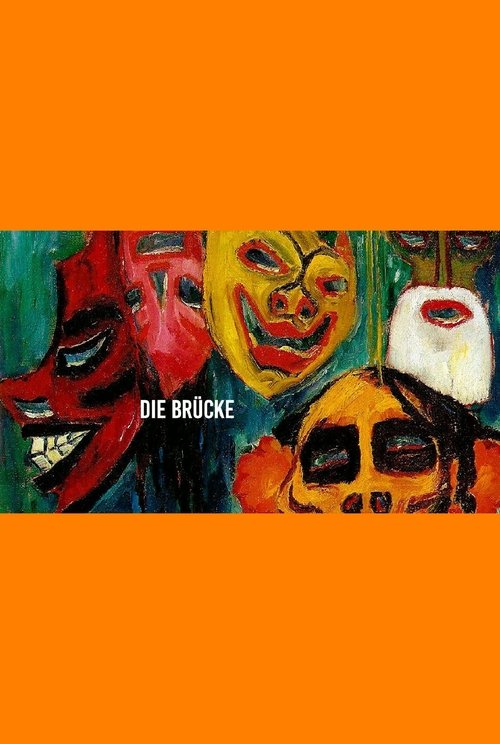
This movement marks the beginning of modern art in Germany. It is the German equivalent of French Fauvism, from which it draws its main inspiration, but it carries an Expressionist and social emphasis that is characteristic of Nordic 'angst.' The artists of Die Brucke were restless creatures, over-sensitive, haunted by religious, sexual, political or moral obsessions. Dramatic landscapes and nudes, mystical and visionary compositions, scenes of the countryside, the streets, the circus, the cafe-dansants and the demi-monde were their principal subjects. Their pure colours blaze in acid stridency, encompassed by rough, dry contours which show the influence of African art and primitive woodcuts. The work of the following is shown: Kirchner, Fritz Bleyl, Erich Heckel, Schmidt-Rottluff, Otto Muller, Emil Nolde and Max Pechstein.




No cast information.
Similar Movies
Director Philip Haas and artist David Hockney invite you to join them on a magical journey through China via a marvelous 72-foot long 17th-century Chinese scroll entitled The Kangxi Emperor's Southern Inspection Tour (1691-1698), scroll seven . As Hockney unrolls the beautiful and minutely detailed work of art, he traces the Emperor Kangxi’s second tour of his southern empire in 1689.
Cyprien Tokoudagba is from the city of Abomey in the Benin Republic of West Africa, where he paints the religious houses of the vodun. Haas and his film crew follow Cyprien as he first paints and then takes part in the ceremony to open a new temple. The paintings include three vodun figures and several emblems, including a pipe and a duck. Cyprien explains his work in the context of the religion and takes the crew to film two other local ceremonies, one where the dead are believed to come back to instruct the living through wild dancing and, another, where women warriors perform their war dances.
Loïe Fuller, stage name of Marie Louise Fuller: the American actress and dancer trained in burlesque, circuses and variety shows who, in the 1890s, signed by the Folies Bergère of Paris, became a star. She was portrayed by Toulouse-Lautrec, loved by the symbolists, the inspiration for Art Nouveau, in her shows she combined dance, spirals of fabric and light, reflected from behind or from below through the glass floor that she had created. She transformed into the "Fairy of Light", was taken up (especially in her Serpentine Dance) by Georges Méliès and Alice Guy and influenced René Clair's early films.
Alma W. Thomas lived a life of firsts: the first Fine Arts graduate of Howard University (1924), the first Black woman to mount a retrospective at the Whitney Museum of American Art (1972), and the first Black woman to have her paintings exhibited in the White House (2009). Yet she did not receive national attention until she was 80.
A portrait of Highlights Magazine following the creation of the cultural phenomenon's 70th Anniversary issue, from the first editorial meeting to its arrival in homes, and introducing the quirky people who passionately produce the monthly publication for "the world's most important people,"...children. Along the way, a rich and tragic history is revealed, the state of childhood, technology, and education is explored, and the future of print media is questioned.