

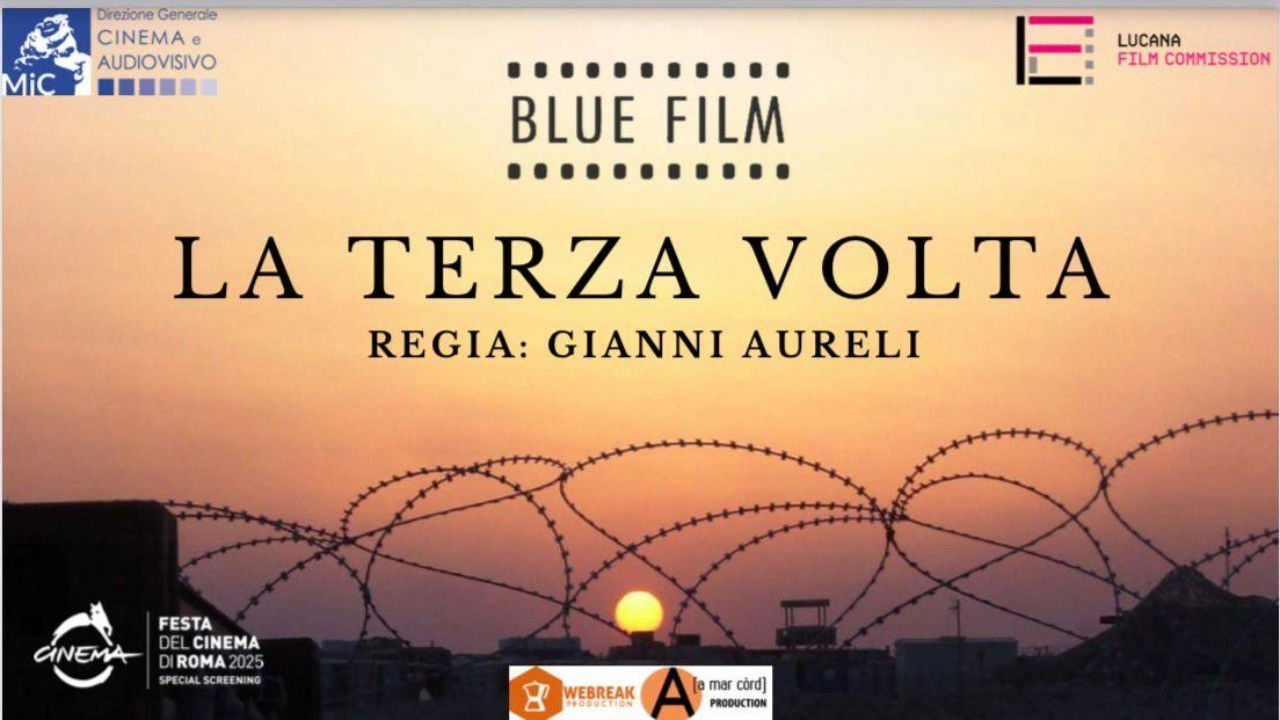

La Terza Volta
History · War
Overview
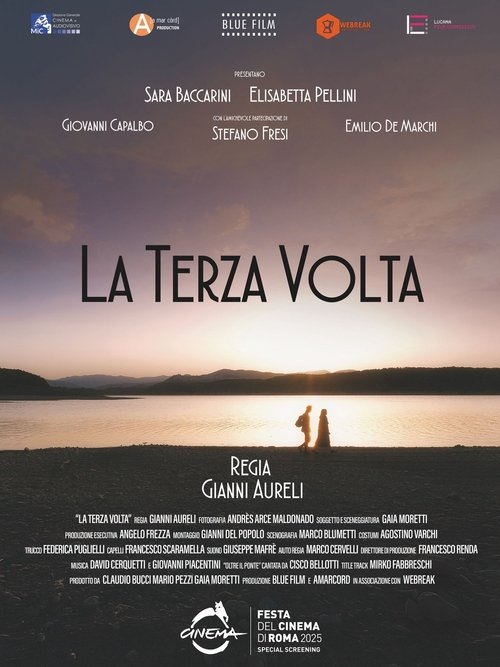
Matera, 1943. Partisan Nichi has been wounded and is returning to her brigade's hideout, but her true concerns are focused on the fate of her husband, a prisoner of the German army. When she arrives at the hideout, however, she finds no one there except a young courier accompanied by a civilian woman who urgently needs to be escorted out of the city by nightfall.
Top Cast
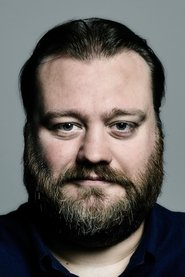
Stefano Fresi
Cuoco
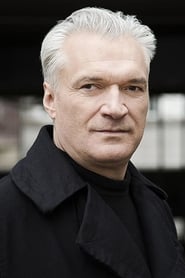
Emilio De Marchi
Generale Maximilian Koch

Sara Baccarini
Nichi
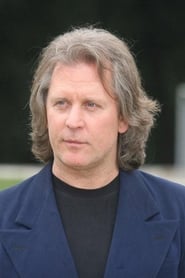
Giovanni Capalbo
Antonio

Elisabetta Pellini
Edda
Teo Guarini
Ufficiale Partigiano
Matteo Valentini
Caposquadra Vico
Samuele Zappavigna
Romolo
Giancarlo Porcari
Gabriele
Adele Perna
Marta
Antonio Flamini
Partigiano
Erminio Truncellito
Ufficiale Partigiano #2




Stefano Fresi
Stefano Fresi
Cuoco
Stefano Fresi
Cuoco
Emilio De Marchi
Emilio De Marchi
Generale Maximilian Koch
Emilio De Marchi
Generale Maximilian Koch
Sara Baccarini
Sara Baccarini
Nichi
Sara Baccarini
Nichi
Giovanni Capalbo
Giovanni Capalbo
Antonio
Giovanni Capalbo
Antonio
Elisabetta Pellini
Elisabetta Pellini
Edda
Elisabetta Pellini
Edda
Teo Guarini
Teo Guarini
Ufficiale Partigiano
Teo Guarini
Ufficiale Partigiano
Matteo Valentini
Matteo Valentini
Caposquadra Vico
Matteo Valentini
Caposquadra Vico
Samuele Zappavigna
Samuele Zappavigna
Romolo
Samuele Zappavigna
Romolo
Giancarlo Porcari
Giancarlo Porcari
Gabriele
Giancarlo Porcari
Gabriele
Adele Perna
Adele Perna
Marta
Adele Perna
Marta
Similar Movies
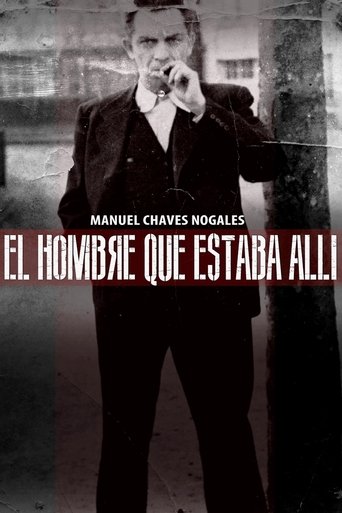
The Spanish journalist Manuel Chaves Nogales (1897-1944) was always there where the news broke out: in the fratricidal Spain of 1936, in Bolshevik Russia, in Fascist Italy, in Nazi Germany, in occupied Paris or in the bombed London of World War II; because his job was to walk, see and tell stories, and thus fight against tyrants, at a time when it was necessary to take sides in order not to be left alone; but he, a man of integrity to the bitter end, never did so.
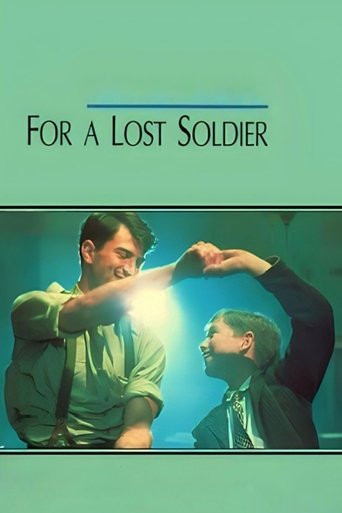
In the occupied Netherlands near the end of WWII, a young teenager, Jeroen Boman (Maarten Smit) is sent to the Dutch countryside to avoid the war in Amsterdam. While living with his adopted family, Jeroen meets and becomes friends with a Canadian soldier named Walt Cook, who is stationed at the same town he is staying at. Joroen and Walt spend a lot of time playing around and eventually a romantic relationship develops between them. The boy’s sexual curiosity leads him to have a sexual experience with Walt, an encounter that is shown with some vague detail but without actually showing any nudity, even though sexual intimacy between the two of them is implied. Overall, the movie handles this difficult subject with an elegant style and feeling, without having the adult-child relationship overwhelm the viewer and thus allowing the movie to be seen as just a wartime relationship between two people that marks an important time in a young boy’s life.
This short-form documentary focuses on the true story of Alfons Heck, who as an impressionable 10-year-old boy became a high-ranking member of the Hitler youth movement during World War II. The story is told in his own words. This film originally aired as part of the "America Undercover" series on HBO.
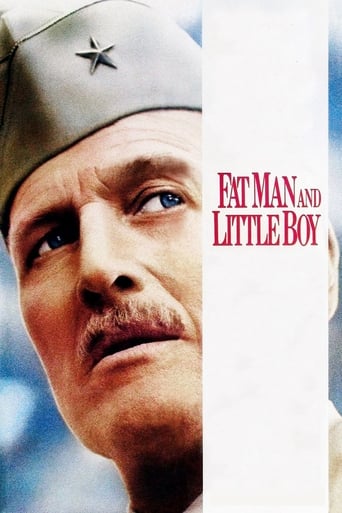
Assigned to oversee the development of the atomic bomb, Gen. Leslie Groves is a stern military man determined to have the project go according to plan. He selects J. Robert Oppenheimer as the key scientist on the top-secret operation, but the two men clash fiercely on a number of issues. Despite their frequent conflicts, Groves and Oppenheimer ultimately push ahead with two bomb designs — the bigger "Fat Man" and the more streamlined "Little Boy."
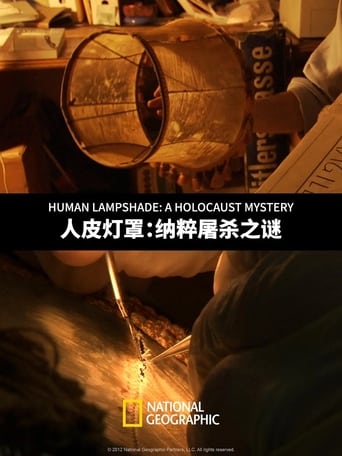
This story follows one man's quest to uncover the origins and reveal the mysteries of a possible Holocaust artifact some historians now say never existed: lampshades made of human skin. When the flood waters of Hurricane Katrina receded, they left behind a wrecked New Orleans and a strange looking lamp that an illicit dealer claimed was 'made from the skin of Jews.'
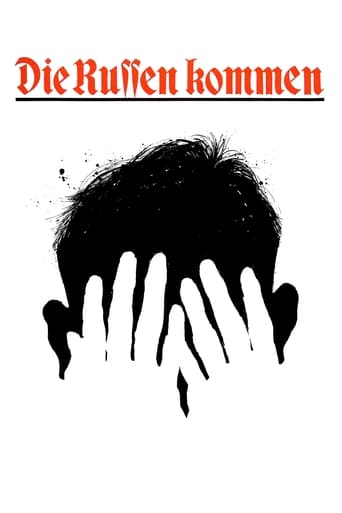
It’s the spring of 1945 in a small resort town on the Baltic. Günter is 16 and firmly believes that the Germans will win the war. During the hunt for a forced labourer who is on the run, Günter catches him and watches as he is shot to death. He proudly accepts the award of an Iron Cross before being shipped to the nearby front as part of the last contingent of troops. He is quickly captured by Soviet soldiers, but manages to escape and return home. When the town is occupied by the Red Army, Günter is arrested for the murder of the forced labourer. The film was banned in 1968 before it was completed, and a large portion of the negative was later destroyed.
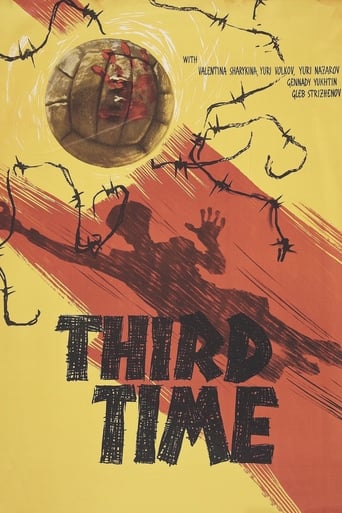
The film is based on the real fact — football «The Death Match» between the German team and a team of Soviet prisoners of war, former "Dinamo". It happened in Kiev on June 22, 1942. Anticipating the possibility of losing, the Germans made a condition — defeat or death. If the Germans won, the Soviet footballers were promised freedom...