

Brasília em Super 8
Documentary


No cast information.
Similar Movies
Pessac, Quartiers Modernes Frugès: The camera goes from living room to living room, from yard to bath, kitchen to balcony, strolls through a typical day at the row houses built by Le Corbusier in the 20s. This film focuses on the question of how the residents have departed from Le Corbusier’s original concept in the intervening decades so that they feel at home within their own four walls.
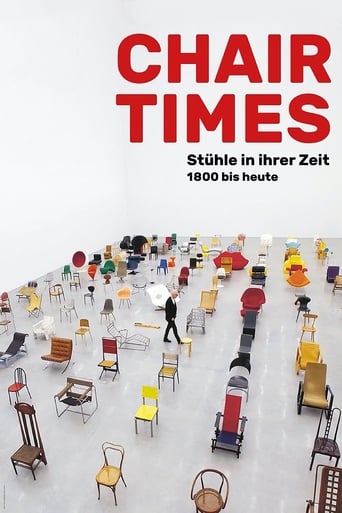
"Chair Times" charts a course through an ocean of chairs. In the focus are 125 objects from the Collection of the Vitra Design Museum. Arranged according to their year of production, they illustrate development from 1807 to the very latest designs straight off the 3D printer, forming a timeline to modern seating design. The film features many people whose vocations involve design and who are experts in the field, such as designers Hella Jongerius, Antonio Citterio and Ronan Bouroullec, architects and collectors Arthur Rüegg and Ruggero Tropeano, architect David Chipperfield, Director Emeritus of MAK Vienna/Los Angeles Peter Noever, Mateo Kries, Director of the Vitra Design Museum, Vitra Design Museum curators Amelie Klein, Jochen Eisenbrand and collection curator Serge Mauduit. And your guide through the history of chairs is Rolf Fehlbaum, Chairman Emeritus of Vitra.
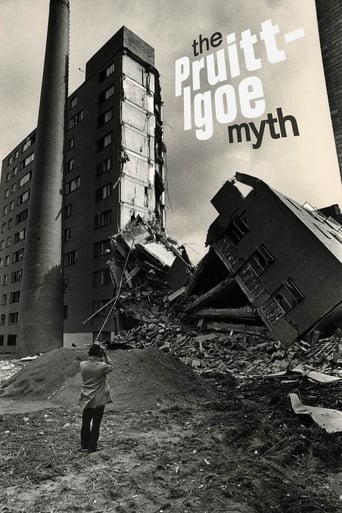
Destroyed in a dramatic and highly-publicized implosion, the Pruitt-Igoe public housing complex has become a widespread symbol of failure amongst architects, politicians and policy makers. The Pruitt-Igoe Myth explores the social, economic and legislative issues that led to the decline of conventional public housing in America, and the city centers in which they resided, while tracing the personal and poignant narratives of several of the project's residents. In the post-War years, the American city changed in ways that made it unrecognizable from a generation earlier, privileging some and leaving others in its wake. The next time the city changes, remember Pruitt-Igoe.
An award-winning wordless documentary that explores the architecture of the then new St. Peter's Seminary which is now seen as one of the most important post-war buildings in the United Kingdom. The film was made in celebration after architect Jack Coia was awarded the RIBA Gold Medal in 1969. Winner of the Medalla de Bronce at the Fifth Union of International Architects Festival in Madrid (1975).
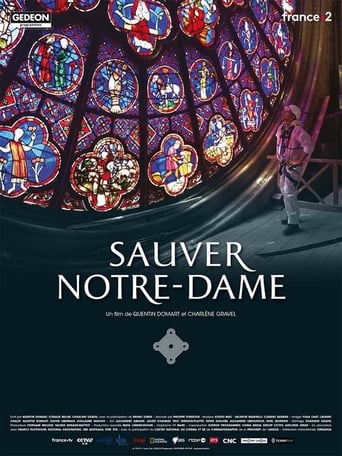
In the aftermath of the fire that struck Notre-Dame de Paris in 2019, the cathedral is in danger of collapsing. A race against time begins for a hundred men and women who will face danger, the unknown, and toxic lead dust for a year to save this world heritage site. Architects, stonemasons, carpenters, crane operators, scaffolders, rope access technicians, archaeologists: this unique project brings together rare skills. With rare enthusiasm and cohesion, they will achieve numerous technical and human feats. This film recounts the spectacular and moving adventure of these builders fighting to save Notre Dame.
The geometry of circles and ellipses is explored using the Roman Colosseum as an example. Using the Pantheon as another practical example, this program explores the concepts of central and intercepted angles, arc segments and chords. The Etude du Cinéma de l’Ecole de Barcelona (a short-lived group that appeared in Spain in the 1960s) offers the opportunity to consider the distrust of the avant-gardes with regard to narrative. The lacunar narration whose principle the School of Barcelona adopts goes against the traditional narrative and its quest for coherence and continuity. She invites the viewer to make the disconcerting experience of unbinding and emptiness. Such an approach involves an ethical posture. The Barcelona School follows in the footsteps of a modernity that intends to move away from an alienating authoritarian discourse and claims to make the spectator a partner in creation.
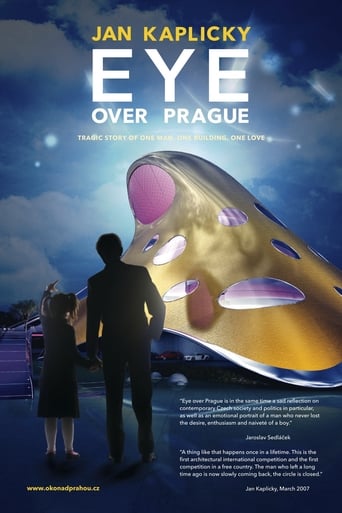
A personal and political biography of the Octopus, or the Prague National Library project, but also a biography of the last years of the life of the author of this design, Jan Kaplický, who wrote in his diary in 1998: to win the competition and have one love. With this entry, read by Eliška Kaplicky at the beginning of the film, it is as if the world-class Czech architect wrote not only the "script" for the final decade of his life, but also for a film that follows the dramatic social story of creative imagination and the intimate relationship between a man and a woman.