


Brutality in Stone
War · Documentary · History
Overview
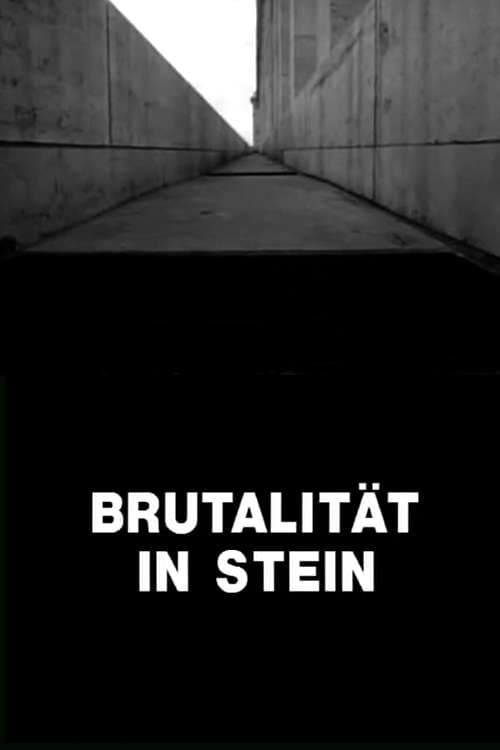
In his experimental short film "Brutalität in Stein" (Brutality in Stone), Alexander Kluge demonstrates how Nazi architecture used dimensions of inhuman and super-human scale to bolster the regime's politics of the same kind. Shots of huge neo-classical architectural structures from the Nazi period are confronted with equally anti-human national-socialist language as a voice-over.







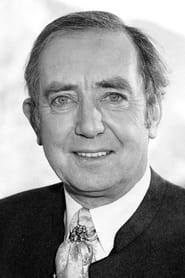
Hans Clarin
Hans Clarin
Narrator
Hans Clarin
Narrator
Christian Marschall
Christian Marschall
Narrator
Christian Marschall
Narrator
Similar Movies
The architectural plans for Berlin from 1938 are used as an example to illustrate the fascist claim to power and its aesthetic effect. The basis for this was the "General Building Inspection" under the direction of Albert Speer, whose enormous projects are illustrated by planning models and archive photographs.
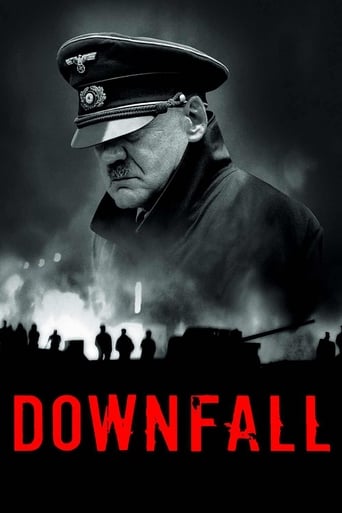
In April of 1945, Germany stands at the brink of defeat with the Russian Army closing in from the east and the Allied Expeditionary Force attacking from the west. In Berlin, capital of the Third Reich, Adolf Hitler proclaims that Germany will still achieve victory and orders his generals and advisers to fight to the last man. When the end finally does come, and Hitler lies dead by his own hand, what is left of his military must find a way to end the killing that is the Battle of Berlin, and lay down their arms in surrender.
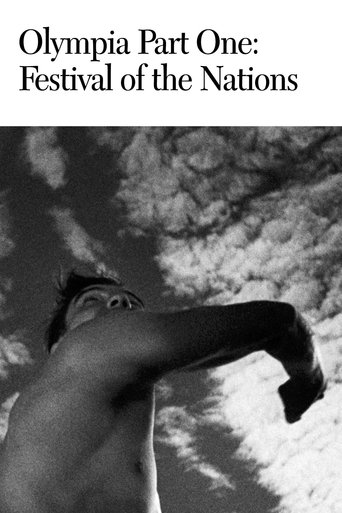
Starting with a long and lyrical overture, evoking the origins of the Olympic Games in ancient Greece, Riefenstahl covers twenty-one athletic events in the first half of this two-part love letter to the human body and spirit, culminating with the marathon, where Jesse Owens became the first track and field athlete to win four gold medals in a single Olympics.
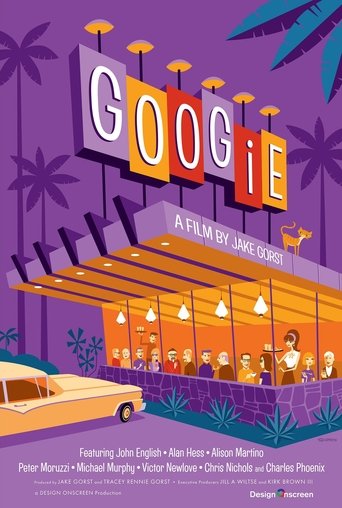
Googie architecture was one of the most visually exuberant and culturally formative design movements of the mid-20th century, yet it remains widely misunderstood. Defined by bold angles, sweeping rooflines, neon signage, and a sense of space-age optimism, Googie transformed everyday buildings into roadside spectacle. Coffee shops, bowling alleys, car washes, banks, and churches were designed not just for function, but to captivate motorists cruising by. Rooted in Los Angeles, the movement drew inspiration from visionary architects such as Frank Lloyd Wright and John Lautner, while firms like Armet & Davis brought futuristic flair to the commercial landscape. Though many original structures have been lost, preservationists now champion Googie as a serious architectural expression—one that captured the aspirations of postwar America and reshaped the visual identity of the modern city.

In the heart of Paris, an entire palace has disappeared. It was the very first residence of the kings of France. Long before Versailles, long before the Louvre, the Palais de la Cité stood on the most prestigious island in Paris, the historic cradle of France, facing Notre-Dame. So majestic in the Middle Ages, this palace has become a ghost of history. Over the centuries, this architectural masterpiece has almost completely disappeared. A trio of experts will resurrect it in 3D. Using science and unprecedented excavations, they will track down the pieces of the puzzle to reconstruct it at its peak in the 14th century, and bring back to life those who inhabited it. From the Romans to the Vikings, from Saint Louis to the cursed kings, all have left clues of this 'Versailles of the Middle Ages'.
After filming the construction site of the Berlitz Palace (2nd), Pierre Chenal shows us in contrast other contemporary architectural achievements which, using the same technical processes, do not sacrifice the structure of iron and concrete for decoration. A documentary to the glory of the modern designs of Mallet-Stevens and Le Corbusier.