

Koločava
Drama · Music
Overview
The production was based on Ivan Olbracht's novel Nikola Šuhaj loupežník (Nikola Šuhaj the Robber). The music draws on Petr Ulrych's famous LP, which was released in 1974, won the Bílá vrána (White Crow) award from Mladý svět magazine, and subsequently inspired a production at Prague's Divadlo Ateliér theater. Among other things, the band Javory was formed on this occasion. The expanded band Javory also plays and sings in the 2002 production of the Brno City Theater, and additional musical numbers were created for it. Of the 25 numbers, more than half are new to the performance. Petr Ulrych won the A. Radok Award for his music. Director and author of the theatrical adaptation Stanislav Moša incorporated film footage into the production, which works wonderfully as a reminiscence of natural beauty. Also worth mentioning is the impressive choreography of the police and bandit choirs and the excellent acting and singing performances, led by Petr Štěpán in the lead role.
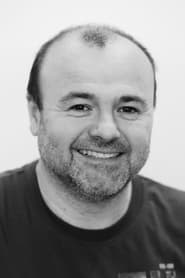



Petr Štěpán
Petr Štěpán
Petr Štěpán
Markéta Sedláčková
Markéta Sedláčková
Markéta Sedláčková
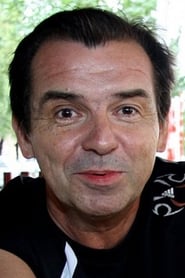
Erik Pardus
Erik Pardus
Erik Pardus
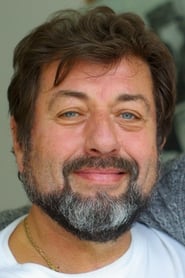
Zdeněk Junák
Zdeněk Junák
Zdeněk Junák
Eva Jelínková
Eva Jelínková
Eva Jelínková
Jiří Tomek
Jiří Tomek
Jiří Tomek

Helena Dvořáková
Helena Dvořáková
Helena Dvořáková
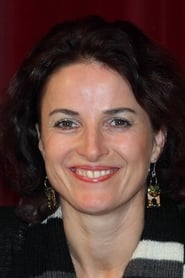
Petra Jungmanová
Petra Jungmanová
Petra Jungmanová
Pavel Kunert
Pavel Kunert
Pavel Kunert
Robert Jícha
Robert Jícha
Robert Jícha
Similar Movies
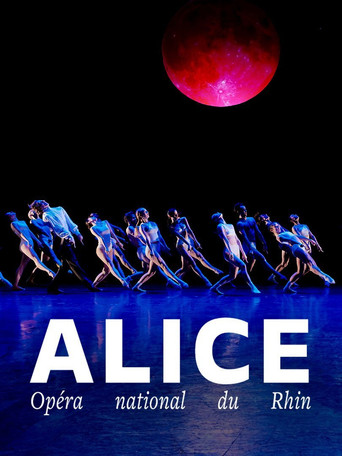
Written in 1865, Alice's Adventures in Wonderland was a popular success. All British schoolchildren and their parents knew about the escapades of the young Alice. With a new score by Philip Glass, a figurehead of American minimalism, choreographers Amir Hosseinpour and Jonathan Lunn reimagine and reinvent Lewis Carroll's fantastical world. Freed from the original narrative, the dancers of the OnR Ballet play a new gallery of contemporary creatures and characters, joined by actress Sunnyi Melles.

Shakespeare's tragicomedy about the banality of love, pride and war performed by DJP in Trnava... Troilus and Cressida is a tragicomic play in which Shakespeare cynically portrays the fates of legendary Greek and Trojan heroes, but also the story of one destroyed love, and especially the image of a useless war. A pseudo-historical fresco that has perhaps never been more topical in the domestic socio-political context. What does a Trojan War look like in which the greatest icons of ancient Greece do not want to fight? A kidnapped Helen as a ridiculous pretext; a sulking and proud Achilles wallowing in a tent and refusing to fight; men who rely more on bickering backstage politics than on concrete deeds; pandering, revenge and, as befits a proper Shakespeare, blood and death.

On June 8, 2024, Oscar-winning French actress Marion Cotillard joined the Berlin Philharmonic Orchestra for a performance of Arthur Honegger’s oratorio Jeanne d'Arc au Bûcher (Joan of Arc at the Stake), conducted by Alan Gilbert, performed at the Berliner Philharmonie in Berlin, Germany and broadcast live on Digital Concert Hall, the online concert hall of the Berliner Philharmonie. In the oratorio, Joan of Arc looks back on her life, her visions, and her successes during a show trial in which she is sentenced to be burned at the stake.
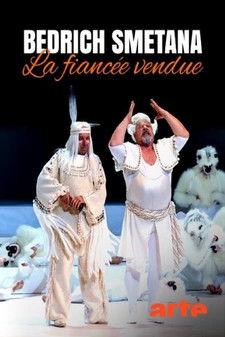
The most popular Czech comic opera, with a libretto by Karel Sabina, marking the 200th anniversary of the birth of Bedřich Smetana, in the current production of the National Theater in Prague. For more than 150 years, The Bartered Bride has dominated Czech opera. No one else, not even Smetana himself, has managed to surpass its popularity, which over the years has become part of our national DNA, so to speak. At the time of its creation in the 1860s, however, The Bartered Bride was actually quite a bold experiment – Bedřich Smetana and librettist Karel Sabina masterfully mocked all those who imagined "national opera" as an idyllic picture of the Czech countryside, where national virtues reign supreme.
More than ten years have passed since the famous premiere of the equally famous drama Maryša by the Mrštík brothers at the Husa na provázku Theater in Brno. Vladimír Morávek's new staging provoked a number of enthusiastic responses as well as great indignation. He subsequently left for the theater in Hradec Králové to launch a great era of drama, which he crowned with a return to the scene of the crime – Brno.
A live performance by Charlie Jimenez & Sioul Blaphate hosted as a pre-show to Rebel Reel CineClub's 'A Most Unholy Christmas' - a screening of Alejandro Jodorowsky's The Holy Mountain (1973) at Rio Cinema, 17th December, 2024. The performance is a live-theatre and dance piece loosely inspired by Jodorowsky's film and its influenced source Mount Analogue. Through dance, masks, and live-theatre, Mount Analogue navigates a procession of ascension through transforming bodies and shapes. A primordial place of transformation, magic, and symbols.
T. Dianiška's documentary fiction from behind the scenes of the assassination of R. Heydrich, in which the real story is intertwined with comic exaggeration, pop culture references, and harsh humor. 294 Brave Men was written by Tomáš Dianiška for the Divadlo po Palmovkou theater, where he also staged it with the local ensemble. As the title of the play suggests, the protagonists of Operation Anthropoid are not the main heroes in this case. 294 Brave Men refers to the people from the domestic resistance who paid with their lives for helping the paratroopers and whose names are now borne by streets in Libeň and the surrounding Prague districts. T. Dianiška treats historical facts with respect, but at the same time quite freely, and he depicts the background of "the greatest heroic deed in our history" with the help of humor, often very dark humor.
A theater director and a young director await an actress’s decision on a role, triggering a scathing critique of how TV’s degraded practices and commercial pressures marginalize true artistry. Through the director’s expansive monologue, inspired by Juraj Kukura’s ethos, he reflects on his life in culture, his convictions about theater, colleagues, and the survival of artistic integrity in today’s climate.
Dancing through Slovak history of the twentieth century. Based on the Theatre du Campagnol performance "Le Bal" by Jean-Claude Penchenat, written by M. Huba and M. Porubjak. A dance locale - a place where people who are looking for partners come together. Lonely individuals become couples, people who were strangers not so long ago become partners and lovers. Outside, conditions change and regimes change, the country is overwhelmed by great history, the whirlwind of the World War, the communist coup, the hopeful spring of 1968, the fraternal occupation, the Hussite normalisation, November 1989 and the collapse of Czechoslovakia. Only those lonely dancers on the dance floor remain the same - with their human longings, their ridiculousness and their unfulfilled dreams.