

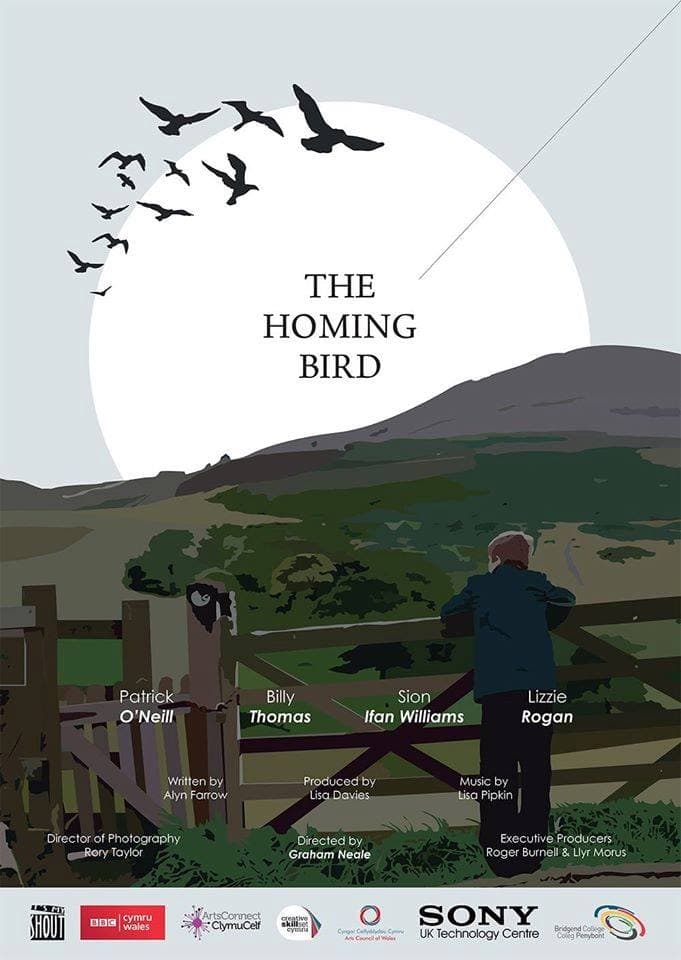
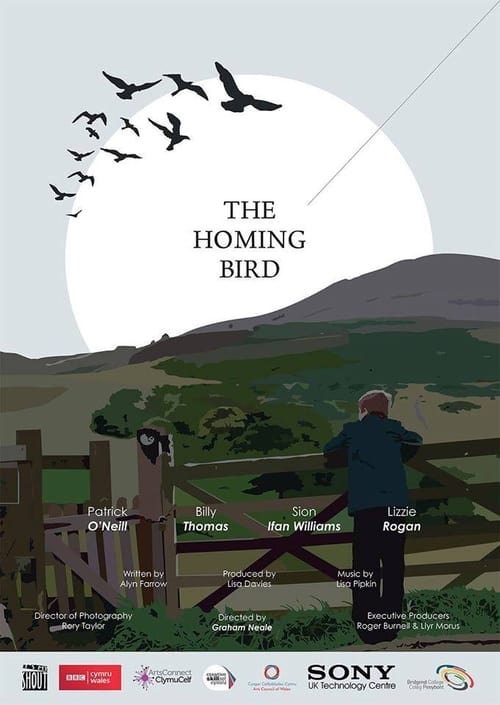
The Homing Bird
History
Overview
A boy accidentally lets loose his father's pigeons, and goes on a dramatic journey in order to retrieve them. After leaving for the war, they are one of the only things he has left of his father.
Top Cast

Patrick O'Neill
Patrick O'Neill
Johnny
Patrick O'Neill
Johnny
Billy Thomas
Billy Thomas
Deano
Billy Thomas
Deano
Sion Ifan Williams
Sion Ifan Williams
Dad
Sion Ifan Williams
Dad
Lizzie Rogan
Lizzie Rogan
Mam
Lizzie Rogan
Mam
Ryan Davies
Ryan Davies
Kyle
Ryan Davies
Kyle
Nathan Blake
Nathan Blake
Mr. Jacobs
Nathan Blake
Mr. Jacobs
Alex Neagle
Alex Neagle
Soldier
Alex Neagle
Soldier
Mali Thomas
Mali Thomas
Kayleigh
Mali Thomas
Kayleigh
Katie Shears
Katie Shears
Sharon
Katie Shears
Sharon
Caitlin Toy
Caitlin Toy
Becky
Caitlin Toy
Becky
Similar Movies
"In 1904, disgusted by the aftermath of the Spanish-American War and the subsequent Philippine-American War, Mark Twain wrote a short anti-war prose poem called "The War Prayer." His family begged him not to publish it, his friends advised him to bury it, and his publisher rejected it, thinking it too inflammatory for the times. Twain agreed, but instructed that it be published after his death, saying famously: None but the dead are permitted to tell the truth."
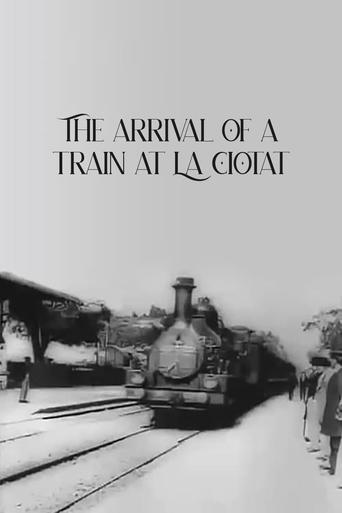
A group of people are standing along the platform of a railway station in La Ciotat, waiting for a train. One is seen coming, at some distance, and eventually stops at the platform. Doors of the railway-cars open and attendants help passengers off and on. Popular legend has it that, when this film was shown, the first-night audience fled the café in terror, fearing being run over by the "approaching" train. This legend has since been identified as promotional embellishment, though there is evidence to suggest that people were astounded at the capabilities of the Lumières' cinématographe.

During the student crisis of 1968, Ines, an 18-year-old homosexual, is prevented from attending law school by her family, who believe that this is not the right course for a woman. This awakens in Inês a feeling of injustice, which leads her to accept Julio's invitation to join the high school students' association. The next day, we find out that the student association has been closed since they found a copy of the clandestine newspaper "Avante!" on the premises. The rectory then decides to expel suspicious students, starting a revolt in the high school and an ideological confrontation between the couple of Inês and Adelaide.
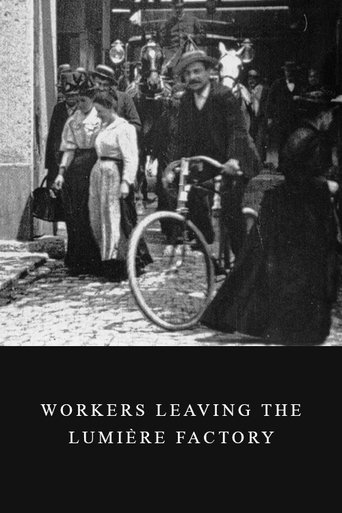
Working men and women leave through the main gate of the Lumière factory in Lyon, France. Filmed on 22 March 1895, it is often referred to as the first real motion picture ever made, although Louis Le Prince's 1888 Roundhay Garden Scene pre-dated it by seven years. Three separate versions of this film exist, which differ from one another in numerous ways. The first version features a carriage drawn by one horse, while in the second version the carriage is drawn by two horses, and there is no carriage at all in the third version. The clothing style is also different between the three versions, demonstrating the different seasons in which each was filmed. This film was made in the 35 mm format with an aspect ratio of 1.33:1, and at a speed of 16 frames per second. At that rate, the 17 meters of film length provided a duration of 46 seconds, holding a total of 800 frames.
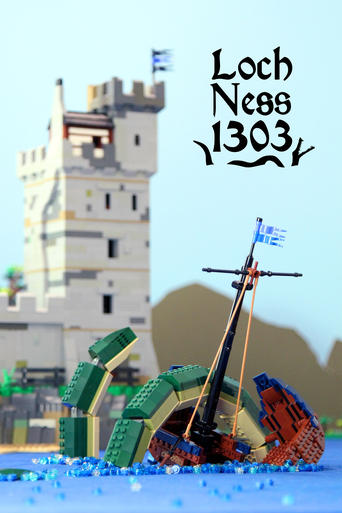
King Edward I has launched a full invasion of Scotland. His next move is a siege of the Urquhart Castle, by Loch Ness. Scottish Governor Alexander De Forbes must defend the castle from the invaders. But the commotion of war will come to a halt when a slumbering ancient power is disturbed: the Loch Ness Monster.