

The War Prayer
War · History
Overview
"In 1904, disgusted by the aftermath of the Spanish-American War and the subsequent Philippine-American War, Mark Twain wrote a short anti-war prose poem called "The War Prayer." His family begged him not to publish it, his friends advised him to bury it, and his publisher rejected it, thinking it too inflammatory for the times. Twain agreed, but instructed that it be published after his death, saying famously: None but the dead are permitted to tell the truth."




Lawrence Ferlinghetti
Lawrence Ferlinghetti
Minister
Lawrence Ferlinghetti
Minister
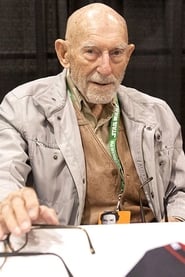
Erik Bauersfeld
Erik Bauersfeld
Stranger
Erik Bauersfeld
Stranger
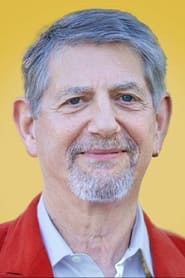
Peter Coyote
Peter Coyote
Narrator
Peter Coyote
Narrator
Similar Movies
During the student crisis of 1968, Ines, an 18-year-old homosexual, is prevented from attending law school by her family, who believe that this is not the right course for a woman. This awakens in Inês a feeling of injustice, which leads her to accept Julio's invitation to join the high school students' association. The next day, we find out that the student association has been closed since they found a copy of the clandestine newspaper "Avante!" on the premises. The rectory then decides to expel suspicious students, starting a revolt in the high school and an ideological confrontation between the couple of Inês and Adelaide.
Kyoto, a thousand years ago. Tokimasa, who unexpectedly visits the house of a woman he abandoned long ago, witnesses the woman's corpse, which remains uncorrupted, and an eerie light lingering in the air. Fearing the curse of the woman who died harboring resentment towards him, Tokimasa seeks out the Onmyoji (exorcist) Kamo no Tadayuki... This is a ghost story anime depicting a beautiful tragic love story of the Heian period, based on a story from the Konjaku Monogatari (Tales of Times Now Past).
A group of people are standing along the platform of a railway station in La Ciotat, waiting for a train. One is seen coming, at some distance, and eventually stops at the platform. Doors of the railway-cars open and attendants help passengers off and on. Popular legend has it that, when this film was shown, the first-night audience fled the café in terror, fearing being run over by the "approaching" train. This legend has since been identified as promotional embellishment, though there is evidence to suggest that people were astounded at the capabilities of the Lumières' cinématographe.
The Bokelberg photographic collection brings to life the Paris of the Belle Époque (1871-1914), an exhibition of workshops and stores with extremely beautiful shop windows before which the owners and their employees proudly pose, hiding behind their eyes the secret history of a great era.
A multimedia short created for the U.S. millennium celebrations, The Unfinished Journey reflects on America’s history and spirit through six chapters—immigration, war, culture, civil rights, and innovation. Commissioned by President Bill Clinton and premiered at the Lincoln Memorial on New Year’s Eve 1999, the film features an original orchestral score by John Williams titled American Journey.
Working men and women leave through the main gate of the Lumière factory in Lyon, France. Filmed on 22 March 1895, it is often referred to as the first real motion picture ever made, although Louis Le Prince's 1888 Roundhay Garden Scene pre-dated it by seven years. Three separate versions of this film exist, which differ from one another in numerous ways. The first version features a carriage drawn by one horse, while in the second version the carriage is drawn by two horses, and there is no carriage at all in the third version. The clothing style is also different between the three versions, demonstrating the different seasons in which each was filmed. This film was made in the 35 mm format with an aspect ratio of 1.33:1, and at a speed of 16 frames per second. At that rate, the 17 meters of film length provided a duration of 46 seconds, holding a total of 800 frames.
The Kabul National Museum, once known as the "face of Afghanistan," was destroyed in 1993. We filmed the most important cultural treasures of the still-intact museum in 1988: ancient Greco-Roman art and antiquitied of Hellenistic civilization, as well as Buddhist sculpture that was said to have mythology--the art of Gandhara, Bamiyan, and Shotorak among them. After the fall of the Democratic Republic of Afghanistan in 1992, some seventy percent of the contents of the museum was destroyed, stolen, or smuggled overseas to Japan and other countries. The movement to return these items is also touched upon. The footage in this video represents that only film documentation of the Kabul Museum ever made.