

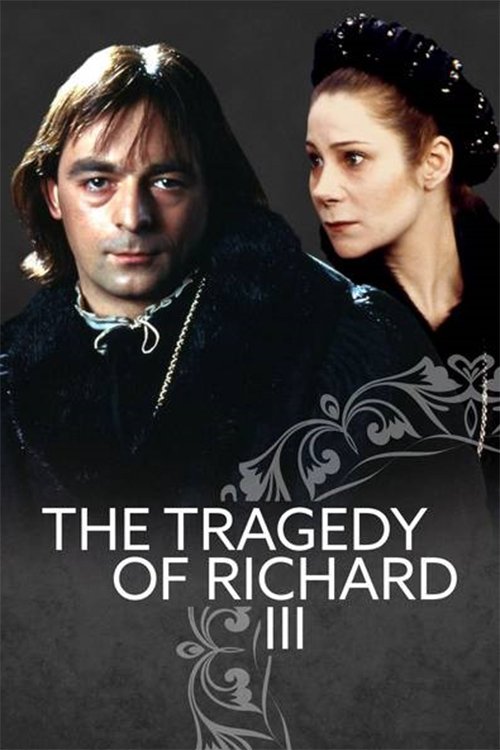
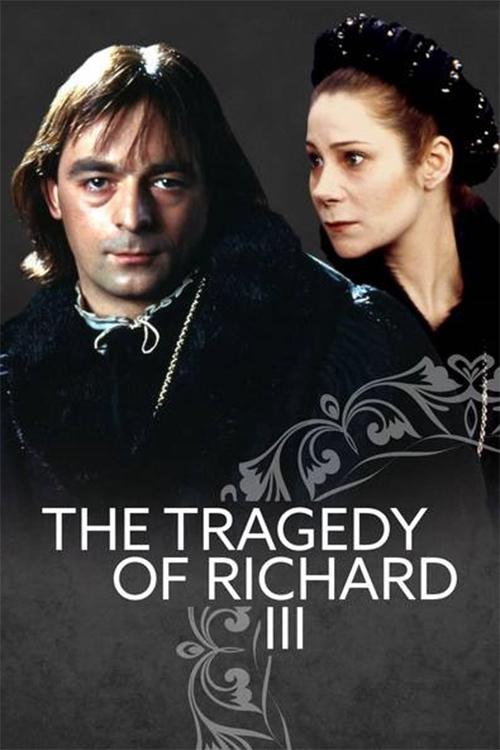
The Tragedy of Richard III
Drama · History · TV Movie
Overview
Richard Duke of Gloucester, youngest brother of King Edward IV, will stop at nothing to get the crown. He first convinces the ailing King that the Duke of Clarence, his elder brother, is a threat to the lives of Edward's two young sons. Edward has him imprisoned in the Tower of London; killers in Richard's pay then drown Clarence in a barrel of wine. When news of Clarence's death reaches the King, the subsequent grief and remorse bring about his death. Richard is made Lord Protector, with power to rule England while his nephew (now King Edward V) is still a minor. Before the young king's coronation he has his two nephews conveyed to the Tower, ostensibly for their safekeeping. Richard's accomplice, the Duke of Buckingham, then declares the two boys illegitimate and offers Richard the crown, which after a show of reticence he accepts. After Richard's coronation, he and Buckingham have a falling-out over whether or not to assassinate the two children.
Top Cast

Ron Cook
Richard III
Peter Benson
King Henry VI
Michael Byrne
Duke of Buckingham

Julia Foster
Queen Margaret
Bernard Hill
First Murderer
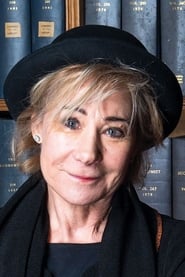
Zoë Wanamaker
Lady Anne
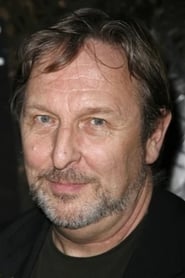
Mark Wing-Davey
First Citizen / Sir James Tyrrel
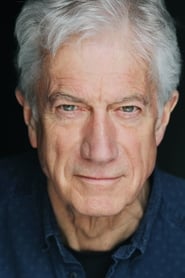
Brian Protheroe
King Edward IV
Antony Brown
Sir Richard Ratcliffe
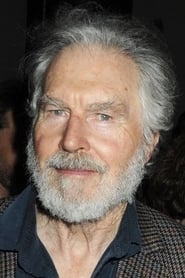
David Burke
Sir William Catesby
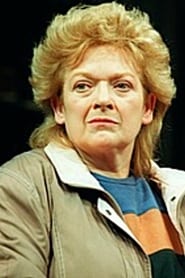
Anne Carroll
Jane Shore
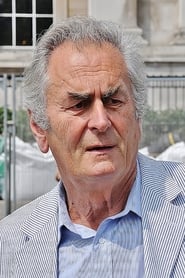
Paul Chapman
Earl Rivers




Ron Cook
Ron Cook
Richard III
Ron Cook
Richard III
Peter Benson
Peter Benson
King Henry VI
Peter Benson
King Henry VI
Michael Byrne
Michael Byrne
Duke of Buckingham
Michael Byrne
Duke of Buckingham
Julia Foster
Julia Foster
Queen Margaret
Julia Foster
Queen Margaret
Bernard Hill
Bernard Hill
First Murderer
Bernard Hill
First Murderer
Zoë Wanamaker
Zoë Wanamaker
Lady Anne
Zoë Wanamaker
Lady Anne
Mark Wing-Davey
Mark Wing-Davey
First Citizen / Sir James Tyrrel
Mark Wing-Davey
First Citizen / Sir James Tyrrel
Brian Protheroe
Brian Protheroe
King Edward IV
Brian Protheroe
King Edward IV
Antony Brown
Antony Brown
Sir Richard Ratcliffe
Antony Brown
Sir Richard Ratcliffe
David Burke
David Burke
Sir William Catesby
David Burke
Sir William Catesby
Similar Movies
Henry IV usurps the English throne, sets in motion the factious War of the Roses and now faces a rebellion led by Northumberland scion Hotspur. Henry's heir, Prince Hal, is a ne'er-do-well carouser who drinks and causes mischief with his low-class friends, especially his rotund father figure, John Falstaff. To redeem his title, Hal may have to choose between allegiance to his real father and loyalty to his friend.
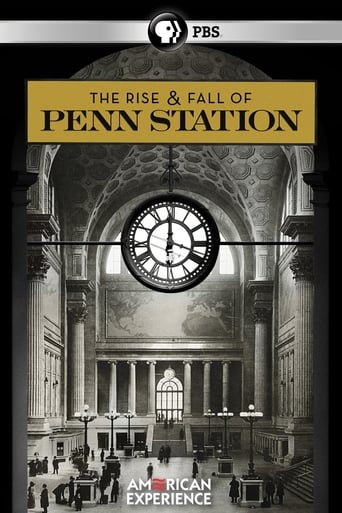
In 1910, the Pennsylvania Railroad successfully accomplished the enormous engineering feat of building tunnels under New York City's Hudson and East Rivers, connecting the railroad to New York and New England, knitting together the entire eastern half of the United States. The tunnels terminated in what was one of the greatest architectural achievements of its time, Pennsylvania Station. Penn Station covered nearly eight acres, extended two city blocks, and housed one of the largest public spaces in the world. But just 53 years after the station’s opening, the monumental building that was supposed to last forever, to herald and represent the American Empire, was slated to be destroyed.
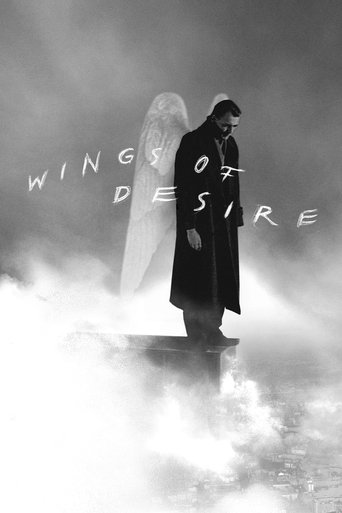
Two angels, Damiel and Cassiel, glide through the streets of Berlin, observing the bustling population, providing invisible rays of hope to the distressed but never interacting with them. When Damiel falls in love with lonely trapeze artist Marion, the angel longs to experience life in the physical world, and finds — with some words of wisdom from actor Peter Falk — that it might be possible for him to take human form.
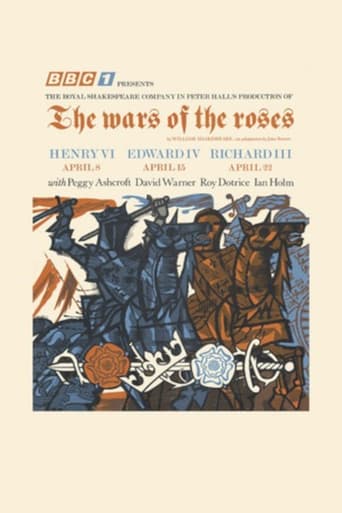
A 1965 BBC adaptation of William Shakespeare's first historical tetralogy (1 Henry VI, 2 Henry VI, 3 Henry VI and Richard III), which deals with the conflict between the House of Lancaster and the House of York over the throne of England, a conflict known as the Wars of the Roses. It was based on the 1963 theatre adaptation by John Barton, and directed by Peter Hall for the Royal Shakespeare Company.
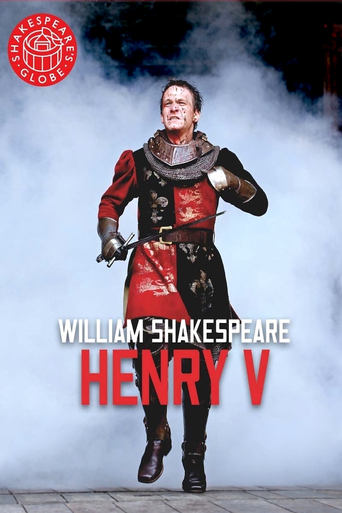
Shakespeare’s masterpiece of the turbulence of war and the arts of peace tells the romantic story of Henry’s campaign to recapture the English possessions in France. But the ambitions of this charismatic king are challenged by a host of vivid characters caught up in the real horrors of war. Henry V, which opened the new Globe with the words ‘O for a muse of fire’, celebrates the power of language to summon into life courts, pubs, ships and battlefields within the ‘wooden O’ - and beyond.