

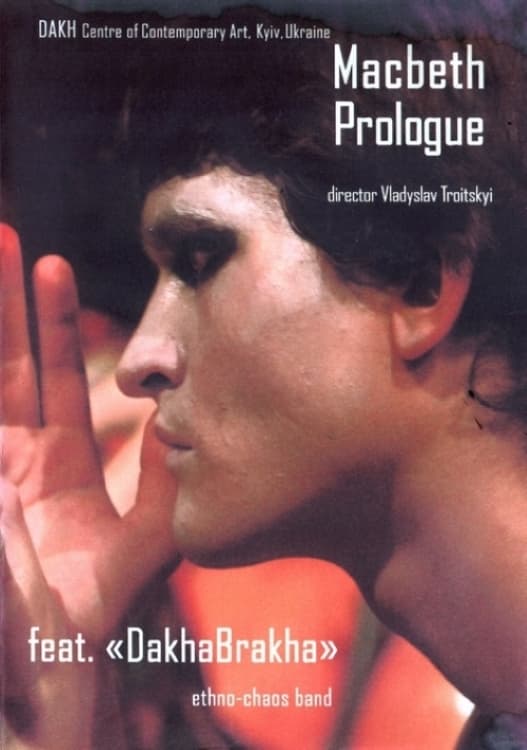
Prologue to Macbeth
Drama
Overview
The Prologue to Macbeth is a mystical maelstrom of Ukrainian archeological symbols and Scottish history. The Roof of Brahah sits on a rise and reflects the rhythms of demiurgical chaos that echoes in the beastly echo of something dark within us. There are almost no words in the play, only spells, rituals, sacrifices. And this was all when there were no geese, and when the king was good, and the people - a dog ... The action lulls with its sinister rhythms, the darkness, introduces into a trance, and dark and sexual witches bring down the hypothetical children of King Macbeth. . Scotland in a Ukrainian manner, a hypnotic, mystical ... beautiful and bleeding tragedy about power.



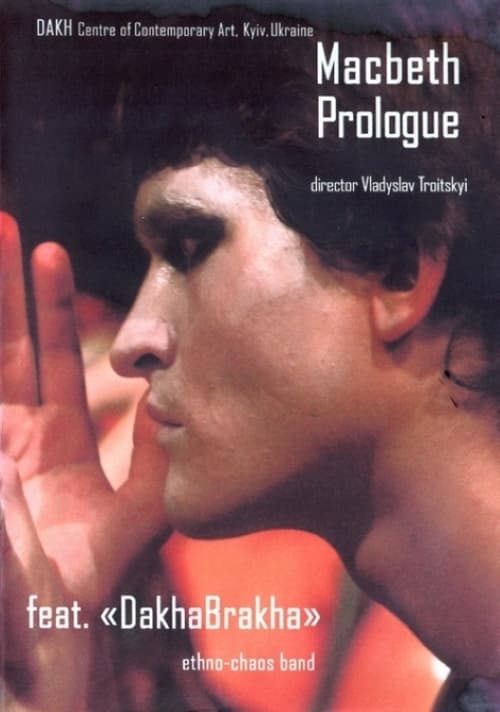

Dmytro Yaroshenko
Dmytro Yaroshenko
Macbeth
Dmytro Yaroshenko
Macbeth
Natalka Bida
Natalka Bida
Lady Macbeth
Natalka Bida
Lady Macbeth
Volodymyr Minenko
Volodymyr Minenko
Banquo
Volodymyr Minenko
Banquo
Solomia Melnyk
Solomia Melnyk
Banquo's bride
Solomia Melnyk
Banquo's bride

Roman Yasinovskyi
Roman Yasinovskyi
King Duncan / Pagan priest
Roman Yasinovskyi
King Duncan / Pagan priest

Viktoriia Lytvynenko
Viktoriia Lytvynenko
Witch
Viktoriia Lytvynenko
Witch

Ruslana Khazipova
Ruslana Khazipova
Witch
Ruslana Khazipova
Witch
Tetyana Vasylenko
Tetyana Vasylenko
Goat / Bird
Tetyana Vasylenko
Goat / Bird
Igor Postolov
Igor Postolov
Murderer
Igor Postolov
Murderer
Vishnya
Vishnya
Stray
Vishnya
Stray
Similar Movies

Inspired by the work of Bertolt Brecht and filmed in Porto's former industrial slaughterhouse, A Santa Joana dos Matadouros is a meta-cinematic essay about the labor market in times of economic crisis in Europe. The film explores the possibilities of cinema in its relationship with theater and brings together a cast of professional actors, amateurs, renowned artists from various disciplines, and a group of unemployed residents of Vale de Campanhã.

Opera in three acts, a prologue and an epilogue, by Jacques Offenbach (1819-1880), with a libretto in French by Jules Barbier (1825-1901), based on a work that Barbier himself and Michel Carré (1821-1872) had written based on stories by E.T.A. Hoffmann (1776-1822). Approximate duration: 2 h 45 min Recommended for those over 15 years old. The young poet Hoffmann, accompanied by Nicklausse, his alter ego and confidant, is in a tavern next to the theatre where Mozart's Don Giovanni is being performed. During the opera's intermission, some diners arrive at the bar who, upon seeing the poet, encourage him to sing and tell them the story of his famous love affairs. Hoffmann finally gives in and shares with them the stories of Olympia, Antonia and Giulietta. They, absorbed in the poet's stories, remain in the tavern, forgetting about the opera performance.

"Despite the multitude of characters and situations, the plot is simple: the eternal flow of life. It is based on Les contes fantastiques d’Hoffmann, a play by Jules Barbier and Michel Carré, who were inspired by some of the stories of the German E.T.A. Hoffmann. On a drunken night in the city, Hoffmann tells how he courted and lost three girls, his impossible loves: Olympia, a mechanical doll that only he believes to be truly human; Giulietta, the courtesan who steals his reflection in a mirror; and Antonia, a young woman who sings until she literally dies." Venue & Opera Company: Teatro Regio di Parma Recorded: 1988 Singers: Alredo Kraus, Ruth Welting, Jonathan Omilian, Barbara Hendricks, Elena Zilio, Nicola Gjiuselev, Bruno Buulgarelli, Francis Egerton, Aldo Bottion Orchestra: Orchestra Sinfonica dell'Emilia-Romagna "Arturo Toscanini" Chorus: Coro del Teatro Regio di Parma Chorus Master: Adolfo Tanhzi Stage Director: Beppe de Tomasi
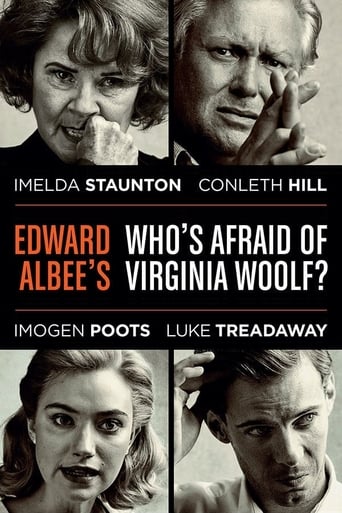
In the early hours of the morning on the campus of an American college, Martha, much to her husband George’s displeasure, has invited the new professor and his wife to their home for some after-party drinks. As the alcohol flows and dawn approaches, the young couple are drawn into George and Martha’s toxic games until the evening reaches its climax in a moment of devastating truth-telling.
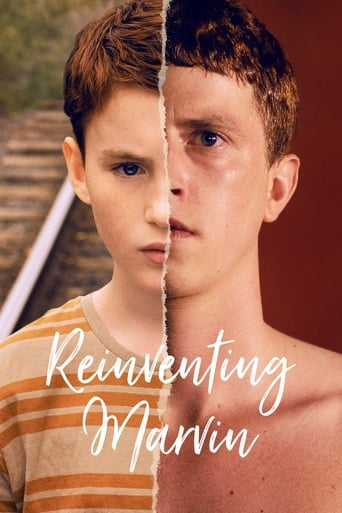
Telling the true story of Marvin Bijou, a young boy from a working-class family in a small village, who suffers constant bullying at school and home for being ‘different’ – too sensitive and too feminine. A chance encounter with a drama teacher opens the doors to a world that offers him the chance to escape his situation.