

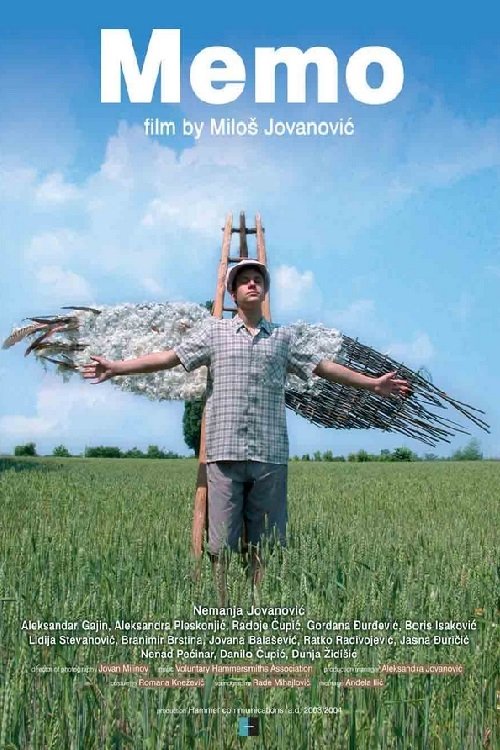
Memo
Drama
Overview
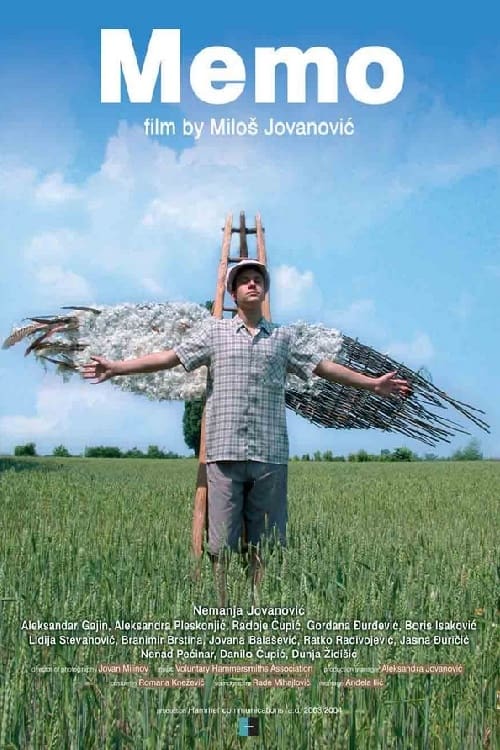
The story of the film is set in the period from the 1940s until today in the Pannonian plain (the plain in the Central Europe), in an area of elusive boundaries, mysterious and unstable spiritual identity. The witness of the time is a Jewish boy Benya Cohn who, with his eye wide open, remembers the tragedy of his family, in the shadow of the Holocaust, concentration camps and new wars.
Top Cast
Nemanja Jovanović
Mali Benja Kon

Radoje Čupić
Jakov Kon

Aleksandra Pleskonjić Ilić
Amalija Kon

Aleksandar Gajin
Radovan Bundevara
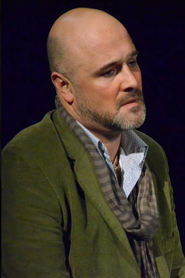
Nenad Pećinar
Veliki Benja Kon
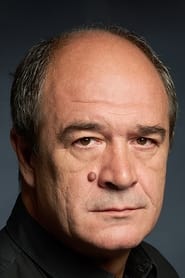
Boris Isaković
Misteriozni čovek Bolanda
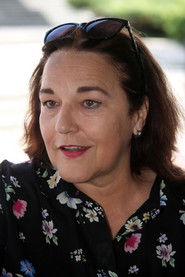
Lidija Stevanović
Magda Grudalj
Danilo Čupić
Radovanov sin Danilo

Jasna Đuričić
Olga Knežević
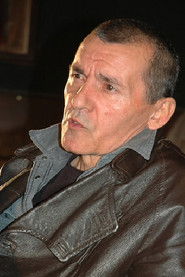
Ratko Radivojević
Filip Fišer
Dunja Zidišić
Julijana Fišer
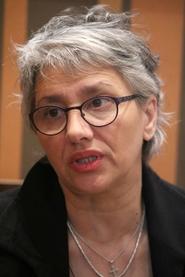
Gordana Đurđević-Dimić
Doktorka



Nemanja Jovanović
Nemanja Jovanović
Mali Benja Kon
Nemanja Jovanović
Mali Benja Kon
Radoje Čupić
Radoje Čupić
Jakov Kon
Radoje Čupić
Jakov Kon
Aleksandra Pleskonjić Ilić
Aleksandra Pleskonjić Ilić
Amalija Kon
Aleksandra Pleskonjić Ilić
Amalija Kon
Aleksandar Gajin
Aleksandar Gajin
Radovan Bundevara
Aleksandar Gajin
Radovan Bundevara
Nenad Pećinar
Nenad Pećinar
Veliki Benja Kon
Nenad Pećinar
Veliki Benja Kon
Boris Isaković
Boris Isaković
Misteriozni čovek Bolanda
Boris Isaković
Misteriozni čovek Bolanda
Lidija Stevanović
Lidija Stevanović
Magda Grudalj
Lidija Stevanović
Magda Grudalj
Danilo Čupić
Danilo Čupić
Radovanov sin Danilo
Danilo Čupić
Radovanov sin Danilo
Jasna Đuričić
Jasna Đuričić
Olga Knežević
Jasna Đuričić
Olga Knežević
Ratko Radivojević
Ratko Radivojević
Filip Fišer
Ratko Radivojević
Filip Fišer
Similar Movies
In the occupied Netherlands near the end of WWII, a young teenager, Jeroen Boman (Maarten Smit) is sent to the Dutch countryside to avoid the war in Amsterdam. While living with his adopted family, Jeroen meets and becomes friends with a Canadian soldier named Walt Cook, who is stationed at the same town he is staying at. Joroen and Walt spend a lot of time playing around and eventually a romantic relationship develops between them. The boy’s sexual curiosity leads him to have a sexual experience with Walt, an encounter that is shown with some vague detail but without actually showing any nudity, even though sexual intimacy between the two of them is implied. Overall, the movie handles this difficult subject with an elegant style and feeling, without having the adult-child relationship overwhelm the viewer and thus allowing the movie to be seen as just a wartime relationship between two people that marks an important time in a young boy’s life.
Assigned to oversee the development of the atomic bomb, Gen. Leslie Groves is a stern military man determined to have the project go according to plan. He selects J. Robert Oppenheimer as the key scientist on the top-secret operation, but the two men clash fiercely on a number of issues. Despite their frequent conflicts, Groves and Oppenheimer ultimately push ahead with two bomb designs — the bigger "Fat Man" and the more streamlined "Little Boy."

It’s the spring of 1945 in a small resort town on the Baltic. Günter is 16 and firmly believes that the Germans will win the war. During the hunt for a forced labourer who is on the run, Günter catches him and watches as he is shot to death. He proudly accepts the award of an Iron Cross before being shipped to the nearby front as part of the last contingent of troops. He is quickly captured by Soviet soldiers, but manages to escape and return home. When the town is occupied by the Red Army, Günter is arrested for the murder of the forced labourer. The film was banned in 1968 before it was completed, and a large portion of the negative was later destroyed.
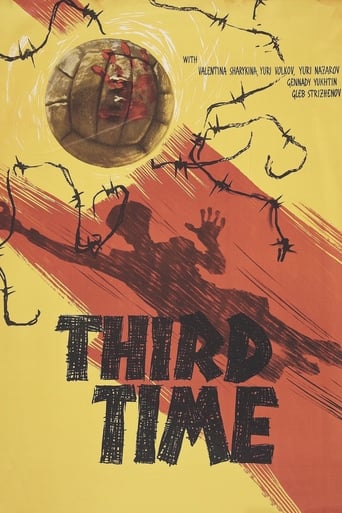
The film is based on the real fact — football «The Death Match» between the German team and a team of Soviet prisoners of war, former "Dinamo". It happened in Kiev on June 22, 1942. Anticipating the possibility of losing, the Germans made a condition — defeat or death. If the Germans won, the Soviet footballers were promised freedom...
In 1939, Hitler is at the height of his power and is steering Europe into a monstrous tragedy. The young Georg Elser recognizes the danger posed by the fascist system and decides to put an end to the Führer. To do so, he builds a bomb himself, which is supposed to explode during one of Hitler's events. Everything seems to be going well until Hitler ends his appearance earlier than planned...
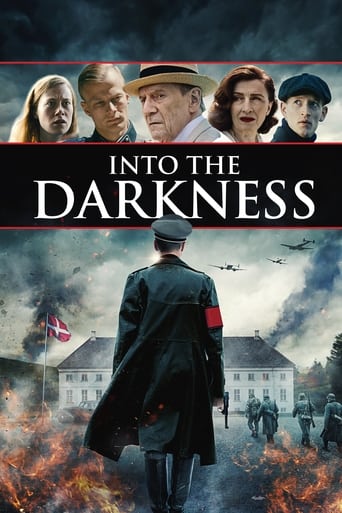
Karlskov is a self made, successful owner of a large electronics factory, has a wife and five children. They live the good, privileged upper-class life on Strandvejen north of Copenhagen when the Nazis occupy Denmark in April 1940. Karl struggles to continue production at the factory, but to protect his family and employees he reluctantly begins to produce for the German market. It brings him into a controversial collaboration with the occupying power and causes painful breaks in the family.