

You All Are Captains
Documentary
Overview
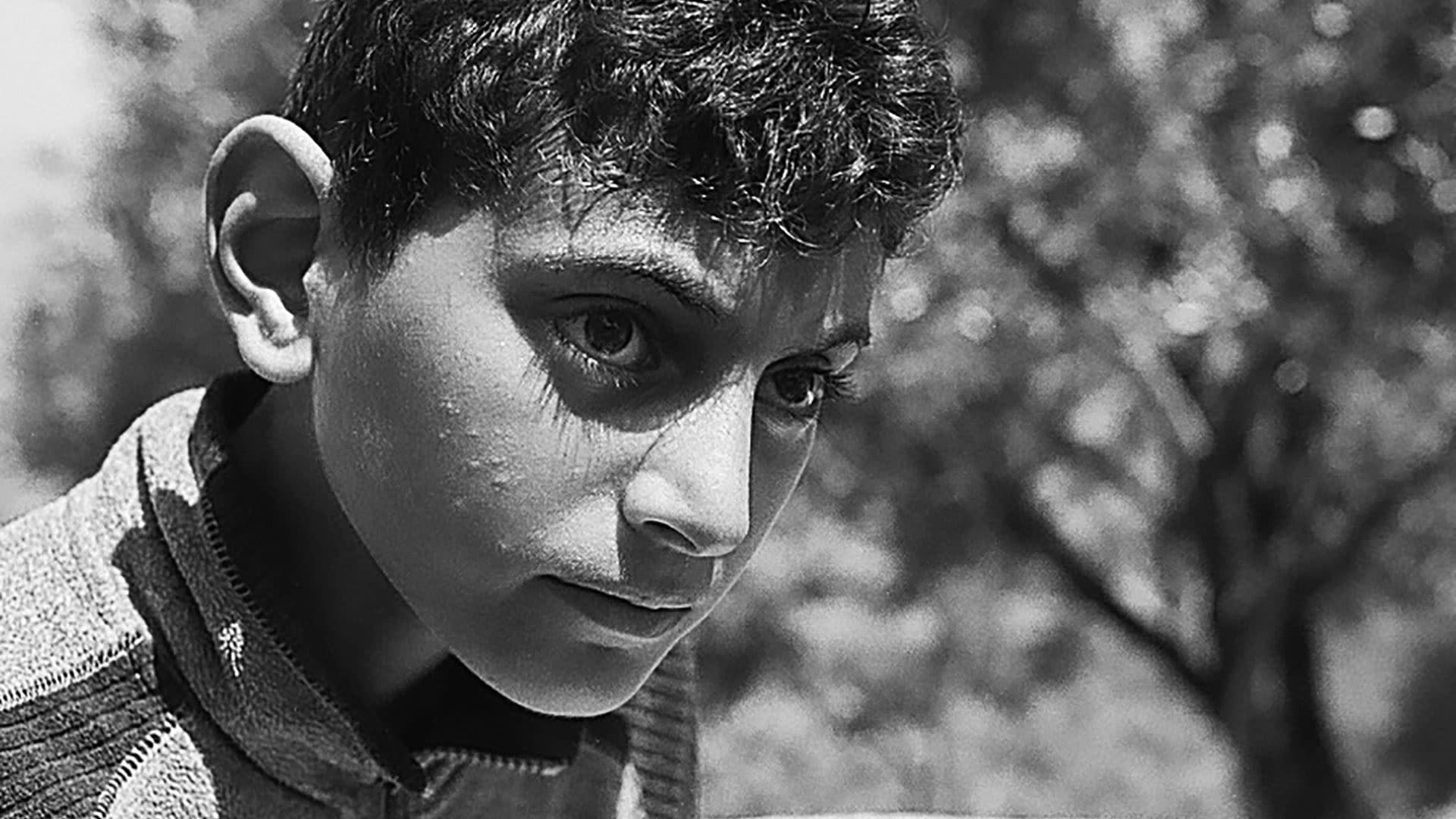
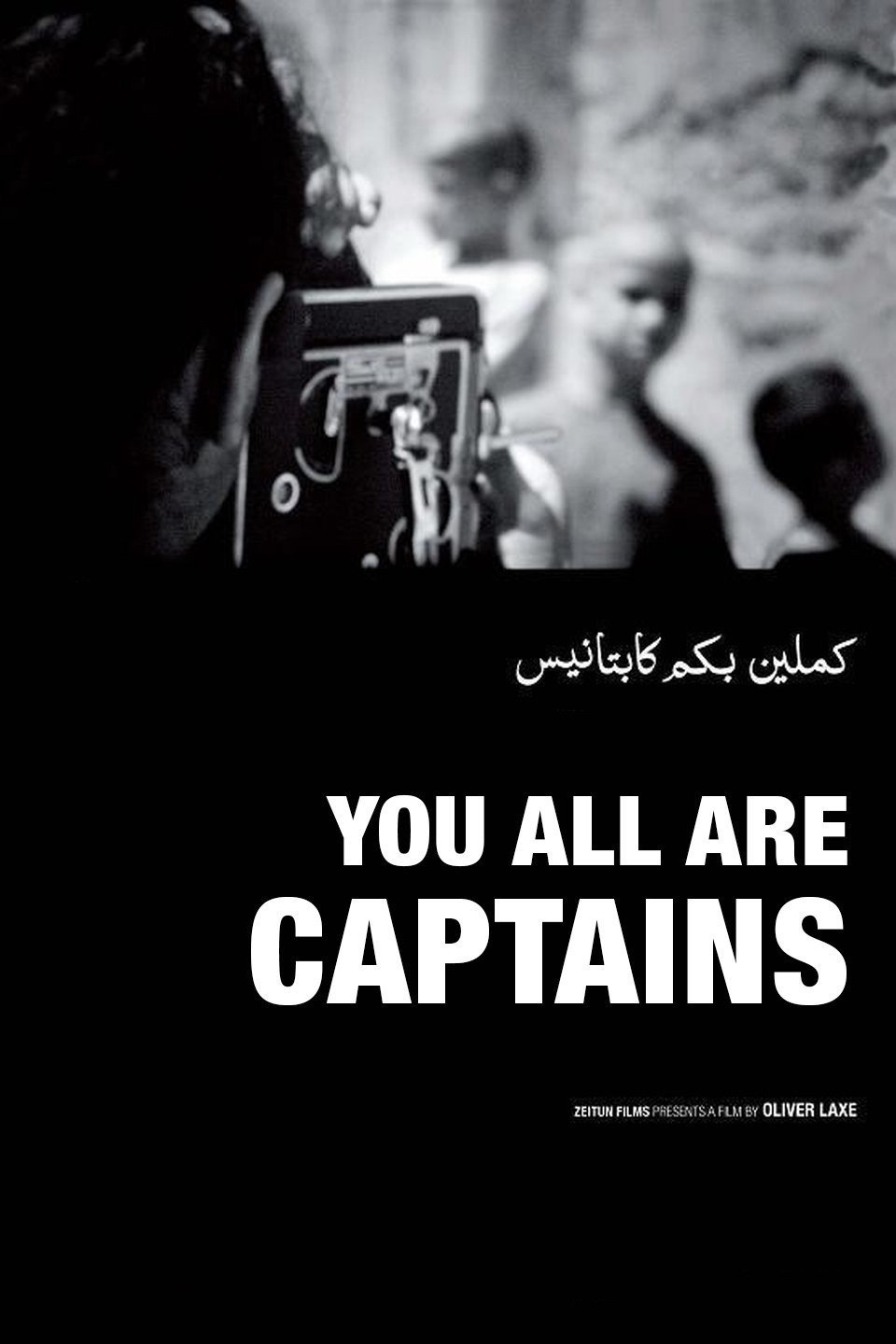
A European director is making a film with children from a social center in Tangiers. Because of his methods, his relationship with the children during shooting degenerates and transforms the evolution of the project.

Oliver Laxe
Oliver Laxe
Himself
Oliver Laxe
Himself
Shakib Ben Omar
Shakib Ben Omar
Shakib
Shakib Ben Omar
Shakib
France Aline
France Aline
France Aline
Hicham Amidallah
Hicham Amidallah
Hicham
Hicham Amidallah
Hicham
Mohamed Bablouh
Mohamed Bablouh
Mohamed Bablouh
Bilal Belcheikh
Bilal Belcheikh
Bilal
Bilal Belcheikh
Bilal
Zhor Arfaoui
Zhor Arfaoui
Zhor Arfaoui
Adam Mouaouia
Adam Mouaouia
Adam Mouaouia
Habiba Bouzerda
Habiba Bouzerda
Habiba Bouzerda
Mohamed Cherif
Mohamed Cherif
Mohamed Cherif
Similar Movies
This poetic core in youngsters is also touched in Stanukina's less known Your very personal poetry (Свои, совсем особые стихи, 1982), a wonderful film about a poetry class. It is here that one recalls Kogan's admiration of Lyalya's emotional documentary skills. And it is here that one recalls Kosakovsky's depiction of Lyalya as a person of extraordinarily prosperous feelings, sensitive and energetic, childish and female, shrill and quiet. The young poets are marvellously sneaky, respectfully adoring and creatively playing with - maybe even deconstructing - "Aleksandr Sergeevich", Mr. Pushkin, Russia's exclusive trade mark of high culture and literature.
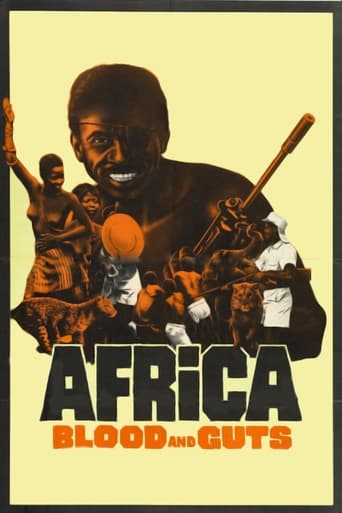
A chronicle of the violence that occurred in much of the African continent throughout the 1960s. As many African countries were transitioning from colonial rule to other forms of government, violent political upheavals were frequent. Revolutions in Zanzibar and Kenya in which thousands were killed are shown, the violence not only political; there is also extensive footage of hunters and poachers slaughtering different types of wild animals.

Dazzled by the surrealist movement, Francis Falceto decided at the age of 17 to live an extraordinary life. In the 1980s, co-created l'Oreille est Hardie and Le Confort Moderne in Poitiers, leaving his mark on French underground culture. A record he discovered by chance opened another important chapter in his life: Ethiopian music, of which he became a great champion. "Ethiopiques Magnetic Suite" is the portrait of a discreet and essential man, a plunge into the counterculture, an invitation to live his his life.

French filmmaker Laurent Chevallier always wanted to make a documentary on an African circus, but there were no native circuses on the continent. So Chevallier decided to help found a circus in Guinea. 36 young people were chosen from the city of Conakry to participate in what would become Circus Baobab. A group of French circus artists were imported to train the participants for 2 years in acrobatics and trapeze. Then the group took their show on the road. This film is Chevallier's account of the troupe's inaugural tour in Guinea, from March 1 - April 11, 2000.

Promotional video that came from local Child World/Children's Palace toy store chains in a box that included a bag of Krunchers potato chips. The video features a mild plot involving mostly all children who are running a video production studio. It also includes a curly haired rapping man named "Robo-T". The video is a giant commercial with live skits in between as a fun bit until the next commercial.
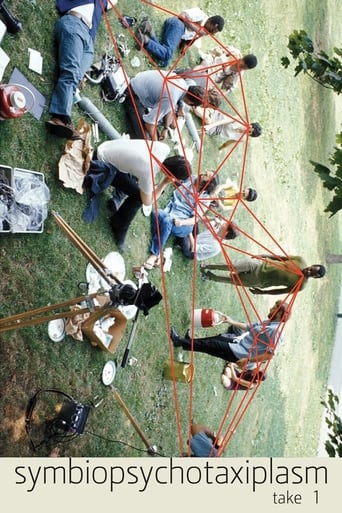
In Manhattan's Central Park, a film crew directed by William Greaves is shooting a screen test with various pairs of actors. It's a confrontation between a couple: he demands to know what's wrong, she challenges his sexual orientation. Cameras shoot the exchange, and another camera records Greaves and his crew. Sometimes we watch the crew discussing this scene, its language, and the process of making a movie. Is there such a thing as natural language? Are all things related to sex? The camera records distractions - a woman rides horseback past them; a garrulous homeless vet who sleeps in the park chats them up. What's the nature of making a movie?

Born in Indonesia to Victor Raoul Baron von Lawick and Isabella Sophia Baroness van Ittersum, he developed an early love for animals. He determined that film would be his medium to capture the stunning images of the Serengeti for all animal lovers. Animal researcher Jane Goodall was his wife and collaborator for many years. They wrote and produced many films together. Hugo van Lawick lived and worked on the African plains for more than thirty years. Join van Lawick on his many small and large adventures through the Serengeti, where animals play the leading role. Van Lawick received eight Emmys and numerous other awards for his extraordinary films.
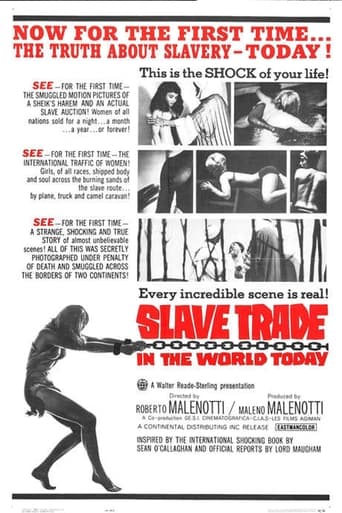
The film documents modern slave trade through a number of African countries, under dictatorship rule. The filming was conducted both in public places, and sometimes with the use of hidden cameras, for high impact scenes of nudity, sex, and violence - and a few surprises, as slaves made out of peregrins to Asia, and slave traders paid in traveller checks.