


Kenyatta
Documentary
Overview
Jomo Kenyatta's death in 1978 brought to an end a political career that encompassed more than 50 years of African history. Kenyatta entered politics in the mid-1920s and then spent 17 years in exile in Europe. He returned to Kenya in 1946, and was elected president of the nationalist movement, the Kenya African Union. Arrested and imprisoned in 1952 for allegedly leading 'Mau Mau', he was released in 1961 and two years later became Kenya's first Prime Minister. In power, the man whom European settlers had once reviled as "the leader to darkness and death" was eulogized by them as a pillar of stability, while former allies challenged him by creating a left-leaning political opposition. Kenyatta weaves archival and contemporary images with interviews with friends and relatives, comrades and opponents, to create a biographical portrait of a key figure in 20th century politics, and a case study of what Frantz Fanon called the pitfalls of nationalism as a political force in Africa.
Top Cast




Musindo Mwinyipembe
Musindo Mwinyipembe
Narrator
Musindo Mwinyipembe
Narrator
Similar Movies
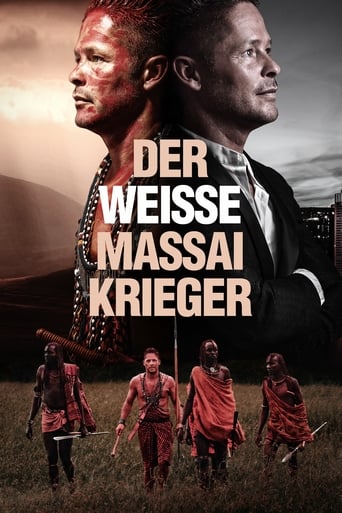
For the first time in history, a white man has been invited to become a Massai Warrior. The Massai of East Africa are one of the last tribes on earth to live as they did hundreds of years ago. Benjamin will live among the tribe, sleeping, hunting, and surviving in the bush. He will get to know their culture, their customs of dancing and playing, and learn how to conquer the dangers of the wilderness. Will he be able to become a true Massai warrior? To become a Massai is a great journey into the unknown.

The ruthless dictator Teodoro Obiang has ruled Equatorial Guinea with an iron hand since 1979. Juan Tomás Ávila Laurel is the most translated Equatoguinean writer, but he had to flee the country in 2011, after starting a hunger strike denouncing the crimes of the dictatorship. Since then, he has lived in Spain, feeling that, despite the risks, he must return and fight the monster with words.
For African athletes making money abroad is the big goal. But Kenyan marathon runners need to be careful – the industry is ruthless and only few make it. For years, sports managers have been bringing African athletes to Europe to run in marathons with promises of potential prize money and a top career. For many it’s a means of escaping poverty. But what price do the marathon runners themselves pay? Long-distance running is among the toughest disciplines in the world. Professional marathon runners battle over seconds in a race more than 40km long - seconds that are often worth huge sums of money. Running has become a business. The prize money for a major event can be in five figures. Participants have to be world-class athletes to win these amounts.
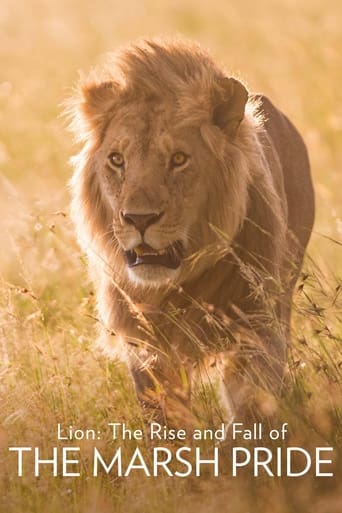
Documented in television documentaries for over 40 years by the BBC and other broadcasters around the world, the Marsh Pride is the most filmed pride of lions on Earth. In this film, the Marsh Pride battle for survival in Kenya's famous Maasai Mara Reserve, which has become a magnet for tourists, many of them keen to see the pride for themselves. A tale of shifting loyalties, bloody takeovers and sheer resilience, the lions’ story is told by those who filmed them, tried to protect them and lived alongside them, as well as some who ultimately wanted them dead.
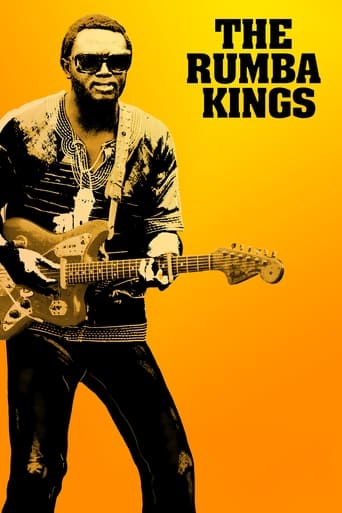
In the fifties, when the future Democratic Republic of Congo was still a Belgian colony, an entire generation of musicians fused traditional African tunes with Afro-Cuban music to create the electrifying Congolese rumba, a style that conquered the entire continent thanks to an infectious rhythm, captivating guitar sounds and smooth vocals.
In the Indian Ocean, off the coast of Kenya, there is an island. On this island there is a stone town; its stone buildings stand as skeletons of the splendor of its yesteryears. High tide, low tide, Full moon, new moon. Lamu is an island frozen in time. Now Africa’s largest port is being constructed. In order to evolve, what part of ourselves do we keep and what part do we leave behind?
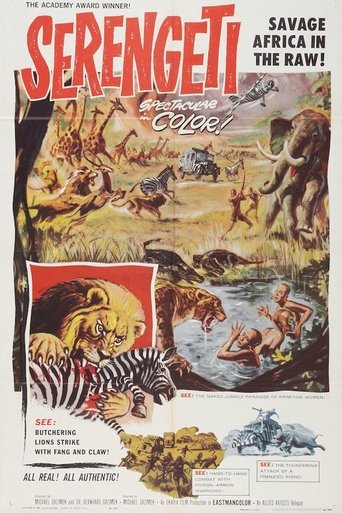
The film tells of the beginnings of the Serengeti National Park in Tanzania. At the end of the 1950s, the Tanzanian National Park Administration wanted to fence in the protected area around the Ngorongoro Crater. Bernhard and Michael Grzimek were invited by the national park administration in 1957 to get a precise picture of the animal migrations and to provide the national park administration with the values they needed for their project. Using a new counting method with two airplanes, the Grzimeks found out that the migration of the herds was different than assumed.
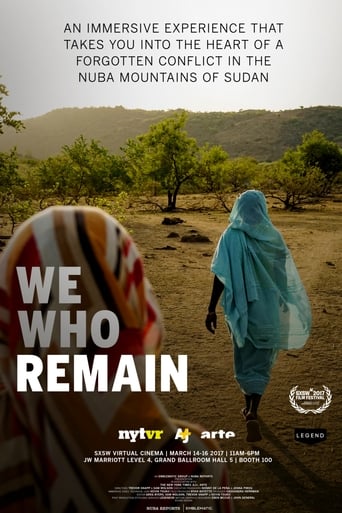
Sudan, Southern Kordofan, the Nuba Mountains in Africa. Scenes from the forgotten war that the fighters of the Nuba people have held since 2011 against the government of President Omar al-Bashir and the Sudanese army, which crudely show the hard daily life of Hannan, a brave woman fighting for the survival of her family; Jordania, a promising student; Mosquito, a reckless journalist; and Al-Bagir, a rebel leader.