

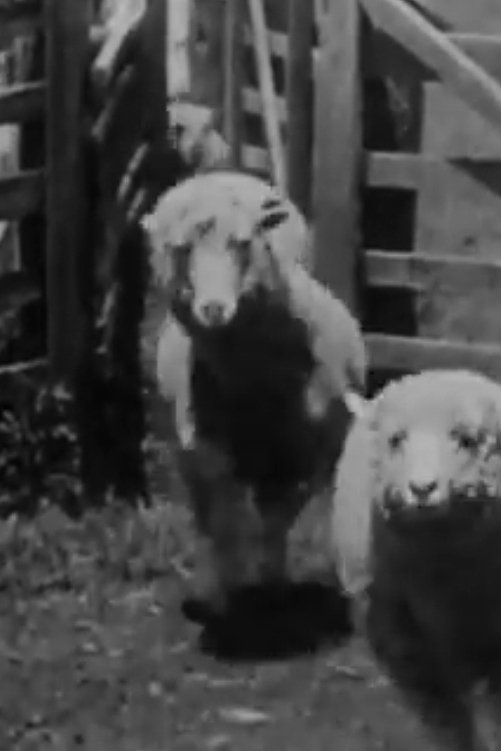
Sheep Coming Through Chute, Humuula Ranch, Hawaii
Documentary
Overview
Sheep bound through a narrow opening, followed by a panoramic vista of the flock running through a meadow.








No cast information.
Similar Movies

The Hawaiian Islands, located 2,000 miles from the U.S. West Coast, primarily rely on agriculture for their economy, as they lack significant minerals and manufacturing. Sugar cane and pineapple are the two main crops. Sugar cane, first cultivated in Hawaii over a century ago, is harvested after 1.5 to 2 years of growth, with fires used to clear leaves before gathering. Pineapples are planted using a paper mulch technique, and the ripe fruit is quickly processed for canning. Shipping plays a crucial role in transporting these products to the mainland U.S. and bringing necessary goods to Hawaii, making it vital for the islands' prosperity.
The film opens with general views and shows building works and Sherpas loading up. Scenes of threshing and a campsite, with Sherpas and huts. A settlement is then shown, including people weaving. Scenes of walking in towards the mountains and climbing in the foothills. More threshing scenes and the film ends with shots of the mountains and village.

From 2019 Maui Film Festival This powerful documentary celebrates the historic Malama Honua Worldwide Voyage that connected countless individuals and communities from around the globe. A voyage that also represented the fulfillment of the vision of Nainoa Thompson and his contemporaries, the passing of the mantle to the next generation of kanaka maoli who will retain the skills of their ancestors and perpetuate this tradition for generations to come so the legacy of Hokulea can last for 1,000 generations.

What do you call an Indian woman who's funny in 20th Century Britain? A British performer? A Black comedienne? An enigma? This humorous and comedic documentary, brings the laughs and dreams of four Indian women cabaret performers while posing the questions: What is comedy and who defines it? Is it culturally specific, or can anyone enjoy the joke? Who makes it into the mainstream and why? Does comedy always have to come from a white perspective in Britain to be taken seriously? What -- ultimately, do you call a funny Indian woman?