

Médeia
Drama
Overview
A theatrical production by the independent theater company JEDL from Divadlo X10. The proven trio of creators Nebeský-Trmíková-Prachař used an ancient theme for original variations and reflections on the relationship between women and men and on the boundaries that cannot be crossed, even when love turns into mad hatred. The creators also invited painter I. Korpaczewski, conceptual artist M. Titlová Ylovsky, and musician J. Šikl to participate in the production, directly involving them in the dramatic form, thus creating the work in action, right in front of the audience.



Lucie Trmiková
Lucie Trmiková
Médeia
Lucie Trmiková
Médeia

David Prachař
David Prachař
Iáson
David Prachař
Iáson
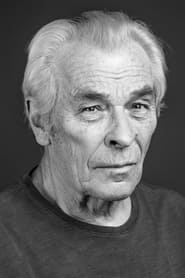
Alois Švehlík
Alois Švehlík
hlas
Alois Švehlík
hlas
Similar Movies
Ballet from the State Theatre in Košice as a true dramatic story of a Jewish family who hid in Amsterdam during the Second World War, but fell victim to Nazi murder just before the end of the war. Life during the hiding was captured by Anne Frank in her diary. The project is experimental in nature and is intended for a discerning viewer.
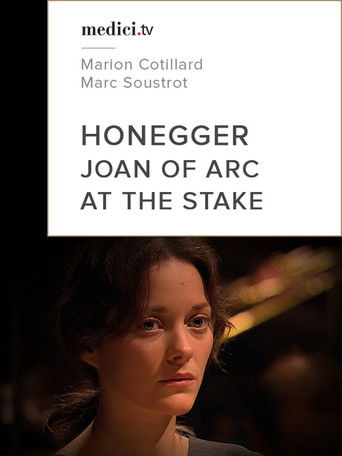
On November 17, 2012, Oscar-winning French actress Marion Cotillard joined the Barcelona Symphony and Catalonia National Orchestra for a performance of Arthur Honegger’s oratorio Joan of Arc at the Stake (Jeanne d'Arc au Bûcher) at the L'Auditori de Barcelona in Spain, broadcast live on Medici.tv. By Swiss composer Arthur Honegger, Jeanne d'Arc au Bûcher (1938) is an imposing oratorio. The libretto is a highly original creation by French poet and playwright Paul Claudel, who dramatises the last moments of the martyr's life. Originally written for actress Ida Rubinstein, the oratorio is written as a flashback in which Joan recalls her life, just before she dies. Honegger creates visually evocative ambiances and fills the orchestra with new sounds (saxophones, ondes Martenot). The initial prologue to the piece was added in 1944 as a symbol of the resistance during the Nazi occupation of France: again, Joan goes beyond her own story.
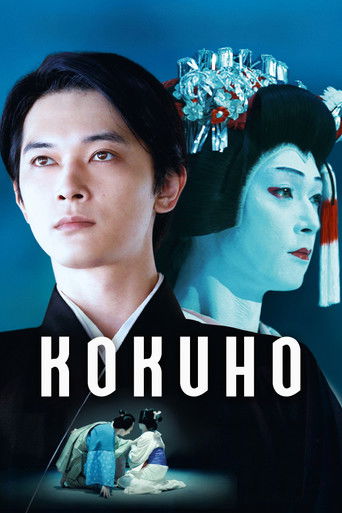
Nagasaki, 1964: Following the death of his Yakuza father, 15-year-old Kikuo is taken under the wings of a famous Kabuki actor. Alongside Shunsuke, the actor’s only son, he decides to dedicate himself to this traditional form of theatre. For decades, the two young men grow and evolve together – and one will become the greatest Japanese master of the art of Kabuki.
Gabriela Preissová wrote her two most famous dramas, Gazdina roba and Její pastorkyňa, when she was not yet thirty. Both were set to music and became famous. The first opera, entitled Eva, was written by J. B. Foerster, and the second by Leoš Janáček. The fame of Janáček's work greatly overshadowed the original. On the other hand, "Gazdina roba," the author's debut work, is still performed on Czech stages, regardless of the era. That is how powerful and impressive this drama is. The production by director Zdeněk Kaloč premiered at the Vinohrady Theater in May 1992. Dagmar Veškrnová endowed the title role of Eva the seamstress with warmth, temperament, pride, and tragic shadows.

"Razakar" is a period drama set in pre-Bangladesh-separation Pakistan, exploring the political tensions of the time. The story follows Jamal, an aspiring Bengali actor, as he grapples with the challenges posed by his uncompromising director, mirroring the larger socio-political conflicts unfolding around them. Through personal struggles and political subtext, the film raises poignant questions about identity and division.
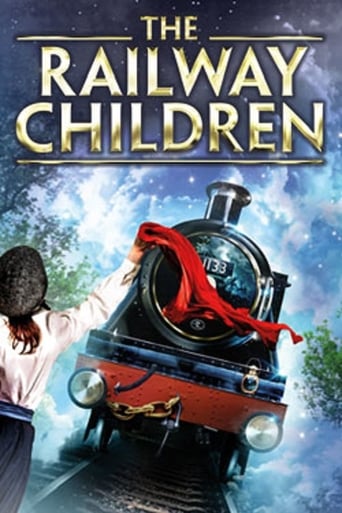
At the dawn of the 20th century, following their father's arrest on suspicion of betraying state secrets, the three Waterbury children—Bobbie, Phyllis and Peter—move with their mother to Yorkshire, where they find themselves involved in unexpected dramas along the railway by their new home. This stage-to-screen version, filmed at the National Railway Museum, features the steam train from the much-loved original feature film.