

Denník Anny Frankovej
Music · History · Drama
Overview
Ballet from the State Theatre in Košice as a true dramatic story of a Jewish family who hid in Amsterdam during the Second World War, but fell victim to Nazi murder just before the end of the war. Life during the hiding was captured by Anne Frank in her diary. The project is experimental in nature and is intended for a discerning viewer.
Top Cast

Tatiana Pauhofová
Anna Franková
Jozef Marčinský
Otto Frank, otec
Janka Kolesová Hriadeľová
Denník, Kitty
Kristína Zemanová
Margot Franková, sestra
Eva Sklyarová
Edita Franková, matka
Šimon Stariňák
Peter Van Daan
Silvia Borsetti
pani Van Daanová
Sergeii Iegorov
pán Van Daan
Igor Pashko
doktor Dussel
Františka Vargová
Miep Giesová
Dalibor Fabián
Viktor Kugler
Marcel Medvecz
Johannes Kleiman


Tatiana Pauhofová
Tatiana Pauhofová
Anna Franková
Tatiana Pauhofová
Anna Franková
Jozef Marčinský
Jozef Marčinský
Otto Frank, otec
Jozef Marčinský
Otto Frank, otec
Janka Kolesová Hriadeľová
Janka Kolesová Hriadeľová
Denník, Kitty
Janka Kolesová Hriadeľová
Denník, Kitty
Kristína Zemanová
Kristína Zemanová
Margot Franková, sestra
Kristína Zemanová
Margot Franková, sestra
Eva Sklyarová
Eva Sklyarová
Edita Franková, matka
Eva Sklyarová
Edita Franková, matka
Šimon Stariňák
Šimon Stariňák
Peter Van Daan
Šimon Stariňák
Peter Van Daan
Silvia Borsetti
Silvia Borsetti
pani Van Daanová
Silvia Borsetti
pani Van Daanová
Sergeii Iegorov
Sergeii Iegorov
pán Van Daan
Sergeii Iegorov
pán Van Daan
Igor Pashko
Igor Pashko
doktor Dussel
Igor Pashko
doktor Dussel
Františka Vargová
Františka Vargová
Miep Giesová
Františka Vargová
Miep Giesová
Similar Movies
Gabriela Preissová wrote her two most famous dramas, Gazdina roba and Její pastorkyňa, when she was not yet thirty. Both were set to music and became famous. The first opera, entitled Eva, was written by J. B. Foerster, and the second by Leoš Janáček. The fame of Janáček's work greatly overshadowed the original. On the other hand, "Gazdina roba," the author's debut work, is still performed on Czech stages, regardless of the era. That is how powerful and impressive this drama is. The production by director Zdeněk Kaloč premiered at the Vinohrady Theater in May 1992. Dagmar Veškrnová endowed the title role of Eva the seamstress with warmth, temperament, pride, and tragic shadows.

"Razakar" is a period drama set in pre-Bangladesh-separation Pakistan, exploring the political tensions of the time. The story follows Jamal, an aspiring Bengali actor, as he grapples with the challenges posed by his uncompromising director, mirroring the larger socio-political conflicts unfolding around them. Through personal struggles and political subtext, the film raises poignant questions about identity and division.

New Faces was a musical revue with songs and comedy skits tied together by a quirky plot. It ran on Broadway for nearly a year in 1952 and was then made into a motion picture in 1954. It helped jump start the careers of several young performers including Paul Lynde, Alice Ghostley, Eartha Kitt, Carol Lawrence, performer/writer Mel Brooks (as Melvin Brooks), and lyricist Sheldon Harnick. The film was basically a reproduction of the stage revue with a thin plot added. The plot involved a producer and performer (Ronny Graham) in financial trouble and is trying to stave off an angry creditor long enough to open his show. A wealthy Texan offers to help out, on the condition that his daughter be in the show.
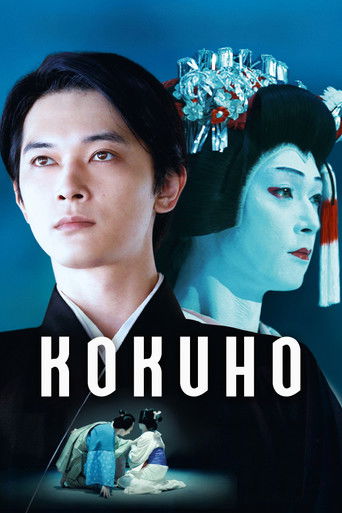
Nagasaki, 1964: Following the death of his Yakuza father, 15-year-old Kikuo is taken under the wings of a famous Kabuki actor. Alongside Shunsuke, the actor’s only son, he decides to dedicate himself to this traditional form of theatre. For decades, the two young men grow and evolve together – and one will become the greatest Japanese master of the art of Kabuki.
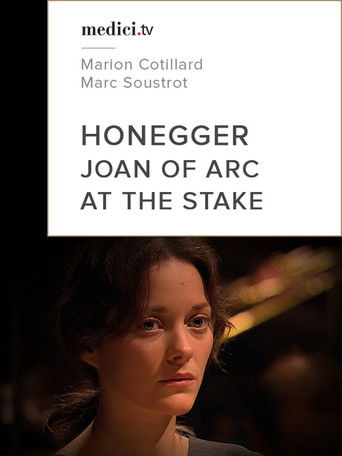
On November 17, 2012, Oscar-winning French actress Marion Cotillard joined the Barcelona Symphony and Catalonia National Orchestra for a performance of Arthur Honegger’s oratorio Joan of Arc at the Stake (Jeanne d'Arc au Bûcher) at the L'Auditori de Barcelona in Spain, broadcast live on Medici.tv. By Swiss composer Arthur Honegger, Jeanne d'Arc au Bûcher (1938) is an imposing oratorio. The libretto is a highly original creation by French poet and playwright Paul Claudel, who dramatises the last moments of the martyr's life. Originally written for actress Ida Rubinstein, the oratorio is written as a flashback in which Joan recalls her life, just before she dies. Honegger creates visually evocative ambiances and fills the orchestra with new sounds (saxophones, ondes Martenot). The initial prologue to the piece was added in 1944 as a symbol of the resistance during the Nazi occupation of France: again, Joan goes beyond her own story.

Inspired by the old-fashioned magic of silent movies and music hall vaudeville, this ballet will transport you to a magical world with large-scale cinematic effects, world premiere choreography by Loughlan Prior and a specially commissioned score by Claire Cowan. This major premiere brings together many of New Zealand’s creative talents to tell a timeless tale for audiences young and old. Royal New Zealand Ballet production of "Hansel & Gretel". This is the dress rehearsal archive recording filmed live on stage at the Opera House, Wellington on 5 November 2019.
Why hate society? Why just think that crime and riots are the only way into the future? Actor Ulf Stenberg and dancer Emil Rosén from "Teater Fryshuset" shapes young lives in this strong and intense performance. We follow three characters with very little faith in the future, who are tormented by poverty and segregation. It is a story of powerlessness and alienation, of hopelessness and distrust of police, government and society. The play is created partly to give young people an increased understanding of the consequences of making the wrong choice, and partly to increase the understanding of what young people's exclusion actually leads to. The play is based on real fate and interviews with guys and girls about their lives.
The play is an atypical story about Leni Riefenstahl, Adolf Hitler's court director, one of the best filmmakers in the world, who rose to fame thanks to films commissioned by the Third Reich. The character of Leni was portrayed by Zdena Studénková in the drama of the Slovak National Theatre. The original Slovak play Leni by Valerie Schulczová and Roman Olekšák is about a fictional meeting of two real people. The legendary presenter Johnny Carson, whose "The Tonight Show Starring Johnny Carson" was one of the most watched talk shows in America for thirty years, and the controversial Leni Riefenstahl, Adolf Hitler's "court director". It's 1974, Johnny is at the height of his career, and Leni is in America presenting her first completed project since the defeat of Germany - a book of photographs from Africa - Last of Nubu. But Johnny knows what his audience is more interested in than art.