


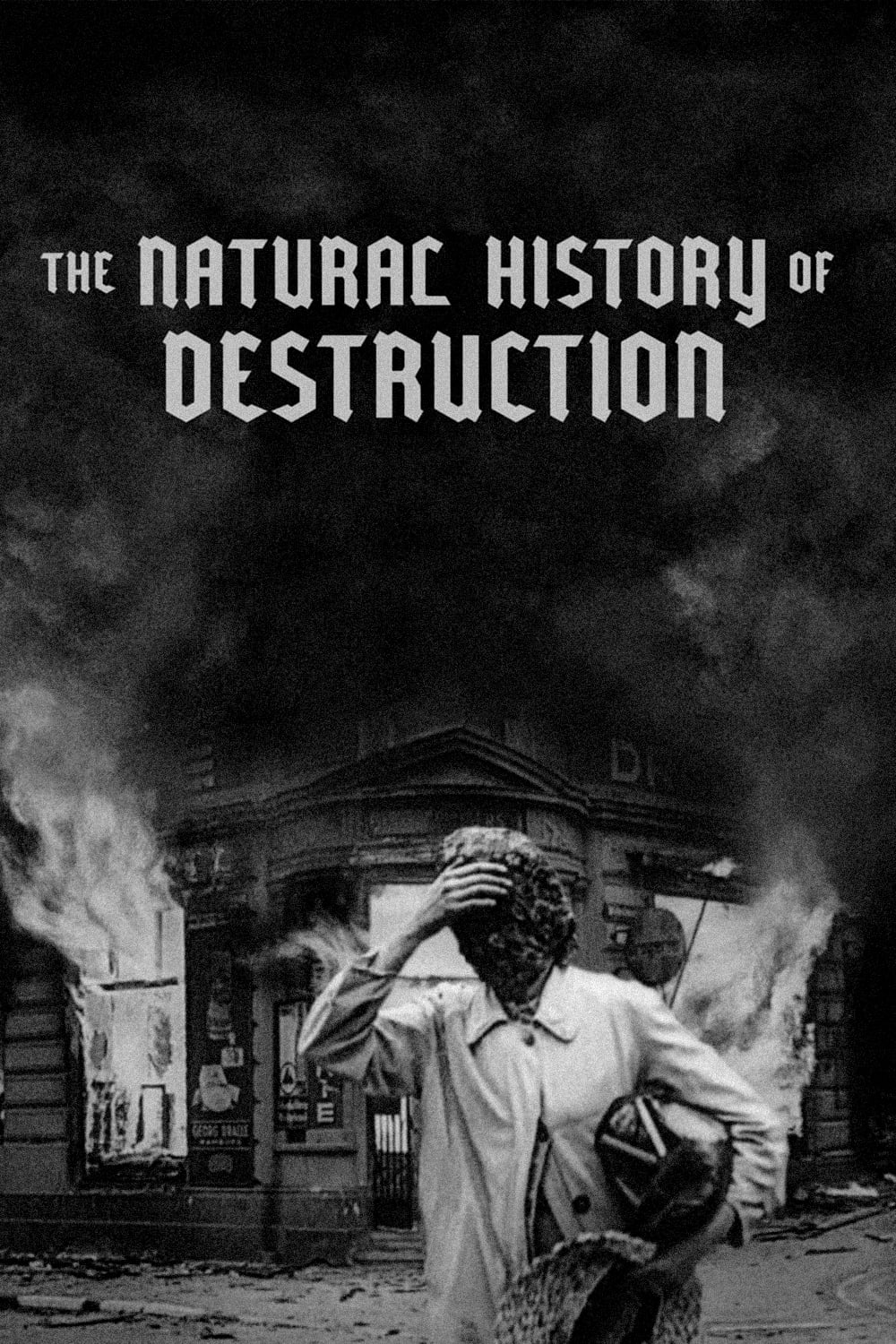
The Natural History of Destruction
Documentary · History
Overview
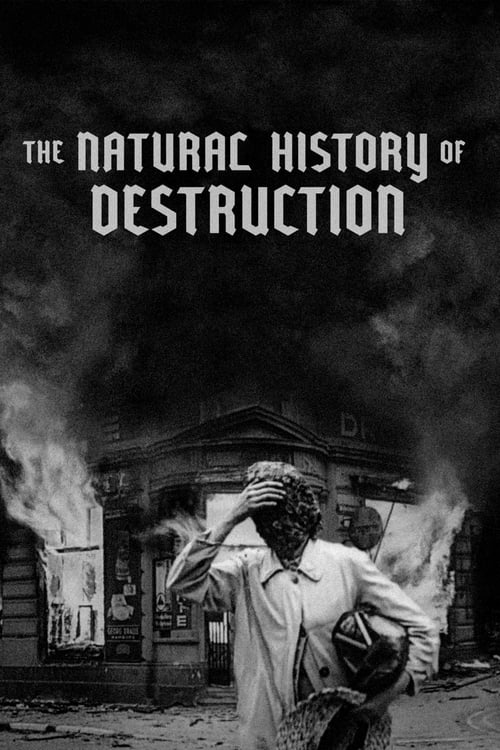
Is it morally acceptable to use the civilian population as yet another tool for waging war? Is it possible to justify death and destruction for the sake of supposedly lofty ideals? The question remains as pertinent today as it was at the beginning of World War II, and it is becoming increasingly urgent to answer, as countless tragedies have been caused by unethical political decisions.





No cast information.
Similar Movies
1981: for the first time, contemporary witnesses of the Holocaust speak on German television in the two-part documentary "Witnesses - Testimonies to the Murder of a People" - at prime time on the first channel. Only 36 years after the Second World War, Bremen filmmaker Karl Fruchtmann has created a counter-design to the US drama series "Holocaust". While there are hardly any people left today who can personally recount their experiences of the Holocaust, there were still many contemporary witnesses in the early 1980s for whom the murder of the European Jews was still very present. Karl Fruchtmann interviewed 60 survivors of the Nazi concentration camps in Israel and Poland, the tapes are in the archives of Radio Bremen, almost 80 hours of interviews, a historical legacy! Only a small part of them has been published so far.
Churchill, a name typically associated with braveness and altruism. Recently found evidence from Soviet and British sources however brings up questions about Churchill's doings in the conferences of Tehran, Yalta and Potsdam. Why did he agree to give Stalin large parts of Poland? The story of two world leaders in times of war - it is also the story of Poland.
Autumn 1941. German tank troops are making another attempt to break through to the Uritsk and Pulkovo Heights. During heavy fighting, Soviet troops managed to stop the offensive of fascist tanks one and a half kilometers south of the Pulkovo Observatory. The 900 days of the blockade and the incredible courage of the Soviet people were approaching ...
Part of the Canada Carries On series, this short film portrays the First Division of the Canadian Active Service Force in Aldershot, England. Using an intimate letter home as a narrative device, this film reveals how the troops were received, what their living conditions were like, how they would get along with their English allies and how they spent their leisure time.
The classic story of English POWs in Burma forced to build a bridge to aid the war effort of their Japanese captors. British and American intelligence officers conspire to blow up the structure, but Col. Nicholson, the commander who supervised the bridge's construction, has acquired a sense of pride in his creation and tries to foil their plans.

Austrian mountaineer Heinrich Harrer journeys to the Himalayas without his family to head an expedition in 1939. But when World War II breaks out, the arrogant Harrer falls into Allied forces' hands as a prisoner of war. He escapes with a fellow detainee and makes his way to Lhasa, Tibet, where he meets the 14-year-old Dalai Lama, whose friendship ultimately transforms his outlook on life.
While exploring the Baltic Sea in 2006, a Polish oil firm stumbled upon the remains of Germany’s first – and last – aircraft carrier at 80 meters depth off the coast near Gdansk. It was a discovery that solved an enduring maritime mystery that had baffled experts for over half a century. The Graf Zeppelin has finally been found! This film tells the incredible story of the lead ship of the German "Kriegsmarine", from its construction to its sinking and its amazing discovery over five decades later. The Graf Zeppelin was a war ship of massive proportions that was never used for its intended purpose and eventually fell into the hands of the Russians, who used it for target practice off the coast of Poland. The program features rare access to private Graf Zeppelin archives, state-of-the-art animation, dramatic reconstructions and a high-tech underwater shoot at the mysterious site of the sunken wreck.