

Zeugen - Aussagen zum Mord an einem Volk
Documentary
Overview
1981: for the first time, contemporary witnesses of the Holocaust speak on German television in the two-part documentary "Witnesses - Testimonies to the Murder of a People" - at prime time on the first channel. Only 36 years after the Second World War, Bremen filmmaker Karl Fruchtmann has created a counter-design to the US drama series "Holocaust". While there are hardly any people left today who can personally recount their experiences of the Holocaust, there were still many contemporary witnesses in the early 1980s for whom the murder of the European Jews was still very present. Karl Fruchtmann interviewed 60 survivors of the Nazi concentration camps in Israel and Poland, the tapes are in the archives of Radio Bremen, almost 80 hours of interviews, a historical legacy! Only a small part of them has been published so far.
Top Cast



Ruth Elias
Ruth Elias
Self
Ruth Elias
Self
David Kahane
David Kahane
Self
David Kahane
Self
Gideon Schuster
Gideon Schuster
Self
Gideon Schuster
Self
Jakov Silberberg
Jakov Silberberg
Self
Jakov Silberberg
Self
Similar Movies
When Allied forces liberated the Nazi concentration camps in 1944-45, their terrible discoveries were recorded by army and newsreel cameramen, revealing for the first time the full horror of what had happened. Making use of British, Soviet and American footage, the Ministry of Information’s Sidney Bernstein (later founder of Granada Television) aimed to create a documentary that would provide lasting, undeniable evidence of the Nazis’ unspeakable crimes. He commissioned a wealth of British talent, including editor Stewart McAllister, writer and future cabinet minister Richard Crossman – and, as treatment advisor, his friend Alfred Hitchcock. Yet, despite initial support from the British and US Governments, the film was shelved, and only now, 70 years on, has it been restored and completed by Imperial War Museums under its original title "German Concentration Camps Factual Survey".
The story of Hitler’s final hours told by people who were there. This special features exclusive forgotten interviews, believed lost for 65 years, with members of Hitler’s inner circle who were trapped with him in his bunker as the Russians fought to take Berlin. These unique interviews from figures such as the leader of the Hitler Youth Artur Axmann and Hitler’s secretary Traudl Junge, have never before been seen outside Germany. Using rarely seen archive footage and dramatic reconstruction, this special tells the story of Adolf Hitler’s final days in his Berlin bunker.
Sylvie Vartan has had an extraordinary life: a Bulgarian child forced into exile, who became the icon of a youth in the midst of revolution in France. After a career spanning 64 years, with nearly 50 albums recorded and 40 million records sold, she has decided to bow out. During her farewell tour, the singer chose to open up to Augustin Trapenard.
Nimrod Workman won a National Heritage Award for his original songs, but in the film that shares his name, he often breaks into impromptu performances of traditional ballads, dances, and delivers monologues that are just as superlative. Born in 1895, Workman provided for a family of thirteen by working in the coal mines of West Virginia, and he reminisces about his experience with union organizing in the 1920s and 30s with anecdotes that match many of the experiences of miners of later years, too. To Fit My Own Category is an extended visit at his home as Workman and his family prepare meals, build an addition to the house, dig for yellow root, swap jokes with the neighbors, and enjoy each other’s company.
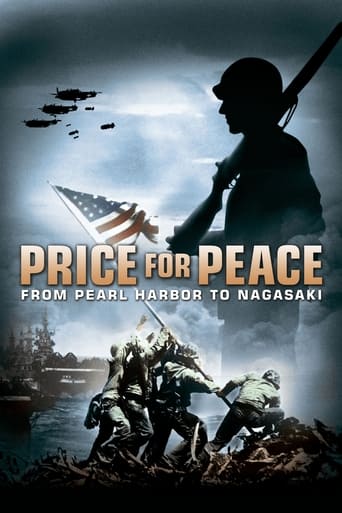
This powerful and thought provoking film chronicles the compelling events in the Pacific Theater of WWII, from the bombing of Pearl Harbor in 1941 to the American occupation of Japan in 1945. It depicts the strength and courage of America's youth, while examining how these men and women dealt with being thrust into this brutal war. The film includes interviews with war veterans, both American and Japanese, from all branches of the military. It features testimony from medics, nurses, dog handlers, as well as Japanese-Americans who were imprisoned at internment camps in the United States. The film also includes a first hand account of the tragic impact of the atomic bomb on Japanese citizens. Among the veterans who appear is Zenji Abe, a Japanese veteran who flew the mission to bomb Pearl Harbor, and retired General Paul Tibbets who flew the mission to bomb Hiroshima.
Cruelty, psychological and sexual violence, humiliations: reality television seems to have gone mad. His debut in the early 2000s inaugurated a new era in the history of the audio-visual. Fifty years of archives trace the evolution of entertainment: how the staging of intimacy during the 80s opened new territories, how the privatization of the biggest channels has changed the relationship with the spectator. With the contribution of specialists, including philosopher Bernard Stiegler, this documentary demonstrates how emotion has made way for the exacerbation of the most destructive impulses.
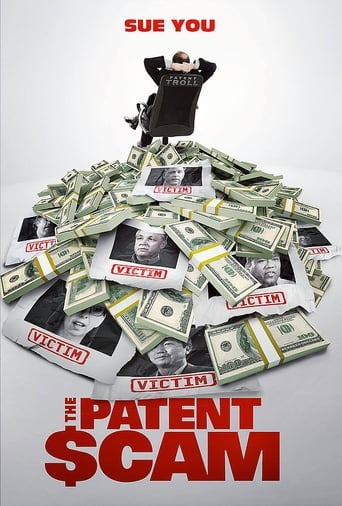
The corruption runs deeper than you'd ever imagine. A multi-billion dollar industry you've never heard of. This is the world Patent Trolls thrive in: A world created for them by our own U. S. Patent system. You can be sued for clicking on a hyperlink, using your own scanner, or sharing your Wi-Fi! It sounds insane, but the reality is even crazier. Patent Trolls look for obvious ideas, patent them, and then sue anyone they claim is infringing on their idea. People's lives and businesses are being destroyed.. and they have no way out. “The Patent Scam” exposes the underbelly of this system, and the people that commit this practice.