

What I Did in Fifth Grade
Documentary
Overview
A teacher chronicles his final year working in a school with a large underprivileged population.
Top Cast



Marc Kornblatt
Marc Kornblatt
Self
Marc Kornblatt
Self
Fabian Alamilla
Fabian Alamilla
Self
Fabian Alamilla
Self
Heidi Becker
Heidi Becker
Self
Heidi Becker
Self
Lashon Buchanan
Lashon Buchanan
Self
Lashon Buchanan
Self
Max Burdeen
Max Burdeen
Self
Max Burdeen
Self
Anthony Broadus-Smith
Anthony Broadus-Smith
Self
Anthony Broadus-Smith
Self
Tom Crawford
Tom Crawford
Self
Tom Crawford
Self
Brad Coleman
Brad Coleman
Self
Brad Coleman
Self
Jesse Coleman
Jesse Coleman
Self
Jesse Coleman
Self
Lisa Coleman
Lisa Coleman
Self
Lisa Coleman
Self
Similar Movies
J and Jacky are good friends who attend the same school. J is from a single-parent family, and will be taken care by Jacky’s family whenever his mother has to return to Mainland to renew her visa; such kind of story is not an isolated case. These families have been uprooted for a “better future” in Hong Kong, but is this “future” that the children really long to have? A Chinese saying: “How does one understand the joy of fish, if one is not a fish?” Will the adults really understand what the children want?
We met in first grade in Ms. Locklear’s class. During the summer of 2006, we decided to search for our beloved teacher. We chose not to use the internet or the telephone, but instead to rely on face-to-face contact with people. Looking for Ms. Locklear is a documentary chronicling our search, which led us far from home and into the company of a host of characters.
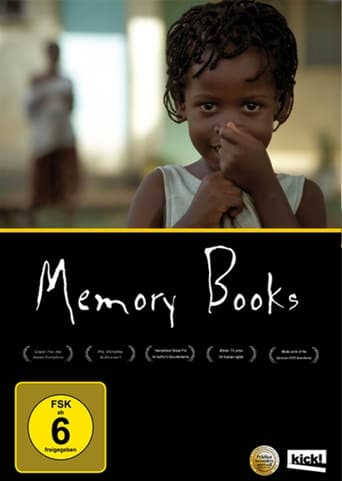
In Uganda, AIDS-infected mothers have begun writing what they call Memory Books for their children. Aware of the illness, it is a way for the family to come to terms with the inevitable death that it faces. Hopelessness and desperation are confronted through the collaborative effort of remembering and recording, a process that inspires unexpected strength and even solace in the face of death.
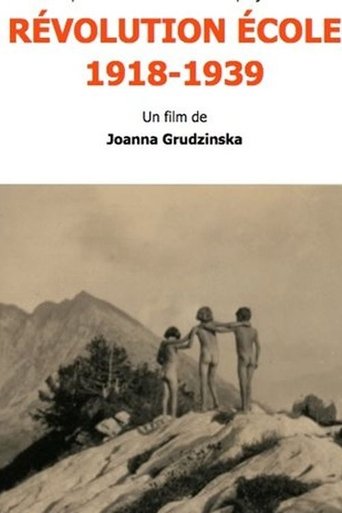
In a Europe traumatized by the First World War, educationalists point the finger of blame: the school, which produced “brave soldiers”. The task now is to build peace and develop a new education for a generation of children who, it is hoped, will never wage war again. How can we educate them without surveillance and punishment? How can we help them to emancipate themselves? To make children happy is to make them better adults, according to those who embarked on the adventure. Their names are Rudolf Steiner, Maria Montessori, Célestin Freinet, Alexander S. Neill, Ovide Decroly, Paul Geheeb or Janusz Korczak, each of them inventing educational methods. A Swiss pedagogue, Adolphe Ferrière, brought them together in the Ligue internationale de l'éducation nouvelle.
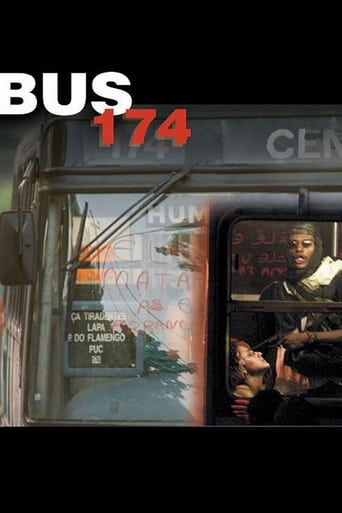
Documentary depicts what happened in Rio de Janeiro on June 12th 2000, when bus 174 was taken by an armed young man, threatening to shoot all the passengers. Transmitted live on all Brazilian TV networks, this shocking and tragic-ending event became one of violence's most shocking portraits, and one of the scariest examples of police incompetence and abuse in recent years.

As Russia launches its full-scale invasion of Ukraine, primary schools across Russia’s hinterlands are transformed into recruitment stages for the war. Facing the ethical dilemma of working in a system defined by propaganda and violence, a brave teacher goes undercover to film what’s really happening in his own school.