

At Folsom Prison with Dr. Timothy Leary
Documentary
Overview
At Folsom Prison with Dr. Timothy Leary is an extraordinary counterculture document, filmed during Leary’s incarceration there. Under 30 minutes in length, this 1973 film shows Leary at his most engaging and personable. It’s a testament to his considerable charm that he was able to pull off such a performance, considering that the prison warden and other officials were sitting across the room listening as this was filmed. Leary discusses his jailbreak (intimating that the daughter of a United States senator he refuses to name helped him), the revolution in consciousness and drugs, Eldridge Cleaver and what it feels like to be an imprisoned philosopher.
Top Cast






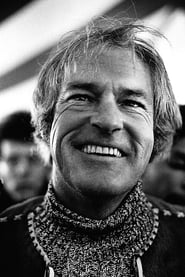
Timothy Leary
Timothy Leary
Himself
Timothy Leary
Himself
Similar Movies
The corruption runs deeper than you'd ever imagine. A multi-billion dollar industry you've never heard of. This is the world Patent Trolls thrive in: A world created for them by our own U. S. Patent system. You can be sued for clicking on a hyperlink, using your own scanner, or sharing your Wi-Fi! It sounds insane, but the reality is even crazier. Patent Trolls look for obvious ideas, patent them, and then sue anyone they claim is infringing on their idea. People's lives and businesses are being destroyed.. and they have no way out. “The Patent Scam” exposes the underbelly of this system, and the people that commit this practice.

Averroès and Rosa Parks: two units of the Esquirol Hospital, which - like the Adamant - are part of the Paris Central Psychiatric Group. From individual interviews to «carer-patient» meetings, the filmmaker focuses on showing a form of psychiatry that continually strives to make room for and rehabilitate the patients’ words. Little by little, each one eases open the door to their world. Within an increasingly worn-out health system, how can the forsaken be given a place among others.
This documentary, made over a period of eight years, tells the remarkable story of an extremely influential rock'n'roll band. Starting from their mid-60's garage band roots (sounding amazingly like the Sonics), the Motor City 5 deveoped into an icon for a brand of loud, crushing music reflecting their industrial roots. Even if you don't care for their music (and you're bound to like even a few of their songs), their story is fascinating. It combines 60's protest, youthful braggadocio, and a style of music that would help carry one to the likes of Iggy and the Stooges (not to mention certain aspects of punk rock). This film is clearly a labor of love, combining extraordinarily rare live shows, still shots, a nearly-continuous backdrop of MC5 tunes, penetrating interviews with the remaining members and their spouses, and even FBI surveillance shots. It's the ultimate testimonial to a band that only gains in stature as time goes on.
Alex Jones interviews Walter Burien, commodity trading adviser (CTA) of 15 years about the biggest game in town. There are over 85,000 federal and regional governmental institutions: school districts, water and power authorities, county and city governments – and they own over 70 percent of the stock market.

Alex Jones exposes the growing militarization of American law enforcement and the growing relationship between the military and police. Witness US training with foreign troops and learning how to control and contain civilian populations. You will see Special Forces helicopter attacks on South Texas towns, concentration camps, broad unconstitutional police actions, search and seizure and more.
Alex Jones exposes the problem-reaction-solution paradigm being used to terrorize the American people into accepting a highly controlled and oppressive society. From children in public schools being trained to turn in their peers and parents, to the Army and National Guard patrolling our nation's highways, Police State: The Takeover reveals the most threatening developments of Police State control
The personal and social tragedy of drug addiction with its evil accompaniment, drug traffic. Over the side of the silent liner in the darkness slips the package of smuggled narcotics, introducing us to the complex problem which involves all races and classes of man. We see many aspects of addiction - the addict preparing an injection, a group waiting tensely for their dope peddler; agents preparing and adulterating the illegal product; the police catching a pusher red-handed. International and national authorities are working from two angles - suppression of the illicit traffic; and where possible, rehabilitation of the addict.