

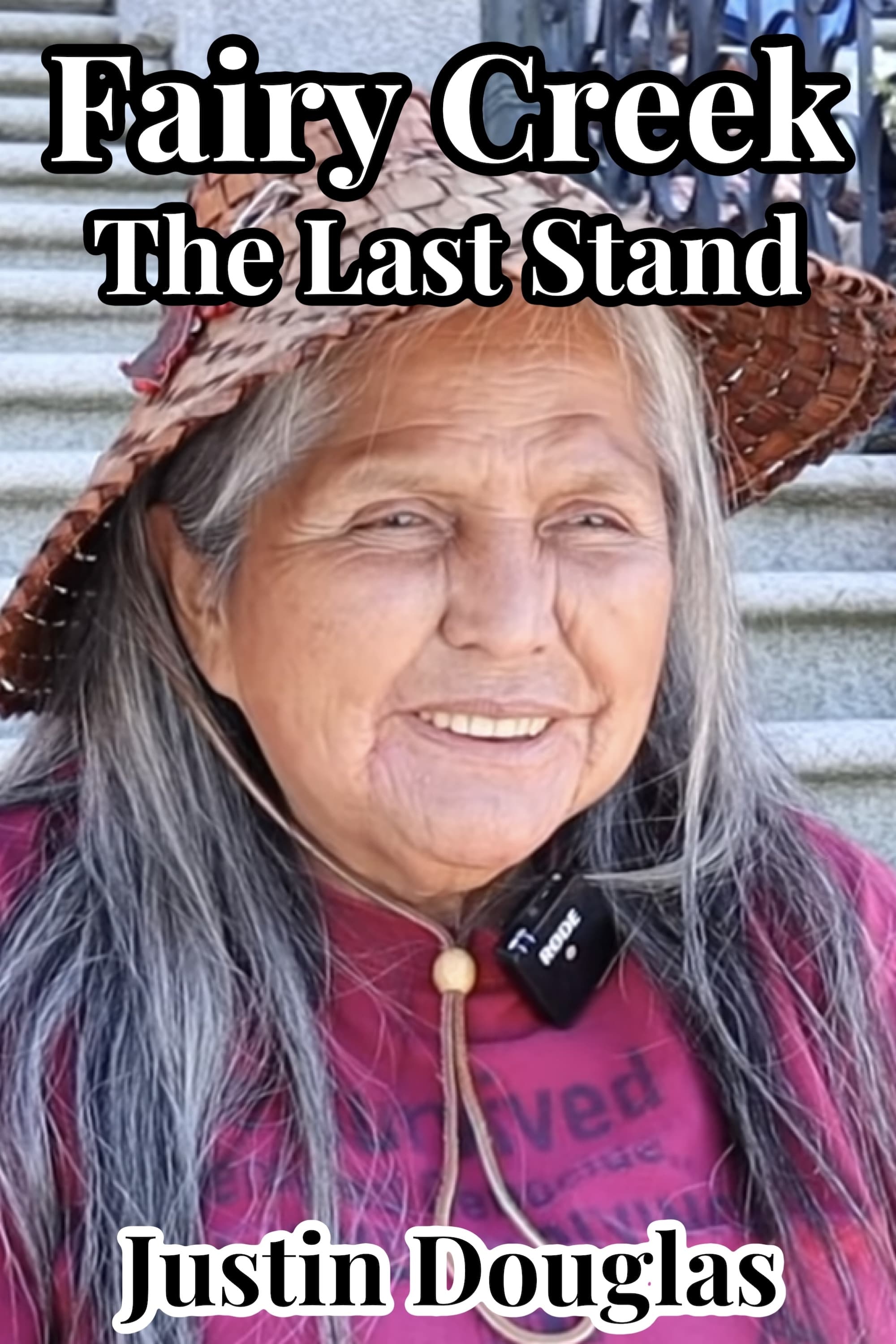
Fairy Creek: The Last Stand
Documentary
Overview
In less than 150 years, 97.3% of British Columbia's old growth forests have been logged. These ancient trees and their ecosystems have been lost forever. Fairy Creek (Ada'itsx), one of BC's last untouched old growth watersheds, lies on Southern Vancouver Island on the unceded territories of the Pacheedaht, Ditidaht and the Huu-ay-aht Nations. Despite Premier John Horgan's 2020 election promise to protect the remaining 2.7% of old growth forest, logging of Fairy Creek continues unabated. In August 2020, forest and land defenders began setting up blockades to prevent the destruction of this beautiful and fragile ecosystem. One year later, after mass civil action, over 500 arrests and intense public pressure, the conflict continues. This comprehensive and compelling documentary film sheds light on the issues around the logging and blockades, through conversations with Indigenous Elders, politicians, police, lawyers, front line activists, and many others.
Top Cast




Rose Henry (Grandmother Losah)
Rose Henry (Grandmother Losah)
Self
Rose Henry (Grandmother Losah)
Self
Paul Manly
Paul Manly
Self
Paul Manly
Self
Justin Douglas
Justin Douglas
Self
Justin Douglas
Self
Pamela Leila
Pamela Leila
Self
Pamela Leila
Self
Rita Wong
Rita Wong
Self
Rita Wong
Self
Victor Peter
Victor Peter
Self
Victor Peter
Self
Kathy Code
Kathy Code
Self
Kathy Code
Self
'Uncle' Bill Jones
'Uncle' Bill Jones
Self
'Uncle' Bill Jones
Self
Adam Olsen
Adam Olsen
Self
Adam Olsen
Self
Sonia Furstenau
Sonia Furstenau
Self
Sonia Furstenau
Self
Similar Movies
Robert J. Flaherty’s follow-up to Nanook of the North shifts from the Arctic to the South Seas, portraying Samoan village life with a painterly eye. Blending ethnographic detail with a romanticized “Gauguin idyll,” the film celebrates daily rituals, communal traditions, and the passage into adulthood, suffused with what Flaherty called “pride of beauty, pride of strength.”
Travel across four continents, through 19 countries, and into dingy Cambodian karaoke bars, Amsterdam’s infamous red-light district, Moldovan orphanages, legal Nevada brothels, and the street corners and alleyways of metropolises worldwide for more than a glance at the fastest-growing organized crime industry in the world with the groundbreaking, tell-all Nefarious: Merchant of Souls.
For more than 100 years, thousands of Indigenous children died while in Canada’s residential school system. Pacheedaht Elder Bill Jones survived, but he, like many others, experienced years of beatings and sexual abuse. The scandal has finally brought the Indigenous rights struggle into focus, none more so than at Fairy Creek, an area of forest on First Nations land that protesters are desperately trying to prevent from falling into the hands of logging companies.
A film initially was released alongside an injunction granted from the BC court to Teal Jones, enabling them to forcibly remove forest protectors who have been sacrificing their worlds at home to stand and defend some of the last of the 2.7% remaining old-growth on Vancouver Island. In collaboration with filmmaker, Ian MacKenzie, the short-film depicts how much we truly depend on these Ancient Forests for our survival as well.
The ancient forests of the Pacific Northwest are home to giant trees and many secrets, which science is just beginning to understand. But these forests are at risk of disappearing. In British Columbia on First Nation territory, a small band of forest defenders are risking life and liberty to protect some of the last remaining ancient forests.
The Cherokee language is deeply tied to Cherokee identity; yet generations of assimilation efforts by the U.S. government and anti-Indigenous stigmas have forced the Tri-Council of Cherokee tribes to declare a State of Emergency for the language in 2019. While there are 430,000 Cherokee citizens in the three federally recognized tribes, fewer than an estimated 2,000 fluent speakers remain—the majority of whom are elderly. The covid pandemic has unfortunately hastened the course. Language activists, artists, and the youth must now lead the charge of urgent radical revitalization efforts to help save the language from the brink of extinction.
For ancient Mayans, cocoa was as good as gold. For subsistence farmer Eladio Pop, his cocoa crops are the only riches he has to support his wife and 15 children. As he wields his machete with ease, slicing a path to his cocoa trees, the small jungle plot he cultivates in southern Belize remains pristine and wild. His dreams for his children to inherit the land and the traditions of their Mayan ancestors present a familiar challenge. The kids feel their father's philosophies don't fit into a global economy, so they're charting their own course. Rohan Fernando's direction tenderly displays a generational shift, causalities of progress in modern times and a man valiantly protecting an endangered culture. Breathtaking vistas of lush rainforests contrast with the urban dystopia that pulled Pops children away from him. Will one child return to carry on a waning way of life
Chemical engineer and inventor Maria Telkes worked for nearly 50 years to harness the power of the sun, designing and building the world's first successful solar-heated modern residence and identifying a new chemical that could store solar heat like a battery. Telkes was undercut and thwarted by her (male) boss and colleagues at MIT, but she persevered. Upon her death in 1995 Telkes held more than 20 patents, and now she is recognized as a visionary pioneer in the field of sustainable energy whose work continues to shape how we power our lives today.