

The Faroe Islands
Documentary
Overview
Documentary shot on the Faroe Islands


No cast information.
Similar Movies

We’re travelling from luxury kitchen to luxury kitchen with Agnes, from Bergisch Gladbach via Barcelona to the Faroe Islands. The cook’s luggage always includes her backpack containing various knives, cleavers and tweezers. The camera watches over the inquisitive young woman’s shoulder as delicacies are being prepared. Our mouths water. At the same time, we get insights into the different ways of running a restaurant. It’s about team spirit and equality at the stove.
Pilot whales are one of the least known of all small whales, and in spite of their name they are one of the largest species of dolphins. Pity the Pilot Whales takes us on an ocean journey, revealing many facets of pilot whale lore that few knew anything about. Why do these highly-intelligent marine mammals strand by the hundreds in certain regions of their known habitat? How do they communicate with one another? How do they find food in the deep dark ocean realm. This film is also a window on how two modern island nations treat these animals, and a statement on humanity and ethics.

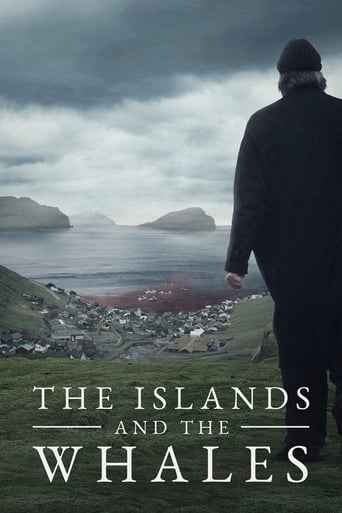
In the Faroe Islands, hundreds of pilot whales are slaughtered each year in a hunt known as the “Grind.” This gruesome tradition has drawn outrage from activists, most notably the international conservation group Sea Shepherd, who routinely sail to the islands to try to block whaling boats. Yet the Faroese are equally determined to maintain their tradition, defending the practice as more sustainable and less cruel than getting meat from slaughterhouses. Director Vincent Kelner spends time with both Faroese hunters and Sea Shepherd crusaders, building to a nuanced look at a disturbing event with much larger implications for the way humans relate to other creatures.
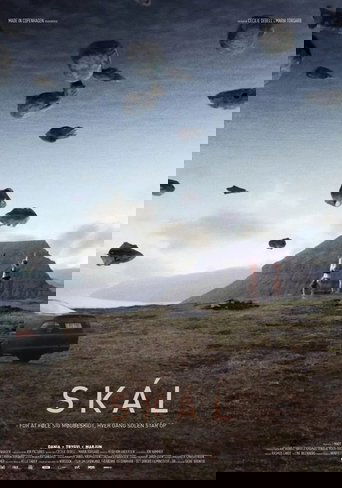
Dania is 21 years old and grew up in a Christian community in the Faroe Islands’ Bible belt. She has just moved to Tórshavn and is seeing Trygvi, a hip-hop artist and poet locally known as Silvurdrongur (Silver Kid). He comes from a secular family and writes poems and texts about the shadow sides of humanity. Dania herself sings in a Christian band but is fascinated by Trygvi’s courage to write brutally honest lyrics. As she tries to find her place in the world and understand herself, she starts to write more personal texts. Her writings develop into a collection of critical poems called ‘Skál’ (‘Cheers’), about the double life that she and other youths must live in the conservative Christian world.
The film depicts life in the Faroe Islands in the 1960s. It's a small society that has maintained its connection to the past, with old customs and ways of life, despite significant developments in trade and industry. Here, fishing remains one of the fundamental pillars of the Faroese economy. The film follows five men, crew members on the same trawler, from the moment they leave their homes in five different places in the Faroe Islands until they meet in the capital, Tórshavn, after long and difficult journeys to set sail on the trawler.
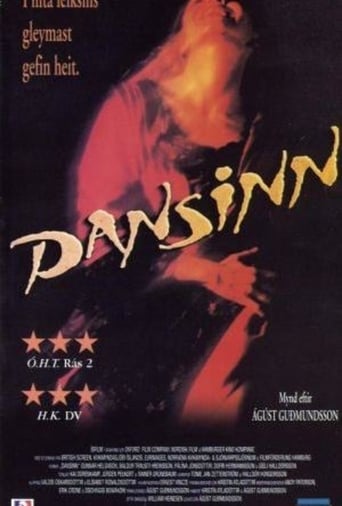
Águst Guðmundsson directed this Icelandic period drama, adapted from the short story We Must Dance by William Heinesen, and set on an island in 1913. Pétur (Gunnar Helgason) narrates, recalling the days when mainlanders arrived for a wedding. Flirtatious Sirsa (Pálína Jónsdottir) marries Harald (Dofri Hermannsson), son of a wealthy landowner on the island. Offshore, a ship is sinking, so the men form a rescue party, returning with the captain, the engineer, and several sailors. With a storm gathering, the engineer dies. The clergyman requests an end to the festivities as a mark of respect. Sirsa protests, but her new husband brings the celebration to a halt. The group then fragments into different activities, drunken or otherwise, and the sensual Sirsa directs her attention toward the handsome Ívar (Baldur Trausti Hreinsson). The film's score features traditional folk music.
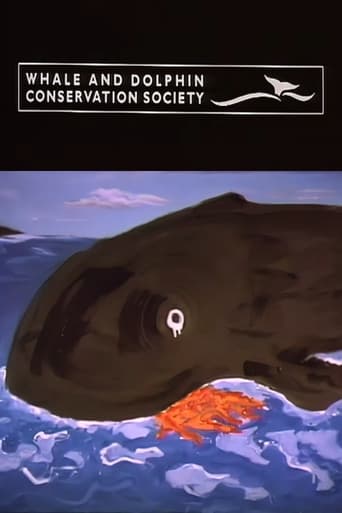
Featuring the voiceover of Sir Anthony Hopkins, this public information film from the Whale and Dolphin Conservation Society starts out rather innocently with beautiful hand-painted animation. It describes how once a year a large group of pilot whales swim to a small group of islands known as the Faroe Islands.